Artemis astronauts' key tool for studying the moon? Their eyes
Humans can detect a subtle colour shift and understand how lighting changes the contours of a landscape like the Moon's surface, details which are scientifically useful but difficult to ascertain from photos or videos
More than 50 years after humans first flew around the Moon, Artemis astronauts will repeat the feat on Monday and use the most basic instrument to study it: their eyes.
Despite the technological advancements since the Apollo missions, NASA still relies on the eyesight of its astronauts to learn more about the Moon.
“The human eye is basically the best camera that could ever or will ever exist,” Kelsey Young, the lead scientist for the Artemis 2 mission, told AFP.
“The number of receptors in the human eye far outweighs what a camera is able to do.”
Although modern cameras may be superior to human eyesight in some respects, “the human eye is really good at colour, and it’s really good at context, and it’s also really good at photometric observations,” Young said.
Humans can understand how lighting changes surface details, like how angled lighting reveals texture but reduces visible colour.
In just the blink of an eye, humans can detect a subtle colour shift and understand how lighting changes the contours of a landscape like the Moon’s surface, details which are scientifically useful but difficult to ascertain from photos or videos.
Artemis 2 astronaut Victor Glover, who pilots the Orion spacecraft, said before liftoff this week that eyes were a “magical instrument.”
Field scientists
To ensure they made the most of their proximity to the Moon, the four Artemis 2 crew members underwent more than two years of training.
Young said the goal was to turn the astronauts into “field scientists” via a combination of classroom lessons, geological expeditions to Iceland and Canada, and multiple simulated flybys of the Moon, just like the mission they are on.
The three American astronauts — commander Reid Wiseman, pilot Glover and mission specialist Christina Koch — along with Canadian astronaut Jeremy Hansen, all had to memorize the Moon’s “Big 15,” or the 15 features of the Moon that will allow them to orient themselves.
Using an inflatable Moon globe, they practiced seeing how the angle of the sun changed the colours and textures of the lunar surface, honing their observation and note-taking skills for the big moment.
“I can tell you, they are excited and they are ready,” Young said with a smile.
‘About the size of a basketball’
The Artemis astronauts’ mission is to study certain lunar sites and phenomena as part of 10 objectives chosen by NASA and ranked in priority order based on scientific interest.
During the Moon flyby, which will last for several hours, the crew will have to observe the celestial body with their naked eyes, along with cameras they have on board.
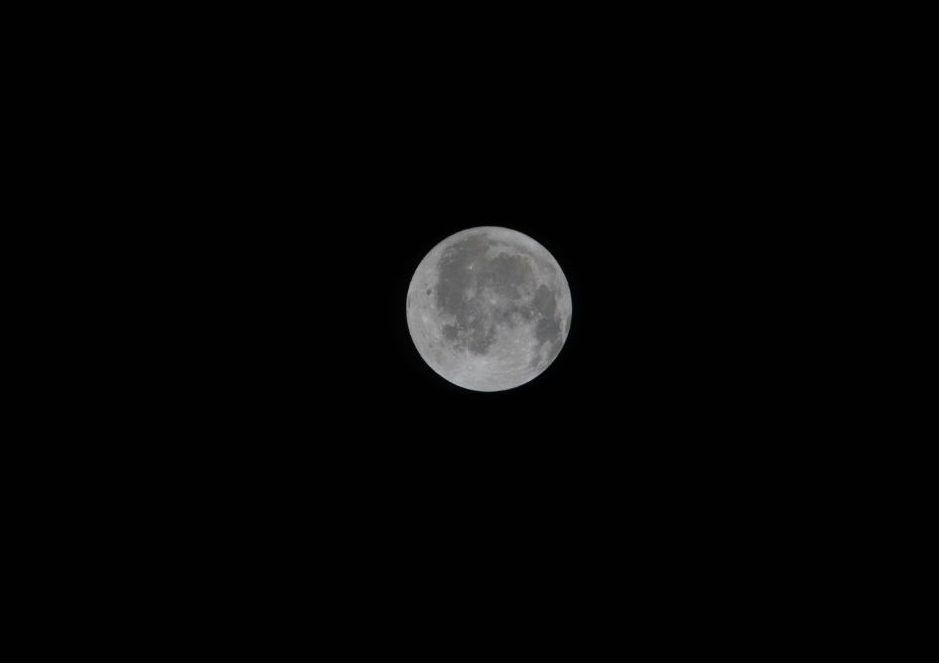
Noah Petro, head of NASA’s planetary geology lab, told AFP that the Moon will look to the astronauts “about the size of a basketball held at arm’s length.”
“The question I’m most interested in is, are they going to be able to see colour on the lunar surface,” Petro said.
“I don’t mean rainbow colours, but you know, dark browns or tan colours because that tells us something about the composition, and that tells us something about the history of the Moon.”
David Kring of the Lunar and Planetary Institute told AFP he is not expecting any earth-shattering discoveries because of the multiple lunar probes and high-resolution images of the Moon taken since the Apollo missions.
Nevertheless, “having astronauts describing what they’re seeing… That is an occurrence that at least two generations of people on Earth have never heard before,” he said.
The Artemis 2 flyby will be broadcast live by NASA, save for a period for when the spacecraft is behind the moon.
“Just listening to their practice descriptions in the mission simulations… It brings chills up my arms,” Young said.
“I am absolutely confident that these four people are going to deliver some incredible descriptions.”
Our website is the place for the latest breaking news, exclusive scoops, longreads and provocative commentary. Please bookmark nationalpost.com and sign up for our daily newsletter, Posted, here.
Postmedia is committed to maintaining a lively but civil forum for discussion. Please keep comments relevant and respectful. Comments may take up to an hour to appear on the site. You will receive an email if there is a reply to your comment, an update to a thread you follow or if a user you follow comments. Visit our Community Guidelines for more information.
Facts Only
NASA’s Artemis 2 mission will launch on Monday, with astronauts using their eyesight as a primary tool to study the Moon.
The mission includes astronauts Reid Wiseman, Victor Glover, Christina Koch, and Jeremy Hansen.
Kelsey Young, lead scientist for Artemis 2, states that the human eye surpasses cameras in color detection, contextual understanding, and photometric observations.
The four crew members underwent over two years of training, including classroom lessons, geological expeditions to Iceland and Canada, and simulated Moon flybys.
They memorized the Moon’s "Big 15" features to aid in orientation during the mission.
The crew practiced observing the Moon’s surface using an inflatable globe to study how sunlight affects colors and textures.
The Artemis 2 flyby will last several hours, during which astronauts will observe the Moon with their naked eyes and onboard cameras.
Noah Petro, head of NASA’s planetary geology lab, notes the Moon will appear "about the size of a basketball held at arm’s length" to the astronauts.
The mission has 10 scientific objectives, prioritized by NASA based on scientific interest.
David Kring of the Lunar and Planetary Institute expects no groundbreaking discoveries but highlights the value of astronaut descriptions for public engagement.
The flyby will be broadcast live by NASA, except when the spacecraft is behind the Moon.
Executive Summary
Full Take
The strongest version of this narrative emphasizes the irreplaceable role of human perception in scientific exploration, even in an era of advanced technology. NASA’s reliance on astronauts’ eyesight for the Artemis 2 mission underscores a paradox: while cameras and probes provide high-resolution data, the human brain’s ability to synthesize context, color, and lighting in real time remains unmatched. This steelman acknowledges the agency’s pragmatic approach—leveraging both human intuition and technological precision to maximize scientific return.
However, the narrative also subtly reinforces a pattern of *ARC-0024 Ambiguity* in how it frames the mission’s scientific value. The article oscillates between touting the uniqueness of human observation and downplaying expectations of "earth-shattering discoveries," leaving unresolved whether this is a genuine limitation or a strategic tempering of public expectations. The emphasis on astronauts’ emotional excitement ("chills up my arms") and the romanticized description of their eyes as a "magical instrument" could be interpreted as *ARC-0043 Motte-and-Bailey*—advancing a poetic vision of human exploration while retreating to modest scientific goals when pressed.
Rooted in this is a broader paradigm: the tension between human-centric exploration and the rise of autonomous systems. The article assumes that human presence is inherently more valuable than robotic missions, yet it doesn’t interrogate why, beyond vague appeals to "context" and "color." Historically, this echoes Cold War-era justifications for manned spaceflight, where symbolic triumphs often outweighed purely scientific ones. The cost-benefit analysis remains unexamined—who bears the risks (astronauts, taxpayers) and who reaps the rewards (NASA’s prestige, public inspiration)?
For human agency, the implications are double-edged. On one hand, the mission celebrates human adaptability and curiosity. On the other, it risks perpetuating a narrative where astronauts are more PR tools than scientists, their observations curated for public spectacle rather than raw data. Second-order consequences include the opportunity cost: could these resources have been allocated to more scalable, robotic exploration?
Bridge questions:
1. If cameras and AI can now replicate many human observational skills, what unique scientific value do astronauts provide that justifies the cost and risk?
2. How might the emphasis on "field scientists" versus automated probes reflect broader cultural anxieties about human relevance in an age of machine intelligence?
3. What would it take to shift the narrative from "humans are irreplaceable" to "humans and machines are complementary"—and would that change how we prioritize space exploration?
Counterstrike scan: A coordinated influence campaign pushing this narrative might exploit nostalgia for Apollo-era heroism, framing human spaceflight as a moral imperative while obscuring its scientific trade-offs. The actual content aligns partially—it leans into emotional appeals ("magical instrument") and downplays alternatives—but stops short of outright manipulation. The focus on astronaut training and scientific objectives keeps it grounded in tangible goals, avoiding the hallmarks of a pure PR play.
Sentinel — Human
The analysis indicates a likely human origin for the text, with variable sentence lengths, a personal voice, and an uncommon argument structure being strong indicators of human authorship.