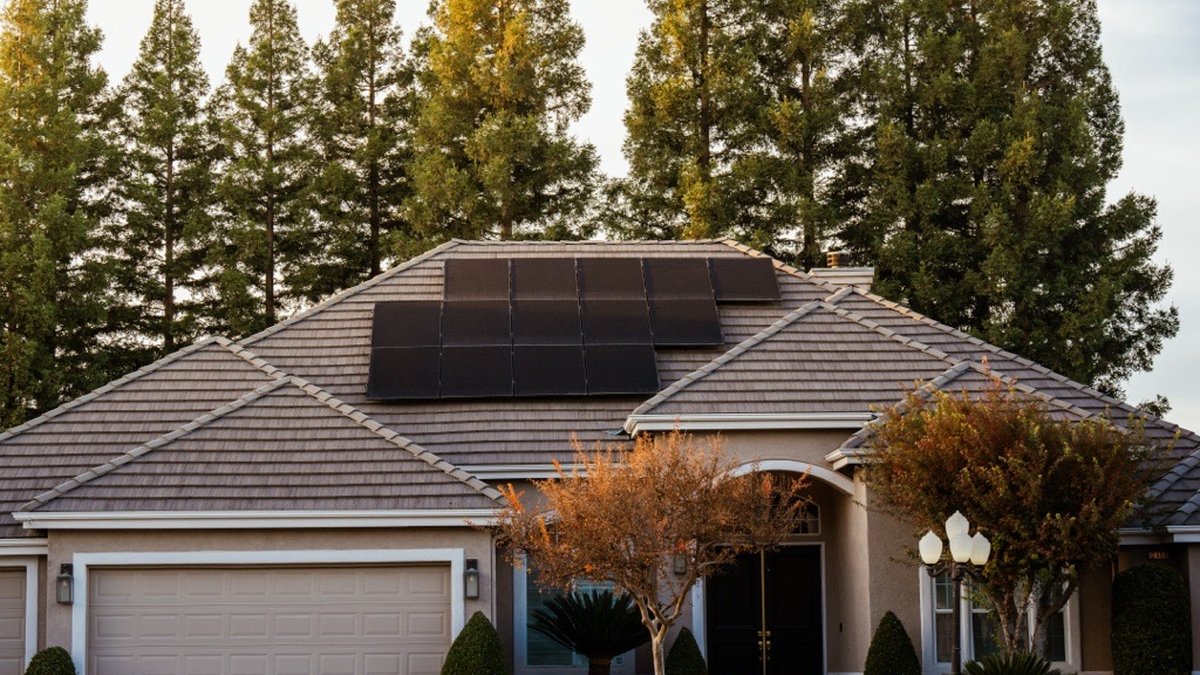
Sunrun, a provider of home battery storage, solar, and home-to-grid power plants, has launched a distributed AI compute pilot program, marking the company’s first foray into distributed edge computing.
Sunrun believes distributed edge computing represents a “high margin revenue opportunity” in which it can leverage its existing energy infrastructure, customer base, and grid service capabilities. Following a proof of concept, Sunrun is expanding the pilot to place numerous compute nodes in homes equipped with Sunrun solar and battery storage systems.
Sunrun is coordinating the selling of inference capacity to enterprise compute buyers, while also testing the nodes under a variety of conditions and rate structures to gather operational data and information. Participating homeowners are compensated for hosting the compute nodes.
“AI companies are scrambling to secure greater access to energy and computing power,” said Sunrun President and Chief Revenue Officer Paul Dickson. “Over nearly two decades, we have perfected our ability to operationalize, finance, and scale distributed assets. We are now using our leadership position in distributed home energy and proven infrastructure to bring compute closer to the sources of energy and inference.”
AI inference demand is growing at approximately 35% annually and is projected by McKinsey to surpass training as the dominant AI workload by 2030, representing more than half of all AI compute. Unlike AI training — which requires massive, tightly synchronized clusters — inference is modular, geographically distributable, and highly sensitive to latency. That makes it a “natural fit” for edge deployment close to end users, Sunrun argues.
Just as Sunrun has helped democratize energy by enabling households to generate, store, and share their own power, this distributed data center model enables American households to play a direct role in powering the nation’s AI future and share in the economic opportunity it creates. For hyperscalers, it provides a flexible, scalable source of compute capacity that complements centralized data centers and accelerates AI deployment.
Sunrun expects to complete the pilot over the coming months and will assess results against defined milestones, compute performance, and homeowner experience before determining the scale, speed, and customer offering of a broader rollout. The company is in discussions with enterprise compute offtakers, homebuilders, and utility partners to structure the commercial and deployment frameworks that would support expansion.
Sunrun’s distributed compute pilot is a distinct and separate initiative, but the company says it complements its recently announced agreement with Renew Home and Tesla to aggregate more than 16 gigawatts of flexible home energy capacity for hyperscalers and utilities. Sunrun argues that compute capacity deployed onsite at customer homes can serve the same surging AI demand that is driving hyperscalers to seek new energy capacity.
16 GW of flexible capacity?
Sunrun, Renew Home, and Tesla recently announced an agreement to deliver more than 16 gigawatts of flexible energy capacity to hyperscalers and utilities. The agreement establishes a framework to aggregate millions of existing demand-side and energy-exporting devices in states across the country into local, turnkey solutions that require no additional hardware, software, interconnection, water, or land usage for offtaking parties.
Deployable in “months, not years,” Sunrun argues this capacity-as-a-solution framework creates headroom on the existing grid by freeing up transmission capacity, easing congestion on distribution infrastructure, and extending the duration and depth of available capacity.
Together, the companies would form the largest distributed power plant in the country, which could add net new electrons onto the grid from home batteries paired with solar generation while also shifting household load during peak demand hours. The combined 16-gigawatt resource could draw dispatchable capacity from hundreds of thousands of home battery systems operated by Sunrun and Tesla, alongside flexible peak capacity from more than 8 million smart thermostats and devices managed by Renew Home.
“The grid of the 1800s cannot power the innovation of 2026,” said Sunrun CEO Mary Powell. “Americans deserve innovation that does not create unnecessary energy costs. When data centers are asked to throttle down operations during the most expensive and stressful hours of the day, we can activate our distributed power plants to help provide them the power they need while also protecting American families from footing the bill for costly new infrastructure.”
In Virginia, the data center “capital” of the world, the companies already have more than 300 MW of capacity available for deployment. By 2030, that figure is expected to grow to at least 500 MW.
Together, the companies have also committed to provide capacity to PJM’s proposed Reliability Backstop Process. If accepted, PJM could unlock over a gigawatt of capacity, with more deployable in the years ahead for peak shaving, locational grid relief, and fast-responding ancillary services.
“The stakes are clear. America’s grid faces mounting pressure from data centers, electrification, and manufacturing growth that no single infrastructure solution can solve fast enough,” said Colby Hastings, Senior Director of Residential Energy at Tesla. “Sunrun, Renew Home, and Tesla believe that a huge piece of the answer is already in place — in the batteries, thermostats, and electric vehicles inside millions of American homes, waiting to be put to work.”
Facts Only
* Sunrun launched a distributed AI compute pilot program involving edge computing.
* The pilot involves placing compute nodes in homes with Sunrun solar and battery storage systems.
* Sunrun coordinates selling inference capacity to enterprise compute buyers.
* The company tests nodes under various conditions for operational data gathering.
* Participating homeowners are compensated for hosting the compute nodes.
* AI inference demand is growing at approximately 35% annually.
* AI training is projected to be surpassed by inference as the dominant AI workload by 2030.
* Sunrun has an agreement with Renew Home and Tesla to aggregate over 16 gigawatts of flexible home energy capacity for hyperscalers and utilities.
* This aggregated capacity aims to free up transmission capacity and ease grid congestion.
* The combined resource could draw dispatchable capacity from home batteries and flexible peak capacity from smart devices.
* Virginia has over 300 MW of data center "capital" available for deployment, projected to reach 500 MW by 2030.
* The companies have committed to provide capacity to PJM’s proposed Reliability Backstop Process.
Executive Summary
Sunrun is piloting a distributed AI compute program by placing compute nodes in homes equipped with Sunrun solar and battery storage systems, aiming to leverage existing energy infrastructure. The company seeks to sell inference capacity to enterprise buyers while testing the nodes under various conditions to gather operational data. Participating homeowners receive compensation for hosting these compute nodes. This initiative stems from the belief that distributed edge computing offers a high-margin revenue opportunity by utilizing existing energy assets.
The broader context involves an agreement between Sunrun, Renew Home, and Tesla to aggregate over 16 gigawatts of flexible home energy capacity for hyperscalers and utilities. This aggregated capacity allows for local solutions that use existing demand-side devices without requiring new hardware or land usage. The goal is to deploy this distributed power to support the growing AI inference demand, which is projected to surpass training workload by 2030. Furthermore, this distributed energy deployment aims to provide grid relief and accelerate the integration of decentralized resources into the national energy system.
Full Take
The narrative links the decentralized energy assets residing in residential settings directly to the centralized computational demands of the AI sector, positioning distributed home energy infrastructure as a necessary solution for future compute scaling. The core tension lies between the localized, bottom-up deployment of energy management and the massive, synchronized needs of hyperscalers and data centers. Sunrun frames this not merely as an energy transaction but as a societal opportunity where household assets directly contribute to national AI infrastructure resilience. This framing subtly shifts the perception of home energy from a utility cost burden to an active, marketable computational resource.
The implied pattern is the leveraging of existing distributed physical assets (batteries, smart devices) to satisfy abstract computational needs (AI inference). The concept relies heavily on defining distributed power as intrinsically valuable for grid stability and AI acceleration, which requires careful scrutiny regarding externalities. The move towards a "capacity-as-a-solution" framework suggests a structural shift where infrastructure providers are integrated into the compute supply chain rather than remaining purely physical energy suppliers.
What assumptions underpin the valuation of this synergy? Does the compensation structure adequately reflect the real impact on homeowner autonomy versus grid optimization goals? Furthermore, if distributed assets are being monetized to serve hyperscalers, what mechanisms exist to ensure that this economic opportunity flows equitably and does not simply extract value from consumers whose homes are utilized as temporary compute nodes during peak demand events? How does the focus on immediate deployment risk obscuring long-term grid stability or consumer cost implications?
Sentinel — Human
This analysis appears to be well-structured journalistic reporting that effectively synthesizes technical concepts and corporate strategy, showing high confidence in its human origin.