The Volvo EX60 And EX90 Get An Important EV Fast-Charging Upgrade
The automaker is making charging seamless for EX60 and EX90 owners with a new feature.
- Charging a Volvo EX60 and EX90 just got way simpler.
- Owners won't have to fiddle with apps and credit cards while charging their EVs.
- EX60 and EX90 owners will be able to Plug & Charge at over 35,000 fast chargers in the U.S.
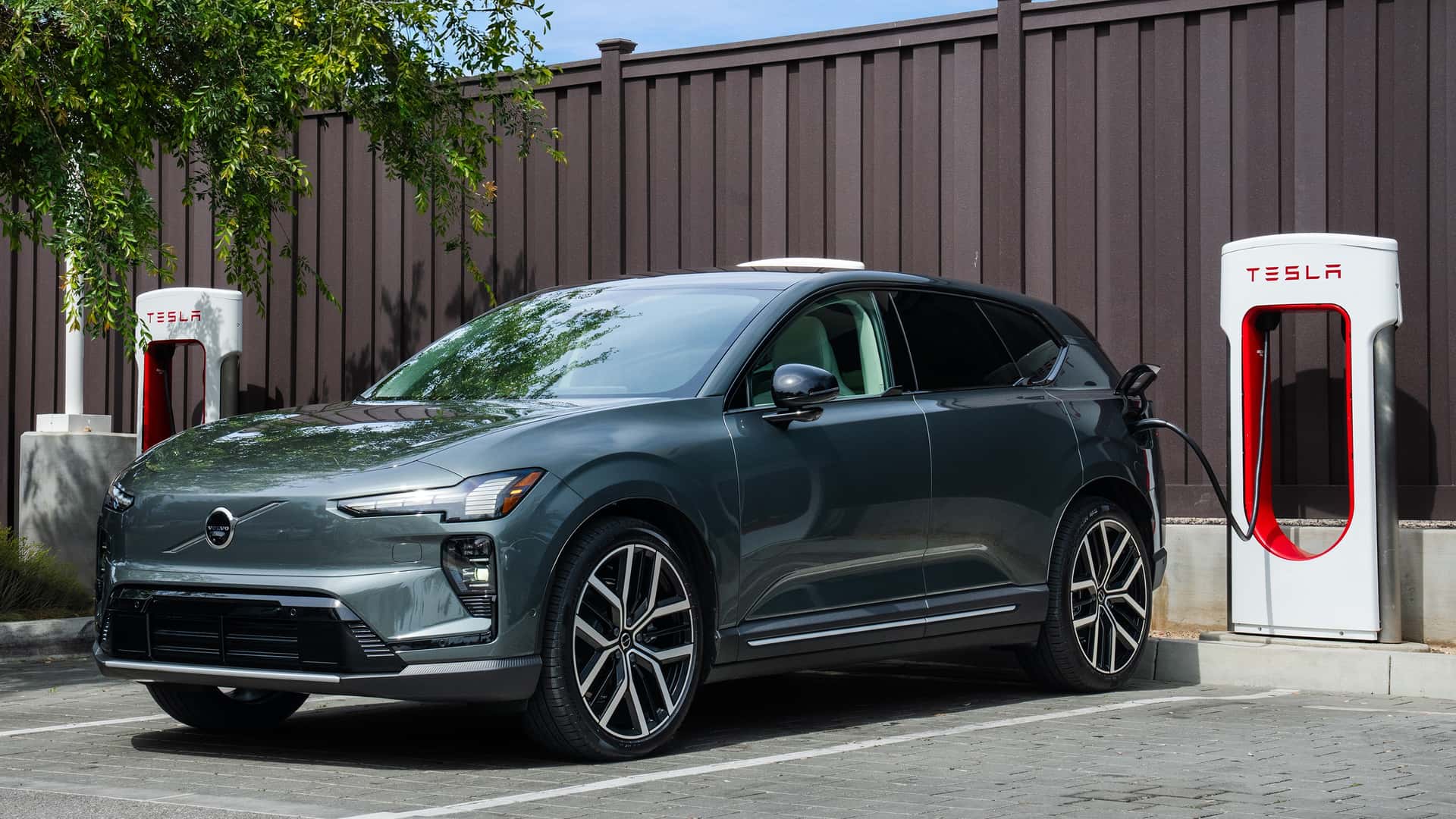
Volvo has started rolling out Plug & Charge capability for the EX90 and the EX60 electric SUVs in the U.S., letting drivers begin charging sessions automatically the moment they plug in. It's a small but meaningful change, eliminating the need to tap the credit card or navigate smartphone apps to make charging super easy.
Plug & Charge is part of a broader, industry-wide push to make the public charging experience better for EV owners. Once drivers set up their payment systems at the very beginning after purchasing their EVs, they won’t have to manually pay for each session. Advanced software integration can make that happen seamlessly for them at stations which support the feature.
The feature is already live for EX90 owners, while EX60 drivers will get it when U.S. deliveries begin later this year. Plug & Charge will work across more than 35,000 stations, including the Tesla Supercharger and Ionna networks, with more charging companies coming online later.
One thing to note for owners of the model year 2025 EX90: Their EVs will need the Nvidia Orin computer upgrade for Plug & Charge to work. While MY2026 vehicles get the upgrade from the factory itself, MY2025 vehicles can get the new chip for free with a scheduled service center visit. The upgrade is part of a broader overhaul for the EX90, which was plagued with software issues when it launched.
Drivers can also find compatible chargers through the built-in Android Automotive operating system or the Volvo Cars app. They don’t have to worry about getting deserted on a long drive—the built-in Google Maps will suggest charging stops along the way, calculating the ideal route based on the vehicle’s state of charge.
That should make the EX60’s charging experience even better. It’s already one of the fastest-charging EVs in the U.S. Built on the 800-volt SPA3 platform, it can charge at a maximum rate of 370 kilowatts at compatible stations and go from 10-80% in as little as 19 minutes. The top-spec P12 AWD can add up to 173 miles of range in just 10 minutes at a 400-kW charger. Plug & Charge should make this process even more seamless and less time-consuming.
Fast-charging networks in the U.S. have been steadily expanding their footprint despite a period of slower EV sales growth, building ahead of demand in the hope that EV sales will rebound. They’re also fine-tuning the overall charging experience with features like Plug & Charge, improved reliability, and access to amenities like restrooms and WiFi, so that plugging in no longer feels like a chore.
Contact the author: suvrat.kothari@insideevs.com
RECOMMENDED FOR YOU
This Simple Trick Boosted My Plug-In Hybrid's Fuel Economy To 50 MPG
A Tesla Model Y Battery Test Looked Bad. Then The Degradation Almost Stopped
Edmunds Has Owned A Volvo EX30 For A Year: ‘It’s Been Rough’
License Plate Cameras Are About To Start Tracking A Lot More Than Just Your Car
The Best EV Lease And Finance Deals In June 2026
Who's Winning The Robotaxi Race? It's... Complicated
The Volvo XC60 Plug-In Hybrid Will Get A Serious Range Boost: Report
Facts Only
* Volvo is rolling out Plug & Charge capability for the EX60 and EX90 electric SUVs in the U.S.
* The feature allows drivers to automatically initiate charging sessions upon plugging in.
* Plug & Charge works across over 35,000 fast-charging stations in the U.S., including Tesla Supercharger and Ionna networks.
* EX90 owners already have Plug & Charge functionality.
* EX60 drivers will receive this feature when U.S. deliveries begin later this year.
* The EX60 can charge at a maximum rate of 370 kilowatts and achieve 10-80% range in approximately 19 minutes.
* A software upgrade, including an Nvidia Orin computer chip, is required for Plug & Charge on model year 2025 EX90 vehicles.
* The system integrates payment systems set up during the vehicle purchase process.
Executive Summary
Full Take
Sentinel — Human
The text displays high coherence and specific technical accuracy, consistent with quality human-written automotive journalism, though its fluency is characteristic of advanced AI capabilities.