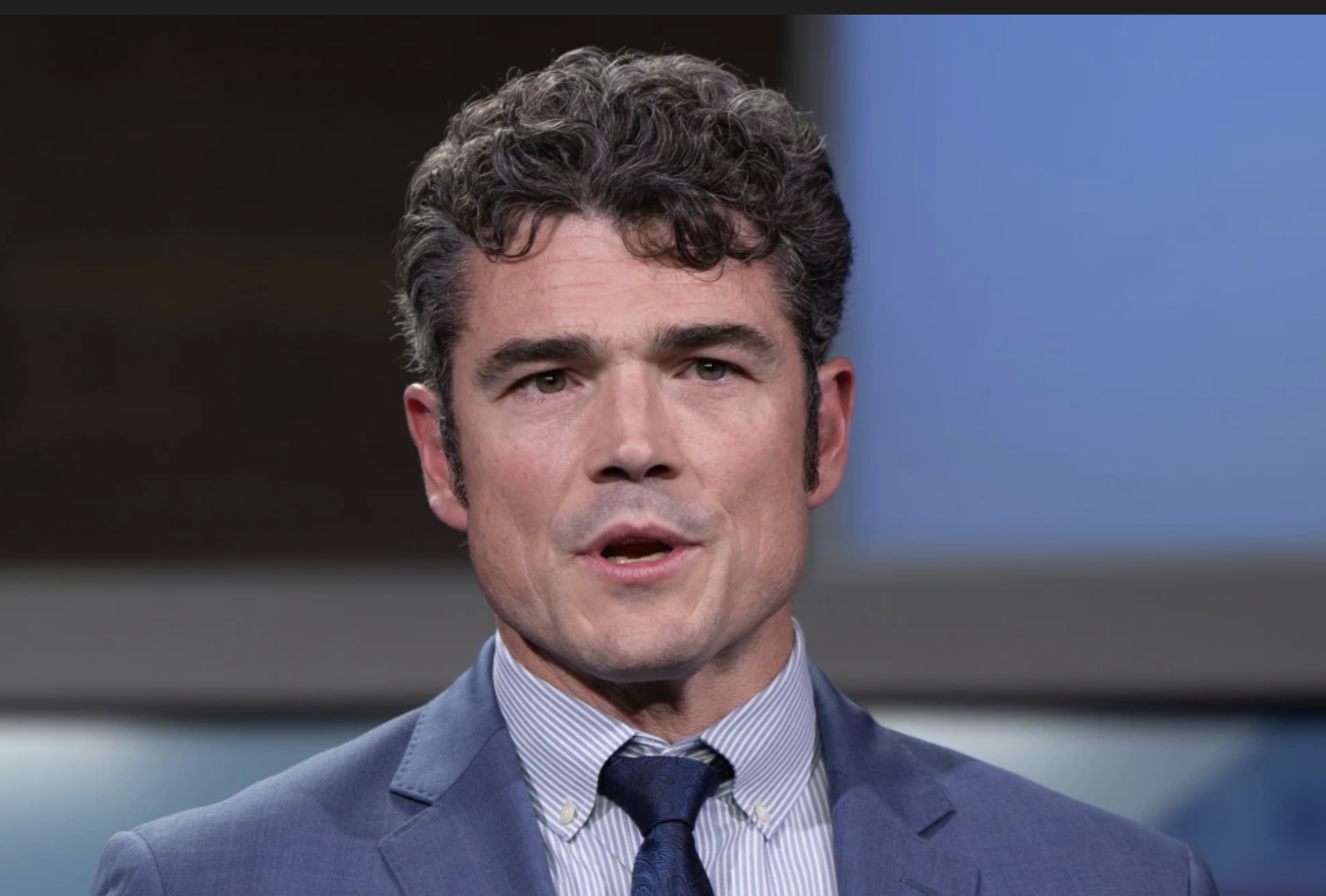
Joe Kent’s resignation is not an anomaly but an alarm: elite dissent is surfacing early because this war is built on deception. Joe Kent’s resignation is shocking, but not for the obvious reason. It is not shocking simply because it comes from within the Trump administration. Any administration of that size, stretching across thousands of officials, operatives and career personnel, will contain people who, despite the surrounding culture, still draw moral lines of their own.
Even an administration defined by blunt militarism, racialized rhetoric and an unapologetic embrace of force is not morally monolithic. There is always room, however narrow, for someone to say: enough.
What makes Kent’s resignation important is something else entirely: the language, the timing, and the political location from which it emerged.
When other officials resigned over Gaza, they established a standard of ethical clarity that still matters. Former UN human rights official Craig Mokhiber resigned on October 28, 2023, warning that “we are seeing a genocide unfolding before our eyes” and describing Gaza as “a textbook case of genocide.”
Former State Department official Stacy Gilbert, who resigned in May 2024 over a government report on Israeli obstruction of aid, put it just as bluntly: “There is so clearly a right and wrong, and what is in that report is wrong.”
These were not carefully lawyered exits. They were moral positions.
Kent belongs in a different political universe than Mokhiber or Gilbert. That is precisely why his resignation carries such force.
He was not some liberal holdout inside a hawkish administration. He was the director of the National Counterterrorism Center, confirmed in July 2025, a former Green Beret, a former CIA paramilitary officer, and by every normal measure a deeply embedded figure within the national security state.
He was also a Trump-aligned Republican whose confirmation battle was shaped by ties to far-right figures and conspiracy politics, according to AP. In other words, this was not an outsider recoiling from empire. This was a man from within that machinery saying he could no longer justify this war.
And he did not mince words:
“I cannot in good conscience support the ongoing war in Iran,” Kent wrote. “Iran posed no imminent threat to our nation, and it is clear that we started this war due to pressure from Israel and its powerful American lobby.”
That sentence alone is politically explosive. It does not merely criticize tactics. It indicts the rationale of the war itself.
Then Kent went further.
“Early in this administration, high-ranking Israeli officials and influential members of the American media deployed a misinformation campaign that wholly undermined your America First platform and sowed pro-war sentiments to encourage a war with Iran,” he wrote.
And then the bluntest line of all:
“This was a lie and is the same tactic the Israelis used to draw us into the disastrous Iraq war.”
This is not bureaucratic dissent. This is a direct accusation of manipulation, deception, and foreign-policy capture.
That is what makes this resignation different.
Officials often leave in silence. They retreat into euphemism. They invoke family reasons, timing, institutional fatigue, or the tired fiction of “policy differences.” Kent did none of that. He drew a line between right and wrong in the language of his own political tradition, and then crossed it. The significance of that act cannot be measured only by whether one agrees with his worldview. It must be measured by what it reveals: that the moral and strategic contradictions of this war are now so visible that even loyalists are beginning to break.
Kent also anchored his decision in personal history.
“As a veteran who deployed to combat 11 times and as a Gold Star husband who lost my beloved wife Shannon in a war manufactured by Israel, I cannot support sending the next generation off to fight and die in a war that serves no benefit to the American people nor justifies the cost of American lives.”
His wife, Navy Senior Chief Petty Officer Shannon Kent, was killed in Syria in 2019 as part of Operation Inherent Resolve. That does not sanctify Joe Kent’s politics, but it does explain the moral register of his letter. He was not speaking abstractly about sacrifice. He was speaking from inside its wreckage.
This matters for another reason.
We do not know what Kent knows and chose not to say. Someone in his position had access to intelligence, internal deliberations, threat assessments and strategic discussions that the public will never see in full. When such a figure concludes that there was “no imminent threat,” that judgment is not casual. It does not prove everything, but it gives weight to the suspicion that the public case for war was not merely weak, but manufactured.
There is also a wider lesson here, and it may be the most important one.
Unlike earlier US wars, this one is generating meaningful dissent with unusual speed. Iraq took time. Afghanistan took time. Even when elite opposition emerged, it often arrived only after the strategic disaster had fully matured. This time, less than three weeks into the US-Israeli war on Iran, anti-war protests are already visible, internal unease is already surfacing, and a senior counterterrorism chief has already resigned in public protest. That does not mean the war is near its end. It means the political architecture sustaining it is less stable than Washington wants to admit.
Kent’s resignation should also sharpen a debate that Washington has spent decades trying to blur: the role of Israel in shaping US foreign policy. Kent did not hide behind coded language. He called this war what he believes it is: a war launched “due to pressure from Israel and its powerful American lobby.” Whether more officials will say the same remains to be seen. But one of them already has, and from a post that matters.
None of this requires romanticizing Joe Kent. One may object, strongly and rightly, to his past politics, to the role he played inside the national security establishment, and to the wider machinery of empire that made his career possible. But that is not the point. The point is that, within his own framework, he reached a conclusion and acted on it. He did the rare thing: he left power and named the corruption plainly.
This story is not ending. It is starting. Because once one insider says the war was built on lies, others are forced into a choice. They can continue to perform loyalty to a collapsing narrative, or they can speak. And the longer this war drags on, the more difficult silence will become.
– Dr. Ramzy Baroud is a journalist, author and the Editor of The Palestine Chronicle. He is the author of six books. His latest, ‘Before the Flood,’ was published by Seven Stories Press. His other books include ‘Our Vision for Liberation’, ‘My Father was a Freedom Fighter’ and ‘The Last Earth’. Baroud is a Non-resident Senior Research Fellow at the Center for Islam and Global Affairs (CIGA). His website is www.ramzybaroud.net
Facts Only
* Joe Kent, Director of the National Counterterrorism Center, resigned from his position.
* Kent was confirmed in July 2025.
* He is a former Green Beret and CIA paramilitary officer.
* Kent is a Trump-aligned Republican.
* He wrote a letter of resignation expressing his opposition to the ongoing war in Iran.
* He claims the war began due to pressure from Israel and its American lobby.
* He accuses high-ranking Israeli officials and media of a misinformation campaign to provoke war with Iran.
* He directly compares the situation to the 2003 invasion of Iraq, alleging a similar deceptive tactic.
* Kent’s wife, Shannon Kent, died in 2019 during Operation Inherent Resolve.
* Kent’s resignation occurred less than three weeks into the US-Israeli war on Iran.
* The article notes that Kent's resignation is unusual given his background.
Executive Summary
Full Take
Sentinel — Likely Human
This article presents a detailed analysis of Joe Kent's resignation, framing it as a significant moment of dissent due to the perceived deception surrounding the Iran war. While the piece offers a balanced synthesis of information, its reliance on accusatory language and lack of specific sourcing raises concerns about potential AI-assisted manipulation.