Across the Indo-Pacific, governments are increasing defense spending, strengthening alliances, and placing renewed emphasis on deterrence. Strategic competition has once again become the defining feature of international politics. And in such an environment, international law can appear increasingly secondary to military capability.
The tenth anniversary of the 2016 South China Sea Arbitration Award, handed down by a tribunal constituted under Annex VII of the United Nations Convention on the Law of the Sea (UNCLOS), with the Permanent Court of Arbitration in The Hague serving as the registry and providing administrative support, prompts a fundamental question: if power continues to shape outcomes, does international law still matter?
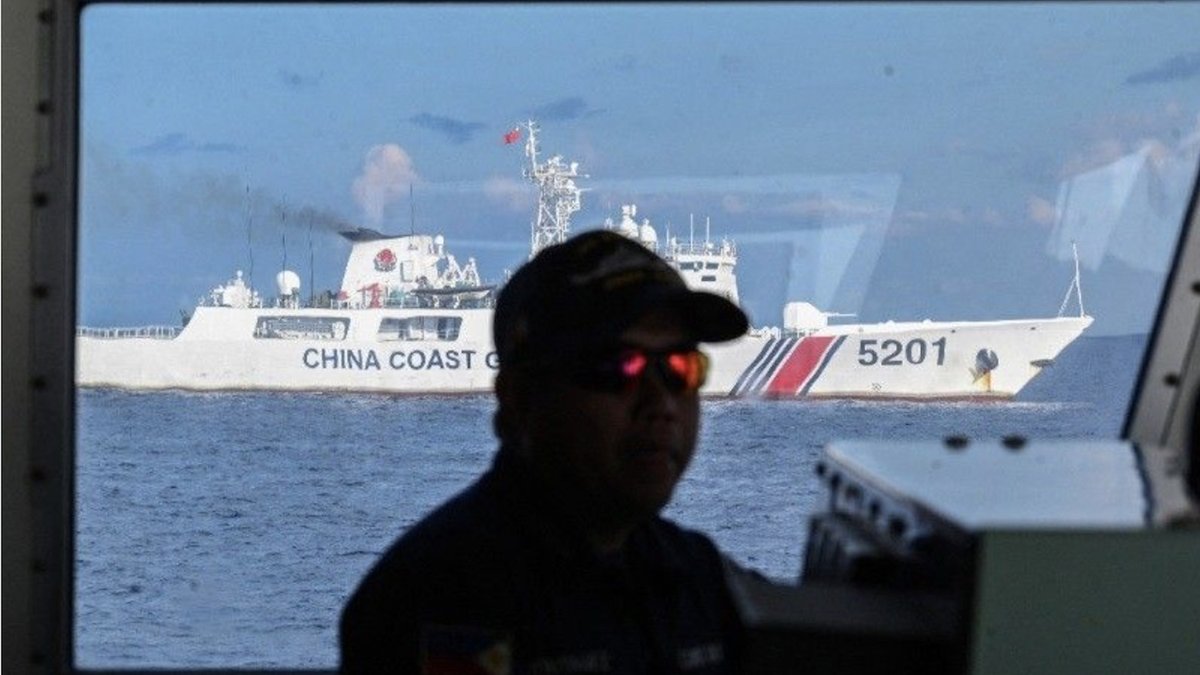
Few contemporary disputes better illustrate the relationship between international law and power than the territorial dispute between the Philippines and China in the South China Sea.
Nearly a decade after the tribunal issued its ruling, the South China Sea remains contested among several states, and maritime confrontations persist. China still rejects the 2016 Award, while the Philippines continues to invoke it in staking its maritime claims. If international law is judged solely by its ability to compel immediate compliance, the ruling, which lacked an enforcement mechanism, has fallen short.
At a time when the relevance of international law is increasingly challenged in a new age of great power politics, the South China Sea offers an important reminder that international law should not be judged solely by its capacity to compel immediate compliance. Its significance also lies in its ability to clarify legal rights, shape state practice and provide a framework through which power is exercised and contested.
The 2016 tribunal was never expected to end strategic rivalry or even forceful coercion in the South China Sea. Rather, it was established to clarify the law and how it applies to the maritime disputes. Measured against that objective, the Award fundamentally changed the legal landscape of the South China Sea.
In particular, the tribunal rejected any legal basis for China’s claim to “historic rights” within its nine-dash line, which encompasses nearly all of the South China Sea.
It held that none of the high-tide features in the Spratly Islands is capable of sustaining human habitation or an economic life of its own within the meaning of UNCLOS Article 121(3) and therefore none generates an entitlement to an exclusive economic zone or continental shelf. It further found that China had violated the Philippines’ sovereign rights within its EEZ and caused serious environmental damage through its activities.
Importantly, the tribunal did not resolve every issue in the dispute. It neither determined sovereignty over maritime features nor delimited maritime boundaries. Instead, it answered a narrower, but arguably more consequential, question: what maritime claims are legally permissible under UNCLOS?
That clarification arguably remains the Award’s greatest achievement. The significance of the Award, therefore, lies less in whether it immediately altered China’s behavior than in how it has shaped the conduct of other states. This is where discussions of the Award are often incomplete.
Too often, its success is evaluated solely through the lens of enforcement. Because China has not complied, some conclude that the tribunal ruling failed. Yet international law does not function through enforcement alone, and its influence is often cumulative rather than immediate.
Unlike domestic legal systems, international law lacks a centralized authority capable of enforcing compliance. Its influence derives from something different: the continued willingness of states to invoke legal rules, incorporate them into policy and measure conduct against shared standards of legitimacy. The familiar choice between law and power is therefore a false one.
International law has never depended on the replacement of power. Its purpose has always been to shape how power is exercised. States continue to build military capabilities because the international system remains decentralized. They strengthen alliances because deterrence still matters. However, states justify their actions with legal arguments because legal legitimacy matters as well.
The South China Sea illustrates this relationship with striking clarity. The Award narrowed the legal space for expansive maritime claims like China’s nine-dash line. It established a legal benchmark for assessing competing claims and provided the Philippines and other states with a durable legal language for explaining and defending their positions. That legal clarity has proven resilient since the ruling was handed down a decade ago.
Perhaps the clearest measure of the Award’s influence is not China’s response, but the Philippines’ own. Across three administrations, the ruling has remained a consistent legal foundation for Philippine maritime strategy.
Initiated under President Benigno Aquino III, retained despite President Rodrigo Duterte’s policy of engagement with Beijing and given renewed prominence under President Ferdinand Marcos Jr., the Award has evolved from a single administration’s policy into a lasting framework for Philippine maritime diplomacy and strategy.
More importantly, it has become embedded through diplomatic protests, official statements and government practice. Rather than just another legal judgment archived in The Hague, it has become a practical reference point through which the Philippines explains its maritime rights and responds to developments at sea.
For the Philippines, the objective is no longer simply to call on Beijing to abide by the ruling, but to preserve the Award as a living legal benchmark that shapes Philippine diplomacy and international expectations.
The Award’s influence has also extended beyond the Philippines. References to the 2016 ruling, UNCLOS and the rules-based maritime order have increasingly appeared in statements made by the G7, the European Union, Australia, Japan, the United States and other partners.
Of course, these statements neither enforce the Award nor resolve the dispute. Instead, they demonstrate how the tribunal’s findings have entered the diplomatic vocabulary through which the South China Sea is increasingly understood.
In doing so, they have reinforced the Philippines’ ability to frame the dispute not merely as a bilateral disagreement with China, but as a question of international law and the preservation of a rules-based maritime order.
To be sure, this should not be mistaken for an argument that law alone explains the Philippines’ strategic position in the contested maritime area. Over the past decade, the Philippines has expanded its defense partnerships, strengthened cooperation with treaty allies and regional partners, modernized its armed forces and enhanced maritime cooperation.
None of these demonstrates the failure of international law. Rather, they reflect the conditions under which international law has always prevailed: law and power perform different functions, and a durable national strategy requires both.
For smaller and middle powers, this distinction is particularly important. Military capability strengthens deterrence, and alliances enhance security. But legal legitimacy provides something that power alone cannot. It enables states to mobilize diplomatic support, reinforce accepted norms and contest coercion within a framework of internationally recognized rules.
The true measure of international law is therefore not whether it supersedes power politics, but whether it continues to shape and restrain the exercise of power. Ten years after the South China Sea Arbitration Award, that may be the ruling’s most enduring upshot.
Ivy Ganadillo is the director of Maritime Programs at the Yokosuka Council on Asia-Pacific Studies (YCAPS), a non-resident fellow at the Indo-Pacific Studies Center and a PhD candidate in international relations at Ewha Womans University in Seoul, South Korea.
Sentinel — Human
This article displays characteristics of high-quality, sophisticated human journalism or academic writing that synthesizes complex legal and geopolitical concepts into a coherent, layered argument about international law and power dynamics.