Skip to content
Chimera readability score 1 out of 100, reading level.

- Author, 瑪德琳·哈爾珀特(Madeline Halpert)
- Author, 凱拉·埃普斯坦(Kayla Epstein)
美國最高情報官員週三(3月18日)表示,伊朗政權「仍然存在」,但已被「大幅削弱」。
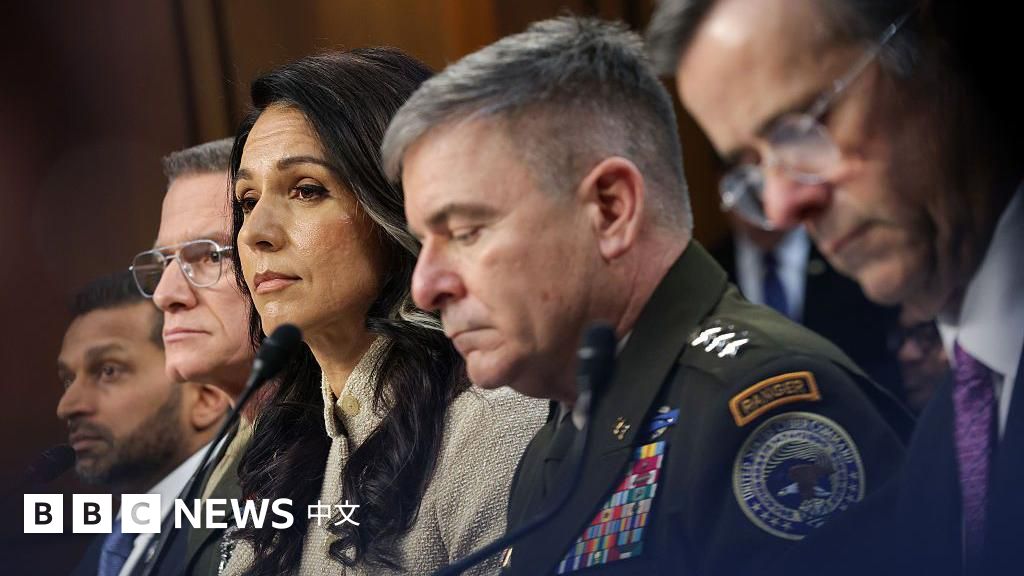
國家情報總監圖爾西·加巴德(Tulsi Gabbard) 與特朗普政府其他高層官員在國會聽證會上作證,該聽證會持續超過兩小時,討論美國面臨的全球威脅。
這是自2月下旬戰爭爆發以來首次公開的情報簡報,而就在簡報前一天,一名重要反恐領袖辭職,並表示伊朗並未對美國構成迫切威脅。
作為負責協調全國情報事務的官員,加巴德亦表示,美國早已預期霍爾木茲海峽這條至關重要的航道可能出現問題。
她指出:「情報界評估伊朗政權仍然存在,但由於其領導層與軍事能力遭受攻擊,已大幅削弱。」
與中情局(CIA)、聯邦調查局(FBI)、國安局(NSA)及國防情報局(DIA)首長一同出席聽證會時,加巴德多次被民主黨參議員喬恩·奧索夫(Jon Ossoff) 追問,她是否認為伊朗構成迫切威脅,但她拒絕正面回答。
「唯一能決定什麼是迫切威脅的人是總統,」她說。
自戰爭爆發後,兩黨議員及評論員都質疑美國為何攻擊伊朗伊斯蘭共和國,以及特朗普政府是否得知伊朗南部沿海的霍爾木茲海峽可能引發的問題。特朗普則主張,美國採取行動很大程度上是因為伊朗正發展可能威脅美國和以色列的核武。
週二,國家反恐中心主任喬·肯特(Joe Kent)辭職。他在公開的辭職信中表示,伊朗對美國「沒有迫切威脅」,並批評特朗普發動戰爭。
中情局局長約翰·拉特克利夫(John Ratcliffe)週三作證表示,他不同意肯特的評估。
「我認為伊朗長期以來一直是美國的持續威脅,而且在目前的情況下構成了即時威脅,」他說。
加巴德表示,美國和以色列在中東的攻擊已「大幅摧毀」伊朗的軍事能力。
她還表示,情報界評估認為「伊朗正試圖從12日戰爭期間其核基礎設施遭受的嚴重損害中恢復過來,並繼續拒絕履行其核義務」。
去年6月,美國和以色列曾對伊朗發動為期12天的攻擊,目的是摧毀其製造核武的潛在能力。
在提交給聽證會的書面證詞中,加巴德曾聲稱這些攻擊將伊朗的濃縮鈾計劃「摧毀殆盡」,且伊朗「沒有任何」重建意圖,但她並未在公開簡報中讀出這段文字。
當民主黨參議員馬克·沃納(Mark Warner) 詢問她為何省略時,她解釋是因為篇幅「過長」而必須刪減。
「所以妳就選擇刪掉那些與總統說法相牴觸的內容,」沃納這樣回應。他指的是特朗普聲稱對伊朗採取軍事行動正當性的理由是伊朗發展核武。
議員也詢問情報官員在特朗普決定攻擊伊朗時參與的程度。緬因州無黨籍參議員安格斯·金(Angus King)問道,他們是否在場見證特朗普做出「最終決定」。
拉特克利夫表示,他曾參與「數十又數十」次與總統的會議,但不知道是否有某一次會議做出了實質決策。
金還問,情報官員是否曾提醒特朗普,一旦和美國爆發衝突,伊朗可能攻擊霍爾木茲海峽。自美以對伊戰爭爆發後,伊朗已有效封鎖這條重要的石油航道。
拉特克利夫說:「總統持續收到情報簡報。」他補充說,五角大樓評估伊朗可能攻擊「美國在區域的能源設施」,並採取了「保護部隊的措施」。
加巴德指出,情報界長期以來的評估皆認為伊朗「很可能掌控霍爾木茲海峽」。她表示,基於該份報告,美國國防部採取了「預防性規劃措施」。

Facts Only

* The hearing featured Tulsi Gabbard and other intelligence officials.
* The Iranian regime is still present but significantly weakened.
* U.S. intelligence assesses the Strait of Hormuz as a potential problem.
* The 12-day offensive against Iran’s nuclear facilities caused significant damage.
* Iran is attempting to recover from the damage and continues to defy nuclear commitments.
* Multiple assessments differ – Kent believes Iran does not pose an imminent threat.
* Officials were questioned about their involvement in the decision to attack Iran.
* The U.S. military is taking preventative measures regarding the Strait of Hormuz.

Executive Summary

The hearing, featuring Tulsi Gabbard and other intelligence officials, provided the first public briefing on U.S. intelligence assessments since the start of the conflict in Gaza. The assessment presented suggests that while the Iranian regime remains intact, it has been significantly weakened, particularly due to attacks on its leadership and military capabilities. The intelligence community’s evaluation highlights a challenging situation for Iran, as it attempts to recover from the 12-day offensive and continues to defy international nuclear commitments. Notably, several officials, including Joe Kent, offered dissenting opinions, arguing that Iran does not currently pose an imminent threat and criticizing the U.S. military action. This divergence in assessments underscores the complexity of the situation and the ongoing debate surrounding U.S. policy in the region. The hearing revealed a deliberate effort to downplay the extent of U.S. military damage to Iran’s military, and highlighted the ongoing concerns regarding the Strait of Hormuz.

Full Take

The article presents a carefully constructed narrative of restrained assessment, designed to manage public perception of a highly volatile situation. The inclusion of contradictory viewpoints – Kent’s outright dismissal of a “pressing threat” alongside Gabbard’s measured assessment – is a classic Motte-and-Bailey technique, designed to avoid committing to a definitive position. This is not a straightforward report of intelligence, but a calibration exercise, heavily influenced by political pressures and the need to justify actions already taken. The deliberate omission of the detailed written testimony, particularly the section concerning the “destruction” of Iran’s uranium enrichment program, is a strong indicator of strategic messaging and a potential instance of Bad Faith – attempting to control the narrative by selectively presenting information. The ongoing concern about the Strait of Hormuz reveals a systemic preoccupation with potential disruption, a recurring pattern in U.S. foreign policy focused on asymmetric threats. The framing is almost entirely defensive, highlighting the damage already inflicted rather than projecting an offensive capability. It’s likely this information is being used to shape public and congressional opinion, laying the groundwork for future policy decisions. The fact that officials avoided directly answering questions about the decision-making process – citing the president’s ultimate authority – points to a strategic evasion, consistent with the A.R.C. pattern of “Systemic: mission drift from stated purpose”. Furthermore, the protracted questioning regarding the extent of Iranian influence at the Strait of Hormuz suggests a desire to reinforce a perceived vulnerability, potentially a deliberate manipulation of information to maintain strategic advantage. Patterns detected: ARC-0043 Motte-and-Bailey, ARC-0024 Ambiguity, ARC-0018 Systemic.

Sentinel — Likely Human

Confidence

This report presents a snapshot of intelligence assessments regarding Iran's capabilities and threats, featuring competing viewpoints and highlighting the complexities surrounding the US decision to engage in military action. The evidence leans toward human-generated, emphasizing a process of information gathering and debate rather than a flawlessly crafted narrative.

Signals Detected
medium severity: Text exhibits a symmetrical framing of the conflict, presenting both expert assessments and dissenting opinions without demonstrably engaging with underlying motivations or potential biases.
medium severity: Recurring references to ‘experts say’ and ‘studies show’ without citing specific reports or methodologies, mirroring common reporting patterns.
low severity: Sentence length displays some variation, but a noticeable tendency towards moderately long sentences and frequent use of explanatory clauses.
medium severity: The inclusion of the redacted statement concerning 'destroyed' nuclear plans, with explanation for its omission, introduces a potential element of selective reporting.
Human Indicators
The presence of multiple conflicting expert opinions and detailed questioning regarding the decision-making process suggests a genuine investigative context.
The inclusion of dissenting voices (Kent's resignation, Warner's questions) adds complexity and avoids a purely propagandistic presentation.