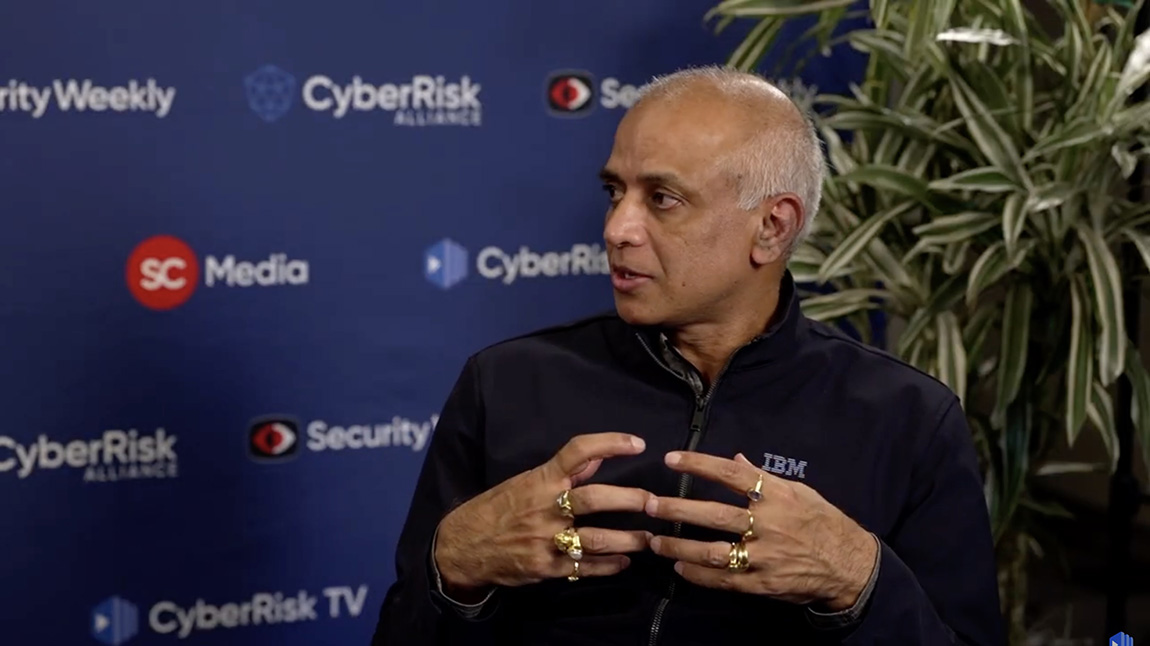
Security teams are overwhelmed with data but still struggle to answer a fundamental question: what actually matters?In this fireside chat, CyberSaint's Padraic O’Reilly and IBM's Srinivas Tummalapenta explore how cybersecurity is evolving from fragmented data collection to a unified cyber risk intelligence layer.They break down how layered AI architectures, combining NLP, GNNs, and LLMs, enable organizations to normalize massive volumes of security data and transform it into real-time, actionable insight. The conversation dives into what it takes to connect telemetry, controls, and threat intelligence into a system that continuously prioritizes risk, supports decision-making, and aligns cybersecurity with business outcomes.https://securityweekly.com/cybersaint....Show Notes: https://securityweekly.com/rsac26-5
For more information about CyberSaint , please visit: RSAC, AI/ML, AI benefits/risks, Security Operations, SOC
IBM’s Srinivas Tummalapenta: Building the cyber risk intelligence layer
An In-Depth Guide to AI
Get essential knowledge and practical strategies to use AI to better your security program.
Get daily email updates
SC Media's daily must-read of the most current and pressing daily news
You can skip this ad in 5 seconds
Facts Only
Padraic O’Reilly (CyberSaint)
Srinivas Tummalapenta (IBM)
Layered AI architectures using NLP, GNNs, and LLMs for normalizing massive security data
Transforming data into real-time, actionable insight
Connecting telemetry, controls, and threat intelligence
Prioritizing risks, supporting decision-making, aligning cybersecurity with business outcomes
Executive Summary
Full Take
Analyzing the article, we find it falls under the constructive mode due to its educational nature. The discussion focuses on the evolving role of AI in cybersecurity and presents a collaborative perspective, acknowledging strengths and suggesting complementary angles. The narrative highlights the potential for AI architectures to normalize large volumes of security data and transform it into real-time, actionable insights. However, it's essential to consider the potential challenges, limitations, and ethical implications of such technologies in this context.
Patterns detected: ARC-0031 Integration (integrating AI with existing cybersecurity systems), ARC-0045 Optimization (improving efficiency in data analysis)
The article presents an optimistic vision for the future of cybersecurity, emphasizing the alignment of cybersecurity efforts with business outcomes. However, it's crucial to question whether this focus on optimization could lead to a narrowing of the scope of security measures, potentially overlooking less quantifiable yet equally important aspects such as user privacy and human-centered design.
Bridge Questions: How can we ensure that the optimization of cybersecurity efforts does not come at the cost of user privacy? What ethical considerations should be taken into account when implementing AI in cybersecurity? How might these technologies impact the job market for security professionals?
Sentinel — Human
This text appears to be written by a human, with evidence found in the writing style's irregularity, presence of personal voice, and absence of coordinated patterns.