China has launched a pair of investigations into U.S. trade practices in response to similar probes from the Trump administration, according to a spokesperson for China’s Ministry of Commerce.
The first investigation will examine whether U.S. measures are disrupting global supply chains, while the second will look into U.S. practices that may be hindering the trade of green products, although the ministry did not specifically define this category.
The Ministry of Commerce said preliminary evidence indicated that the U.S. has installed practices that specifically harm Chinese industry. The ministry said these measures are prohibiting China-made goods, including green products, from entering the U.S., and also slowing down the deployment of new energy products and restricting cooperation on green technologies.
Both investigations will be carried out over the next six months, with the ministry utilizing questionnaires, hearings and on-site investigations to assess the impact of U.S. trade practices.
The spokesperson said the probes were a response to a pair of Section 301 trade investigations the U.S. launched into potential manufacturing overcapacity and forced labor regulations. China was one of the countries targeted in each probe.
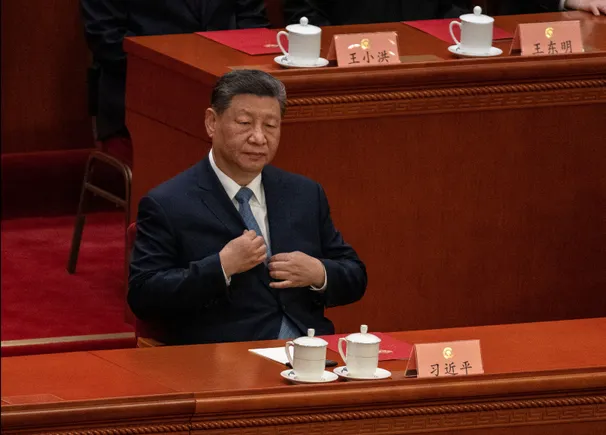
China’s probes come ahead of a planned meeting between China President Xi Jinping and U.S. President Donald Trump, scheduled for May. White House Press Secretary Karoline Leavitt confirmed Thursday the meetings will take place May 14 and May 15 in Beijing.
Xi and Trump met in October to iron out the details of a trade war truce. The two had countries engaged in a back-and-forth trade spat for much of last year that led to escalating tariffs from both sides. However, the terms agreed to then were largely based on tariffs Trump installed using the International Emergency Economic Powers Act. Those levies have since been lifted following a Supreme Court ruling that invalidated them.
“In a move exuding growing confidence, China is in effect telling the US that if you return to your IEEPA level tariffs (which we accepted in our October truce) we will impose more tariffs to match that increase,” Wendy Cutler, SVP of the Asia Society Policy Institute, said in a LinkedIn post. “And to back off this move, expect the emboldened Chinese negotiators to make more asks when the leaders meet in May.”
Facts Only
China’s Ministry of Commerce has launched two trade investigations into U.S. practices.
The first investigation examines U.S. measures disrupting global supply chains.
The second investigates U.S. practices hindering trade in green products.
The ministry claims preliminary evidence shows U.S. measures harm Chinese industry.
U.S. actions are alleged to block China-made goods, including green products, from entering the U.S.
The investigations will span six months, using questionnaires, hearings, and on-site visits.
The probes are a response to U.S. Section 301 investigations into Chinese manufacturing overcapacity and forced labor.
A meeting between Chinese President Xi Jinping and U.S. President Donald Trump is scheduled for May 14-15 in Beijing.
The October 2023 meeting between Xi and Trump resulted in a trade war truce.
Tariffs imposed under the IEEPA were later invalidated by a U.S. Supreme Court ruling.
Wendy Cutler of the Asia Society Policy Institute suggests China may impose additional tariffs if U.S. measures are reinstated.
Executive Summary
China has launched two trade investigations targeting U.S. practices, citing concerns over supply chain disruptions and barriers to green product trade. The probes, announced by China’s Ministry of Commerce, will examine whether U.S. measures unfairly restrict Chinese goods, including new energy products and green technologies. The investigations, set to last six months, will involve questionnaires, hearings, and on-site assessments. This move follows U.S. Section 301 probes into Chinese manufacturing overcapacity and forced labor regulations, signaling escalating trade tensions. The announcement precedes a planned meeting between Chinese President Xi Jinping and U.S. President Donald Trump in Beijing on May 14-15, where trade issues are expected to be discussed. The backdrop includes a previous trade war truce in October, which temporarily eased tariffs imposed under the International Emergency Economic Powers Act (IEEPA). Analysts suggest China’s investigations may be a negotiating tactic ahead of the summit, with potential for further tariff escalations if U.S. measures are reinstated.
The situation reflects ongoing friction in U.S.-China trade relations, with both sides using investigative tools to pressure the other. While China frames its actions as defensive, the U.S. has historically used similar mechanisms to address perceived unfair trade practices. The outcome of the May meeting could determine whether this escalates into broader trade conflicts or leads to renewed negotiations.
Full Take
The strongest version of this narrative frames China’s investigations as a calculated response to U.S. trade pressure, leveraging procedural tools to signal resolve ahead of high-stakes negotiations. The move mirrors U.S. tactics, using Section 301-style probes to assert grievances while avoiding immediate escalation. The timing—just before the Xi-Trump summit—suggests a bargaining chip, with China positioning itself as both aggrieved and assertive. The focus on "green products" is particularly notable, as it taps into global climate narratives while framing U.S. policies as protectionist.
Pattern scan: The narrative employs **ARC-0024 Ambiguity** by leaving "green products" undefined, allowing flexible interpretation. There’s also a hint of **ARC-0043 Motte-and-Bailey**—China’s broad claims of harm to its industry could later narrow to specific, harder-to-dispute cases. The framing of U.S. actions as "disrupting supply chains" risks **ARC-0012 Emotional Exploitation** by invoking economic instability fears, though the article itself avoids overt sensationalism.
Root cause: The paradigm here is tit-for-tat trade warfare, where investigative tools become weapons in a broader struggle for economic dominance. The unstated assumption is that trade disputes are zero-sum, with each side seeking leverage rather than systemic solutions. This echoes Cold War-era brinkmanship, where procedural moves (e.g., probes, tariffs) substitute for direct conflict.
Implications: Human agency is constrained by state-level maneuvering, with businesses and consumers bearing the costs of uncertainty. If negotiations fail, second-order effects could include supply chain fragmentation, delayed green tech adoption, and deeper U.S.-China decoupling. The beneficiaries are likely domestic industries shielded by tariffs, while global trade stability suffers.
Bridge questions: How might China’s definition of "green products" differ from U.S. or international standards? What evidence would falsify claims of U.S. supply chain disruption? Are there alternative frameworks for resolving trade disputes beyond retaliatory probes?
Counterstrike scan: A coordinated influence campaign would amplify the "U.S. as aggressor" narrative, omitting China’s own trade barriers or state subsidies. The actual content, however, presents both sides’ actions, avoiding one-sided framing. No structural alignment with a hypothetical attack playbook is detected.
Sentinel — Human
This analysis suggests the article is likely to be human-written. The text demonstrates a human-like writing style with some variance in sentence length, a clear narrative, and minimal formulaic structure.