Buenos Aires, Argentina – The Supreme Court of the United States heard arguments on Wednesday regarding the Trump administration’s attempts to end Haitians’ Temporary Protected Status (TPS), which defends Haitian migrants from deportations.
The Supreme Court’s ruling, which is likely to be made in the coming months, could affect around 350,000 Haitians who are currently living in the United States.
The Department of Homeland Security, then headed by Kristi Noem, justified February’s decision saying that Noem “determined that there are no extraordinary or temporary conditions in Haiti that prevent Haitian nationals […] from returning to safety,” and that “it is contrary to the national interests of the United States to permit Haitian nationals […] to remain.”
Immigrant rights advocates, however, paint a different picture.
Daniel Berlin, policy director for protection pathways at the International Rescue Committee (IRC), told Latin America Reports that “Haiti continues to face a compounding crisis marked by food insecurity, displacement, deadly disease outbreaks, and surging gang violence, making it dangerous for anyone forced to return.”
“There are groups of people at particularly high risk, notably women and children as gangs increasingly use sexual violence to strike fear in communities and forced child recruitment has risen 200%,” he added.
Haitians were first granted TPS in 2010 following a devastating earthquake and have seen their protections extended multiple times since, including after the assassination of Jovenel Moise, the Caribbean country’s last elected president.
Since Moise’s assassination in 2021, Haiti has suffered from institutional collapse and rife gang violence.
More than 8,100 killings were documented nationwide between January and November last year, whilst up to half of the members making up these deadly armed groups are children, according to the UN.
As a result, the IRC reports that 73% of households feel unsafe where they sleep and 60% of households do not have their children in school due to fears of kidnapping, recruitment, and crossfire.
Berlin warns that “if TPS is ended, the administration could begin the legal process to remove people without other status immediately.”
The reality on the ground has led the plaintiffs to argue that the Trump administration did not follow due process in evaluating the conditions in Haiti.
The New York Times reported earlier this week that government officials had distorted evidence in order to justify removing Haitians’ TPS. Internal emails show that data that did not support the administration’s argument was removed from research reports.
Moreover, the lawyers also referenced President Trump’s frequent usage of inflammatory language against Haitian people to contend that the administration was racially motivated in its decision, which would violate the constitutional prohibitions of discriminatory government actions.
Trump has previously described Haitian immigrants as undesirable because they come from a “filthy, dirty, disgusting” country and claimed that they had been eating their neighbors’ pets in Springfield, Ohio.
Lower court judges who dealt with the case found that Noem’s decisions were in fact predetermined and not informed by meaningful analysis, thus postponing the terminations of Haitians’ TPS.
The government’s lawyers asked the conservative-dominated Supreme Court to intervene as a result, arguing that the courts have no right to review Noem’s decisionmaking.
In the same session, the Supreme Court also heard arguments regarding the TPS of 6,100 Syrians in the US.
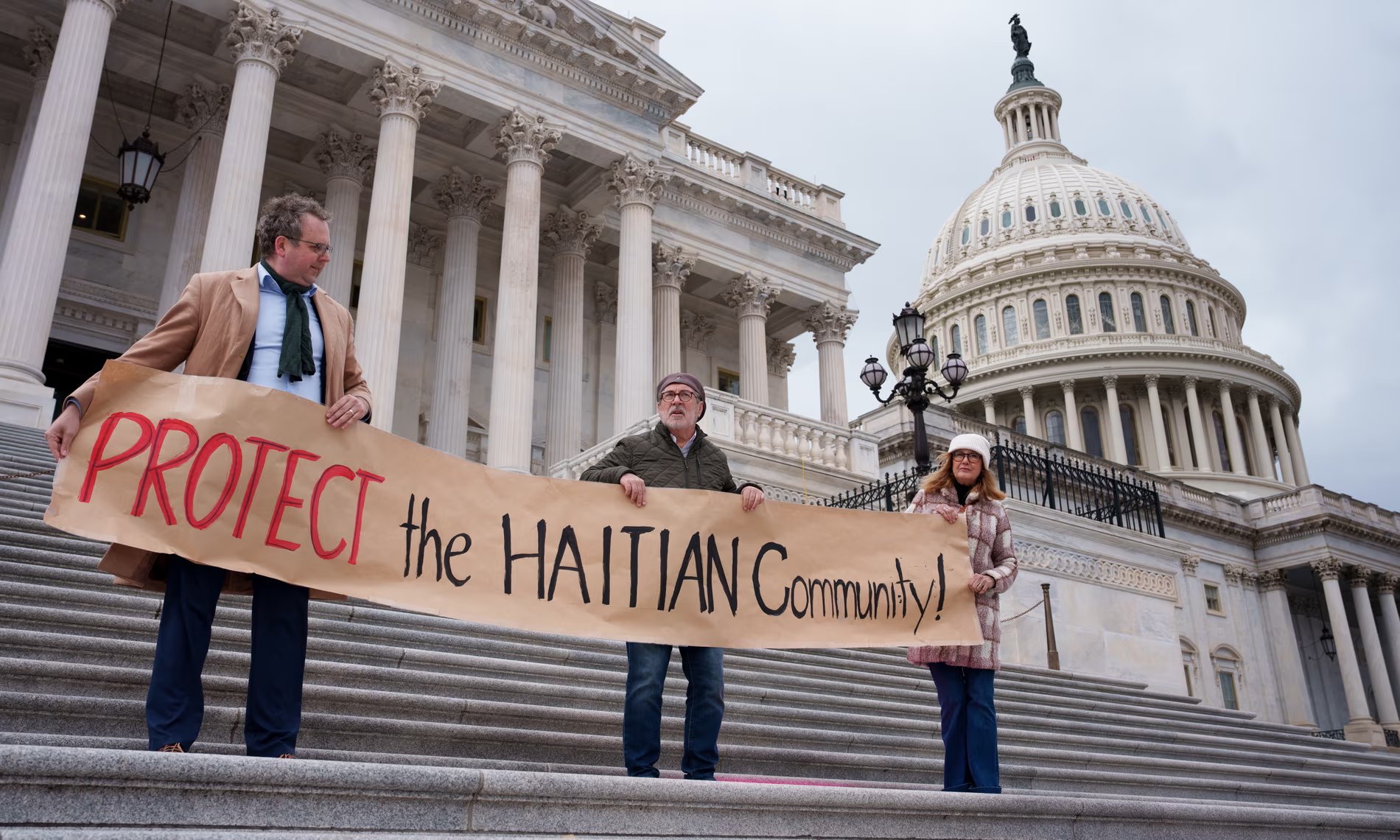
Featured image description: Protest at the US Capitol against the removal of Haitian migrants’ Temporary Protected Status, March 6th 2026.
Featured image credit: @MarioNawfal via X.
Facts Only
* The Supreme Court heard arguments on Wednesday regarding the Trump administration’s attempts to end Haitian Temporary Protected Status (TPS).
* The ruling could affect approximately 350,000 Haitians currently living in the United States.
* The Department of Homeland Security, headed by Kristi Noem, justified the decision by arguing that there were no extraordinary conditions in Haiti preventing Haitian nationals from returning to safety.
* Advocates report that Haiti faces a crisis marked by food insecurity, displacement, deadly disease outbreaks, and surging gang violence.
* Since the assassination of President Jovenel Moise in 2021, Haiti has suffered from institutional collapse and rife gang violence.
* Between January and November of the previous year, more than 8,100 killings were documented nationwide in Haiti.
* Up to half of members of deadly armed groups in Haiti are children, according to the UN.
* IRC reports that 73% of households feel unsafe where they sleep, and 60% do not have their children in school due to fears of kidnapping, recruitment, and crossfire.
* Government officials reportedly distorted evidence in order to justify removing Haitians’ TPS.
* Lawyers referenced President Trump’s use of inflammatory language against Haitian people in their legal arguments.
Executive Summary
Full Take
This narrative utilizes a framework of national security and moral panic to frame humanitarian suffering as a matter of political expediency. The core tension lies between the legal and political claims of national interest and the documented realities of extreme violence and institutional collapse on the ground in Haiti. The use of statistics regarding gang violence, child recruitment, and household insecurity (73% unsafe, 60% children out of school) serves as a powerful emotional appeal, shifting the focus from the root causes of the crisis (instability, violence) to the immediate, urgent need for removal. This pattern employs emotional exploitation to bypass critical analysis of the structural and historical context.
The manipulation involves linking a complex humanitarian emergency directly to the perceived character or threat posed by the affected population, as seen in the references to President Trump’s inflammatory language. This tactic deflects scrutiny from the administration's decision-making process and the legal claims regarding due process. The authority game is evident in the government’s attempt to have the Supreme Court rule on executive decision-making rather than factual conditions. The pattern is the systematic distortion of evidence and the weaponization of fear to achieve a desired political outcome, leveraging the established anxieties surrounding migration and instability.
The implication is that human dignity and the safety of vulnerable populations are secondary to geopolitical or administrative convenience. This forces an examination of who benefits when instability is framed as an obstacle to be eliminated rather than a crisis requiring comprehensive international support.
What assumptions are driving this framing? Does the focus on "national interests" sufficiently account for the long-term consequences of statelessness and the perpetuation of cycles of violence? What are the missing perspectives regarding accountability for the systemic failures that led to the conditions currently facing Haitians?