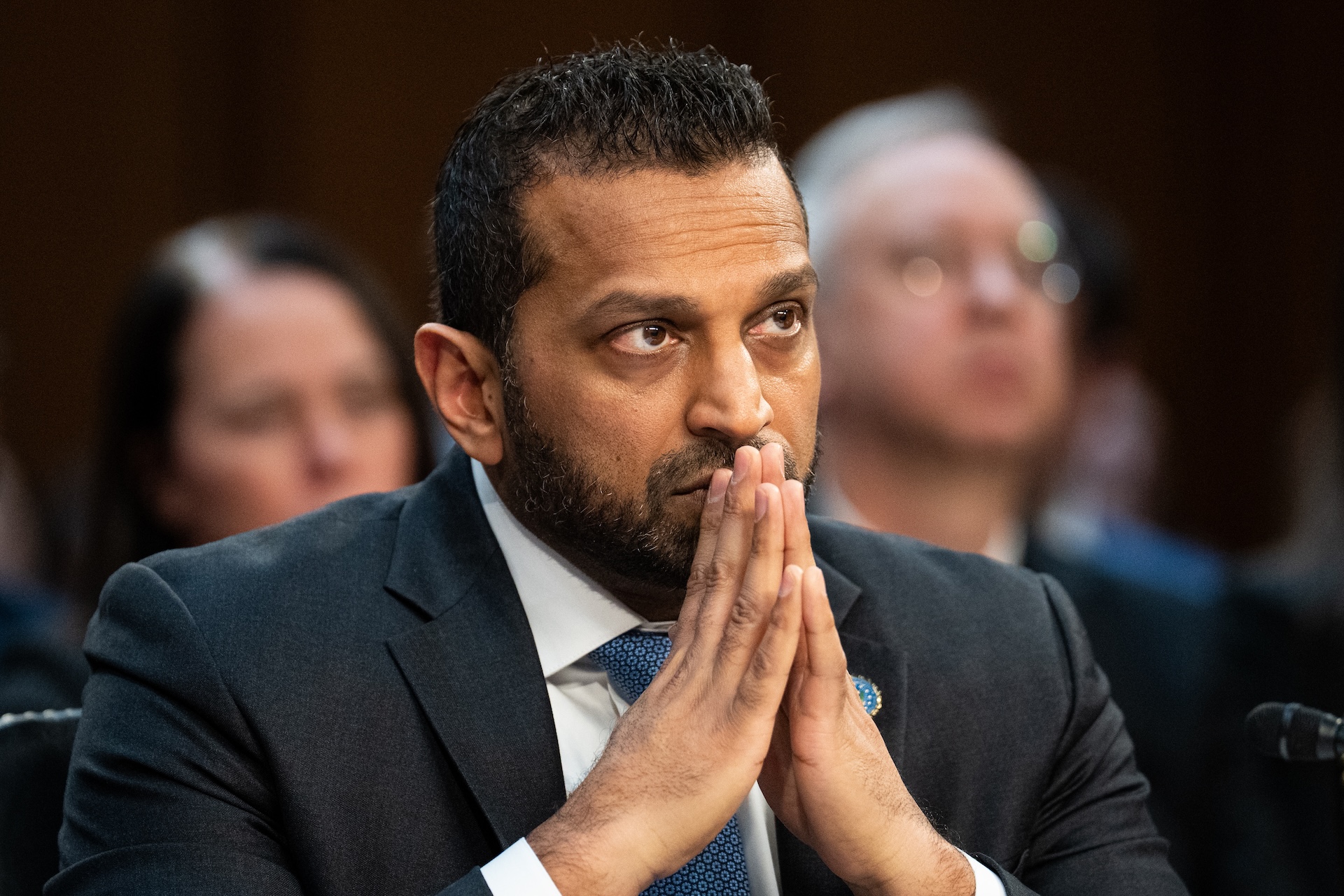
Iranian hackers claimed Friday to have compromised the personal data of FBI Director Kash Patel, and the bureau confirmed that it knew of the targeting of Patel’s personal email.
The government-connected hacking group, Handala, previously claimed credit for hacking medical device maker Stryker, a boast that threat researchers considered credible.
“All personal and confidential email of Kash Patel, including emails, conversations, documents, and even classified files, is now available for public download,” Handala — also known as Handala Hack — said.
The group said it did so in response to the FBI seizing its domains and the U.S. government offering a $10 million reward for information on members of the group.
The FBI noted that Handala frequently targets government officials, and challenged elements of Handala’s claims, such as that it had brought the FBI’s systems “to its knees,” rather than Patel’s own email.
“The FBI is aware of malicious actors targeting Director Patel’s personal email information, and we have taken all necessary steps to mitigate potential risks associated with this activity,” the FBI said in response to questions from CyberScoop. “The information in question is historical in nature and involves no government information.”
The activist group Distributed Denial of Secrets published what it said was Patel’s email cache.
The FBI pointed to the State Department’s reward program seeking information on members of Handala.
“Consistent with President Trump’s Cyber Strategy for America, the FBI will continue to pursue the actors responsible, support victims, and share actionable intelligence in defense of networks,” it said. “We encourage anyone who experiences a cyber breach, or has information related to malicious cyber activity, to contact their local FBI field office.”
Facts Only
Actors: Iranian hackers (Handala), FBI Director Kash Patel, Distributed Denial of Secrets
Actions: Claiming to compromise personal data, targeting personal email, seizing domains, offering reward for information, publishing email cache
Events: Handala's claim, FBI's response, publication of email cache
When: Not explicitly stated in the article, but likely recent due to the timeliness of the report
Where: Not explicitly stated in the article, but presumed to be online given the digital nature of the hack and publication
Executive Summary
Full Take
Analyzing this situation, it's important to acknowledge the ongoing tension between Iran and the United States, particularly regarding cybersecurity. Handala's claim to have compromised FBI Director Kash Patel's personal data can be seen as a form of retaliation against the FBI seizing their domains and the US government offering a $10 million reward for information on members of the group. This incident highlights the vulnerability of high-profile individuals to cyber attacks, particularly in times of geopolitical tension.
Patterns detected: ARC-0043 Motte-and-Bailey (Handala claims to have compromised classified files while the FBI asserts that the information is historical and involves no government data), ARC-0024 Ambiguity (The article does not provide clear evidence of Handala actually accessing or releasing classified files).
Questions for further inquiry include: What motivations underlie Handala's actions? To what extent can this incident be seen as an escalation in the ongoing geopolitical tensions between Iran and the United States? What are the implications for cybersecurity going forward, particularly regarding the protection of high-profile individuals' personal data?
Sentinel — Human
This text appears to be likely human-written, displaying idiosyncrasies in its focus on the hacking group Handala, while also reporting actions and responses by the FBI.