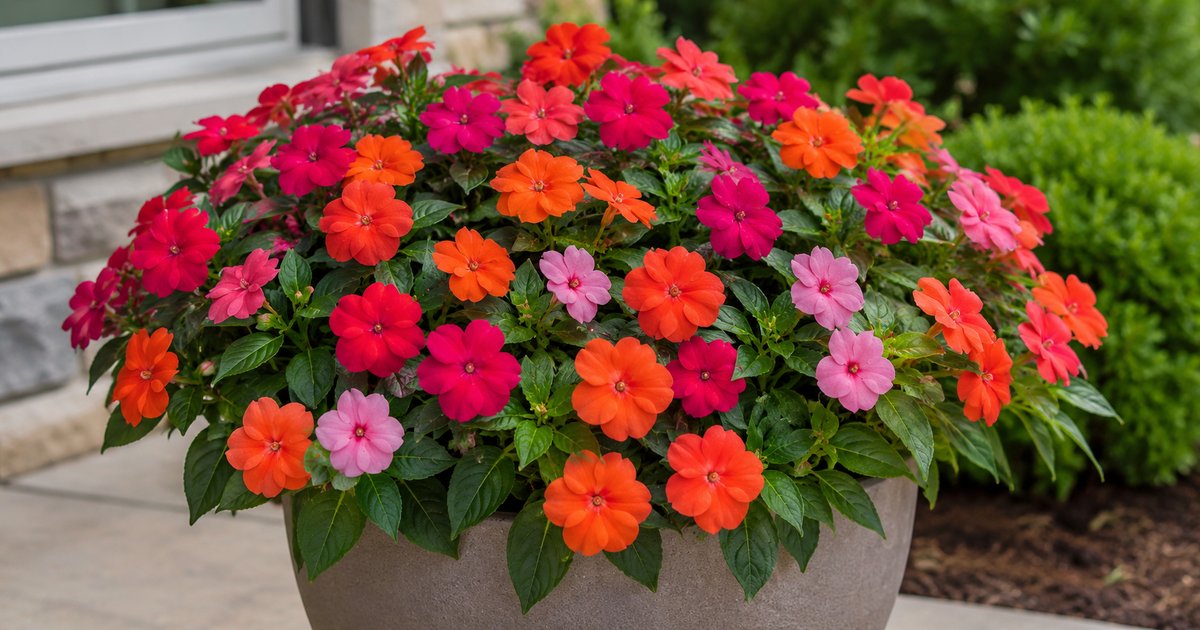
For years, gardeners faced a choice: the lush color of impatiens in the shade or the heat-tolerance of other species in the sun. Enter SunPatiens® Compact, the revolutionary hybrid that has changed the game for Northern Colorado landscapes. These robust plants offer the classic, vivid "carpet of color" look while standing up to the intense, high-altitude UV rays that define a Fort Collins summer.
Why SunPatiens® Compact is a Front Range Essential
SunPatiens® are specifically engineered to thrive where traditional impatiens might falter. In our local climate, they are prized for:
- Three-Season Versatility: They flourish in full sun, partial shade, and full shade, making them a "fail-safe" option for yards with varying light levels.
- Heat-Resilient Performance: As a premier heat-resilient variety, they maintain their structural integrity and bloom density even during the hottest July afternoons.
- Exceptional Durability: Their thick, sturdy stems and petals are built to withstand the drying winds and occasional heavy afternoon downpours common in the Front Range.
- Rapid Establishment: These plants grow quickly to fill garden beds, providing a dense canopy of foliage that helps suppress weeds and retain soil moisture.
Designing with SunPatiens®
To achieve a professional "Better Homes" aesthetic, utilize the "Compact" series for its tidy, mounded habit. They generally stay under 24 inches tall, making them ideal for:
- Uniform Garden Borders: Create a continuous ribbon of saturated color along a front walkway or around the base of a mature tree.
- High-Impact Containers: Use them as the primary "filler" in large patio pots for a lush, overflowing look that lasts until the first frost.
- Mass Plantings: Their consistent growth habit makes them perfect for large-scale color blocks that can be seen from the street, adding significant curb appeal to your home.
Perfect Pairings for the Fort Collins Landscape
Because SunPatiens® provide such a solid block of color, they pair beautifully with plants that offer architectural contrast or airy textures. Consider these local companions:
- Agastache (Hyssop): The spiky verticality and aromatic foliage of Agastache provide a stunning backdrop to the rounded mounds of SunPatiens®.
- Angelonia: Known as the "Summer Snapdragon," Angelonia offers elegant towers of flowers that add height and sophistication to a mixed SunPatiens® bed.
- Gomphrena: The whimsical, button-like globes of Gomphrena add a playful, contrasting shape that breaks up the broad petals of the SunPatiens®.
- Ornamental Grasses: The fine, swaying blades of blue fescue or fountain grass provide a soft, textural "frame" for the bold brilliance of the blooms.
Pro-Tips for Local Success
While SunPatiens® are incredibly tough, they are "thirsty" plants. In the dry air of Fort Collins, they perform best with consistent moisture—especially when planted in full sun. Using a drip irrigation system or mulching around the base of the plants can help maintain the hydration they need to stay vibrant all season long.
Are you looking to fill a specific sunny border or refresh your patio containers with these unstoppable bloomers?
Facts Only
* SunPatiens® Compact is a hybrid plant.
* The plant is marketed for use in Northern Colorado landscapes.
* The plants are described as heat-resilient.
* The plants are adapted for three-season versatility, thriving in full sun, partial shade, and full shade.
* The plants are built to withstand drying winds and heavy afternoon downpours.
* The plants demonstrate rapid establishment, growing quickly to fill garden beds.
* The "Compact" series generally stays under 24 inches tall.
* The plants are recommended for use in uniform garden borders, high-impact containers, and mass plantings.
* Suggested pairings include Agastache, Angelonia, Gomphrena, and ornamental grasses.
* Plants require consistent moisture to perform best.
Executive Summary
Full Take
The narrative establishes the SunPatiens® Compact as a definitive, necessary solution to regional climatic and horticultural challenges in the Front Range. This framing leverages a classic conflict (shade vs. sun) and positions the new variety as an inevitable, superior answer. The focus on "Front Range Essential" creates an authority derived from local context and climate necessity, implicitly suggesting that this specific solution is the only viable one for the region. The presentation utilizes high-impact, aesthetic language ("carpet of color," "high-impact containers") to link botanical performance directly to consumer desire for "Better Homes" aesthetics, blurring the line between agronomy and lifestyle marketing.
The pattern of connecting botanical resilience directly to specific consumer outcomes—curb appeal, curb appeal, and property value—is a form of emotional exploitation. The subsequent advice on pairing plants (Agastache, Angelonia) functions less as pure ecological recommendation and more as a curated, pre-approved visual algorithm designed to maximize perceived beauty. The advice regarding water management (drip irrigation, mulching) is presented as a necessary corrective to a natural weakness ("thirsty plants"), which subtly shifts the responsibility for plant health onto the user and their method of care, rather than the inherent design or environment. This structure operates by substituting objective botanical data with applied, aspirational utility, demanding that the reader adopt the plant’s persona as an essential, resilient element of their landscape.
Sentinel — Uncertain
The article is a highly cohesive, well-structured piece that reads like expertly crafted marketing content, showing strong signs of AI synthesis rather than organic journalistic writing.