Skip to content
Chimera readability score 64 out of 100, Academic reading level.

The Trump administration on Tuesday revoked the temporary waivers it issued as part of the memorandum of understanding (MOU) with Iran that allowed Tehran to sell oil, the Department of Treasury announced.
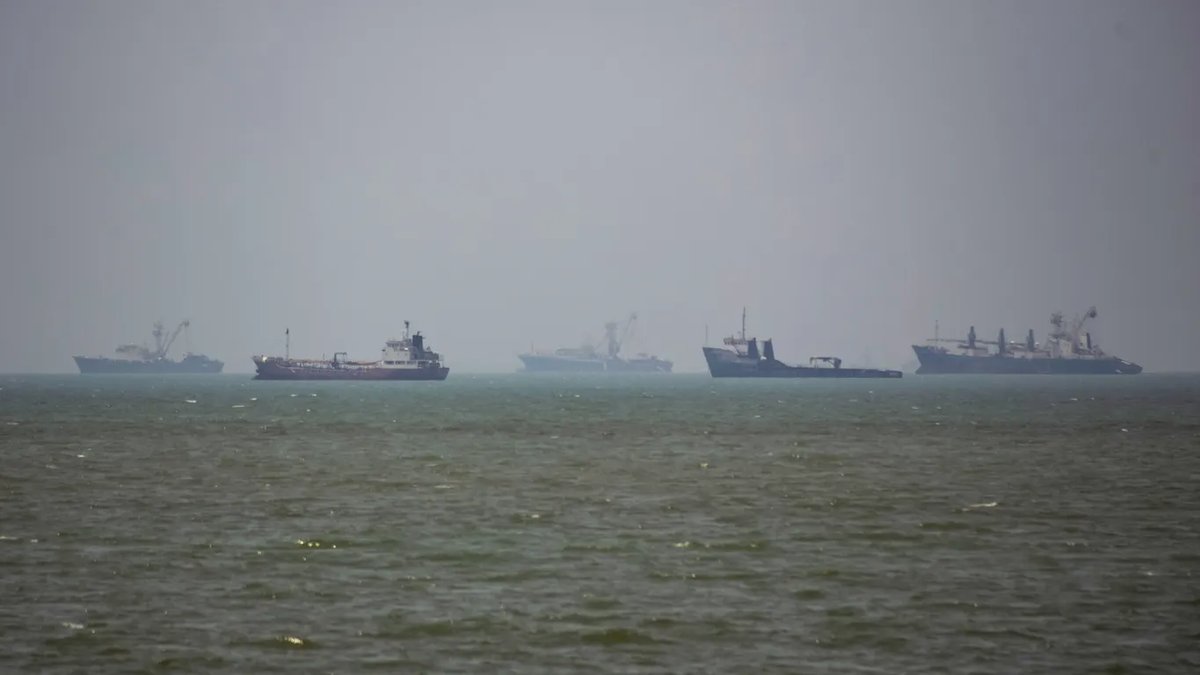
Why it matters: The revocation of the waivers that was issued less than three weeks ago is in response to the renewed Iranian attacks against ships in the Strait of Hormuz over the past 24 hours.
The latest: An Iranian Foreign Ministry spokesperson said commercial vessels using uncoordinated routes with Iran or "tampering" with ships' tracking faced risks and disrupted Tehran's efforts to facilitate a safe passage in the Strait of Hormuz.
Driving the news: A U.S. official said the Office of Foreign Assets Control was revoking the general license that authorized the sale of Iranian oil because as "President Trump and the administration have repeatedly affirmed, the MOU in effect with Iran is entirely performance-based.
The official added: "Iran will only reap benefits if they exhibit good behavior. Iran's actions in the Strait were wholly unacceptable to the United States and will be met with consequences. Our negotiators continue to work in good faith towards a final deal."
What they're saying: Tehran's Foreign Ministry said Iran was "diligently fulfilling its commitments" per the MOU in regards to "necessary measures" to manage the strait.
He said countries in the region and shipping companies should "refrain from any actions that contradict provisions of the MOU."
This is a breaking news story. Check back for updates.

Facts Only

* The Trump administration revoked temporary waivers issued under the memorandum of understanding (MOU) with Iran concerning oil sales.
* The revocation was announced by the Department of Treasury.
* The action followed renewed Iranian attacks against ships in the Strait of Hormuz over the last 24 hours.
* An Iranian Foreign Ministry spokesperson stated that commercial vessels using uncoordinated routes or tampering with tracking faced risks and disrupted passage facilitation.
* A U.S. official indicated the Office of Foreign Assets Control revoked the license for Iranian oil sales because the MOU is performance-based.
* The official asserted Iran would only reap benefits if it exhibited good behavior, stating its actions in the Strait were unacceptable and would result in consequences.
* Iran's Foreign Ministry claimed it was diligently fulfilling its commitments regarding necessary measures to manage the strait under the MOU.
* Iran requested that regional countries and shipping companies refrain from actions contradicting the provisions of the MOU.

Executive Summary

The Trump administration revoked temporary waivers related to a memorandum of understanding (MOU) with Iran, which previously allowed Tehran to sell oil, as announced by the Department of Treasury. This action followed renewed Iranian attacks against ships in the Strait of Hormuz over the preceding 24 hours. An Iranian Foreign Ministry spokesperson indicated that commercial vessels using uncoordinated routes or "tampering" with tracking efforts posed risks and disrupted Iran's ability to facilitate safe passage through the strait. A U.S. official stated that the Office of Foreign Assets Control revoked the general license authorizing the sale of Iranian oil because the MOU is performance-based, contingent on Iran exhibiting good behavior. The administration maintained that Iran's actions in the Strait were unacceptable and would face consequences while negotiators pursue a final deal. In response, Iran asserted that it was diligently fulfilling its commitments under the MOU regarding necessary measures for managing the strait and requested that regional countries and shipping companies refrain from actions contradicting the MOU provisions.

Full Take

The dynamic presented reveals a tension between diplomatic agreements, operational realities, and asserted behavioral compliance in high-stakes geopolitical areas. The sequence—an agreement followed by a punitive action based on immediate security events—highlights how real-time conflict can immediately override structured negotiation frameworks. The core pattern involves using performance metrics, as emphasized by the U.S. official, to justify unilateral shifts in trade privileges, suggesting that diplomatic agreements are conditional upon observable conduct rather than static legal adherence. Furthermore, the differing narratives regarding fulfillment of commitments—Iran claiming diligence versus the administration asserting unacceptable behavior—demonstrates a fundamental divergence in defining acceptable security protocols for navigating shared maritime spaces. This structure implies that sovereignty over operational freedom (Strait of Hormuz passage) is being leveraged as the primary mechanism to enforce compliance within an existing agreement. What remains unclear is how future performance metrics will be defined, and whether this episode establishes a precedent where immediate security actions supersede established legal frameworks in multilateral understandings.

Sentinel — Human

Confidence

The text reads like a standard, fact-focused news bulletin reporting on an immediate diplomatic event with explicit sourcing.

Signals Detected
low severity: Sentence length variance is erratic; abrupt shifts between formal announcements and direct quotes.
low severity: The narrative flows logically from an action (revocation) to a justification (attacks) to the stated rationale (MOU terms), showing a clear argumentative trajectory.
low severity: Attribution is specific (Department of Treasury, Iranian Foreign Ministry spokesperson, U.S. official) indicating sourcing beyond vague consensus.
low severity: The claims are directly tied to specific governmental actions and quotes, making large-scale confabulation less likely.
Human Indicators
The inclusion of direct quotes attributed to multiple high-level bodies suggests direct reporting from official statements rather than synthesized commentary.
The structure follows a typical breaking news flow (What happened -> Why it matters -> Latest developments -> Official response).