Bart van der Heijden
redacteur Economie
Bart van der Heijden
redacteur Economie
Nederland importeerde in de eerste drie maanden van dit jaar nog altijd 12
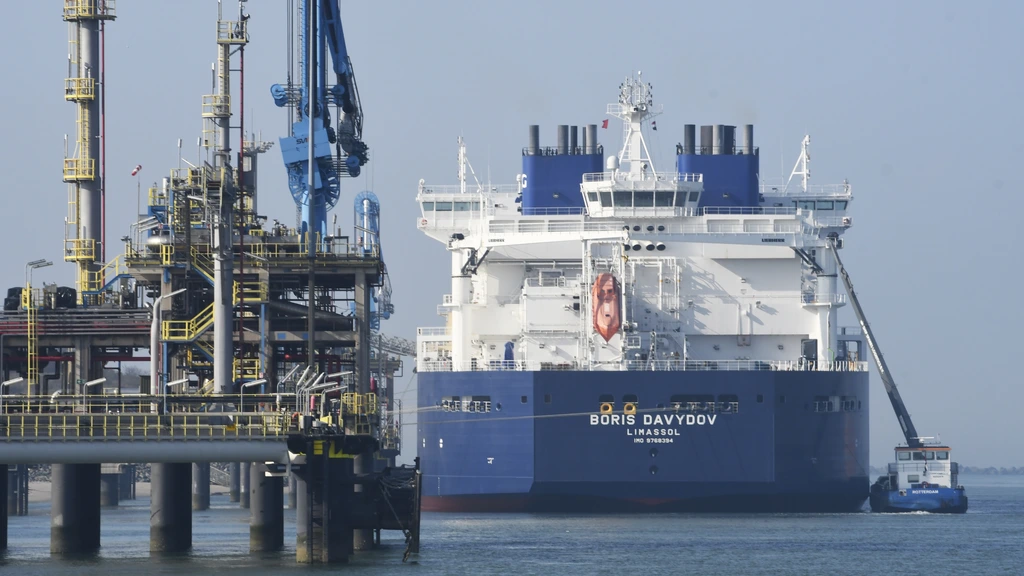
procent van het vloeibare gas (lng) uit Rusland. Dat blijkt uit cijfers van onderzoeksinstituut Institute for Energy Economics and Financial Analysis (IEEFA). Het cijfer is opmerkelijk omdat Nederland en de Europese Unie juist proberen de afhankelijkheid van Russisch gas zo snel mogelijk af te bouwen sinds de inval in Oekraïne.
"Dat is echt veel meer dan ik had verwacht", zegt energiedeskundige Jilles van den Beukel van het Haags Centrum voor Strategische Studies.
Hoeveel van het Russische lng daadwerkelijk in Nederland wordt gebruikt is lastig vast te stellen, omdat via de haven van Rotterdam ook veel vloeibaar gas wordt doorgevoerd. In de eerste drie maanden van dit jaar kwamen daar volgens een woordvoerder 44 lng-tankers uit de Verenigde Staten aan en zes uit Rusland. Mogelijk wordt een deel van dat Russische lng vervolgens verder vervoerd binnen Europa.
Nederland behoort tot de vijf EU-landen die afgelopen kwartaal nog Russisch lng importeerden. De andere zijn Spanje (26 procent), Frankrijk (35 procent) België (40 procent) en Portugal (11 procent).
De Europese Unie heeft besloten dat het vanaf begin 2027 helemaal verboden wordt om vloeibaar gas vanuit Rusland te importeren. In het najaar van volgend jaar gaat dat ook gelden voor de invoer van gas via pijpleidingen. Het is nu al niet meer toegestaan om nieuwe contracten af te sluiten voor de import van gas uit Rusland. Door langetermijncontracten kan er nu dus nog wel gas binnenkomen.
In 2025 is de import van vloeibaar gas uit Rusland weer toegenomen. Toenmalig klimaatminister Hermans (VVD) wees toen al op een handvol langlopende contracten die nog liepen en niet zomaar opgebroken kunnen worden.
Inval Oekraïne
Toen Rusland in 2022 Oekraïne binnenviel, moest Europa in hoog tempo op zoek naar alternatieven voor Russisch aardgas. Nederland bouwde binnen 200 dagen een drijvende lng-terminal in de Eemshaven. Sindsdien is de Europese gasmarkt veranderd en nam de aanvoer van Russisch gas via pijpleidingen fors af, terwijl de import van vloeibaar aardgas per schip juist sterk toenam. Dat komt vooral uit de Verenigde Staten.
Amerika heeft veel lng-fabrieken gebouwd toen het zag dat Europa zo afhankelijk was van gas. Het land heeft daar ook veel geld aan verdiend. Deze afhankelijkheid leidt in toenemende mate tot ongemak binnen Europa. "Vloeibaar gas is de achilleshiel van Europa's energiestrategie geworden", staat in het IEEFA-rapport.
De EU koos 2027 als deadline voor een volledig verbod op Russisch lng omdat Europa in de tussentijd voldoende capaciteit moest opbouwen om gas uit andere delen van de wereld te importeren.
"Europa had dus verwacht dat de wereldwijde gasmarkt iets ruimer zou zijn, maar door de afsluiting van de Straat van Hormuz zijn gasprijzen weer iets gestegen", zegt deskundige Van den Beukel. De zeestraat was goed voor 20 procent van de wereldwijde lng-levering, blijkt uit data van het IEEFA. "Ik zou niet raar opkijken als Brussel de datum van het verbod daardoor verder zou opschuiven."
Dilemma
Het blijft een lastig dilemma voor de Europese Unie op de korte termijn, zegt Van den Beukel. "Aan de ene kant wil je de lng-markt niet nog krapper maken -en dus duurder- maar aan de andere kant wil je ook de oorlogskas van Poetin niet spekken."
Ondertussen proberen Europese landen hun gasvoorraden weer aan te vullen voor de winter. Omdat commerciële partijen terughoudend zijn, heeft staatsenergiebedrijf Energie Beheer Nederland 20 miljard euro te besteden om de gasopslagen bij te vullen.
Overcapaciteit
Volgens het IEEFA schuilt daarin ook een risico. Overal in Europa worden nieuwe lng-terminals gebouwd, terwijl de vraag naar gas op de langere termijn juist daalt.
Van den Beukel begrijpt de kritiek, maar noemt extra capaciteit wel noodzakelijk. "Uiteindelijk blijft de afhankelijkheid van fossiele brandstoffen het structurele probleem", zegt hij. "Als Europa structureel minder kwetsbaar wil worden, zal het sneller moeten overstappen op duurzame energie."
Facts Only
* In the first three months of the year, the Netherlands imported 12 percent of its liquefied natural gas (LNG) from Russia, according to IEEFA figures.
* Forty-four LNG tankers from the United States and six from Russia arrived at the Port of Rotterdam in the first three months of the year.
* The European Union has decided to ban the importation of LNG from Russia starting in 2027.
* The ban on Russian LNG imports will also apply to gas imports via pipelines in the autumn of the following year.
* New contracts for the import of gas from Russia are no longer permitted.
* The EU expects the world gas market to be wider, but gas prices have increased due to the closure of the Strait of Hormuz.
* The United States built numerous LNG facilities in response to Europe's dependence on Russian gas.
* The IEEFA report states that LNG has become the "Achilles' heel of Europe's energy strategy."
* The Dutch state energy company, Energie Beheer Nederland, plans to spend 20 billion euros to replenish gas storage reserves.
Executive Summary
Full Take
Sentinel — Human
The analysis is highly coherent and data-driven, exhibiting characteristics of professional journalistic reporting rather than generic AI synthesis.