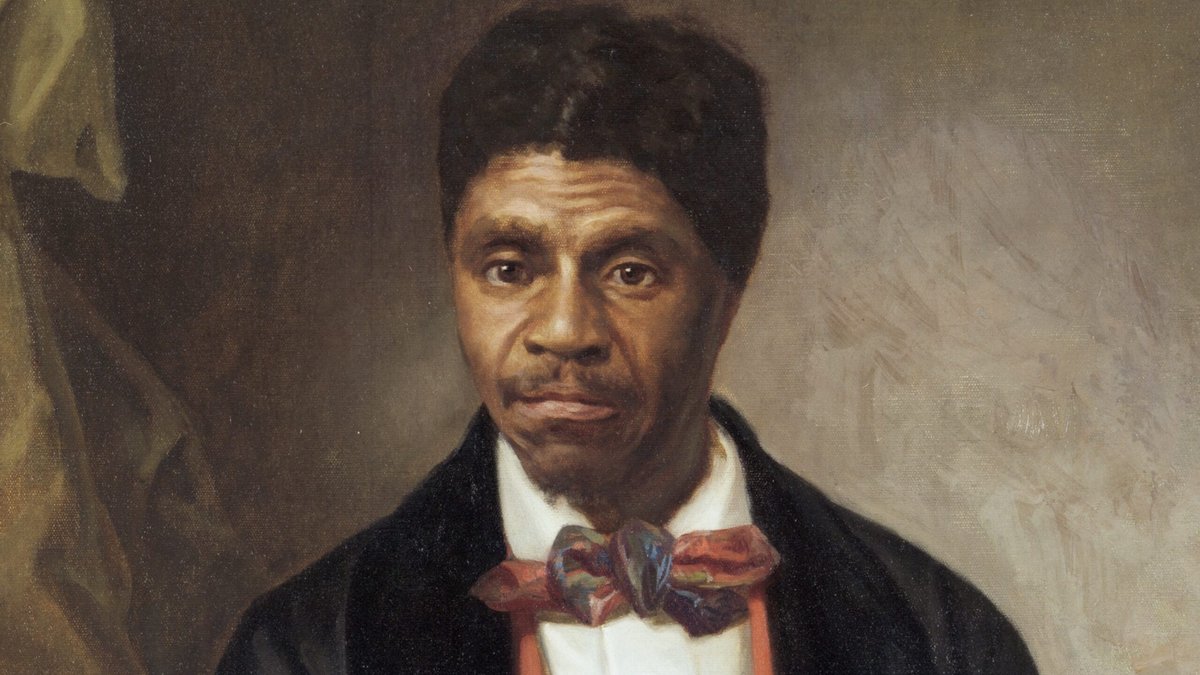
The United States has always been divided against itself. From its founding, the promise of democracy has existed alongside the violence of settler colonialism, slavery, racial capitalism, and white supremacy. The nation’s greatest democratic advances have emerged not from the fulfillment of its founding ideals but from generations of struggle against racial domination, economic exploitation, and political exclusion. American history is therefore not a story of inevitable democratic progress. It is an ongoing struggle over whose histories are remembered, whose humanity is recognized, and whose freedom counts, a struggle measured against the gulf between the nation’s claims to freedom and justice and the reality of systemic cruelty and racialized terror. Today, that struggle has entered a new and dangerous phase. The assault on birthright citizenship is not simply another dispute over immigration or constitutional interpretation. It is an attempt to decide once again who counts, who qualifies as a citizen, and who possesses the right to have rights. At stake is nothing less than whether the United States becomes a multiracial democratic socialist society or completes its transformation into a fascist white republic.
The attack on birthright citizenship forces the nation to confront a question every democracy must answer: Who belongs, and whose lives are valued? As Judith Butler argues, politics is organized around distinctions between lives regarded as grievable and those rendered ungrievable, between those recognized as fully human and those denied that status. Every authoritarian movement answers that question by transforming citizenship from a universal right into a racial, nationalist, and class privilege. Once citizenship becomes conditional, every other right becomes conditional as well. The Trump-Miller campaign against birthright citizenship is therefore not simply an attack on immigration policy. It is an attempt to transform the United States from an imperfect democracy into a racial state. In doing so, it revives a political tradition that never disappeared, one rooted in the racial nationalism of the Johnson–Reed Immigration Act of 1924, the rebirth of the Ku Klux Klan, and the recurring fantasy of preserving the United States as a white republic.
The assault on birthright citizenship is an attempt to steal one of Reconstruction’s greatest democratic achievements. As constitutional scholar Sherrilyn Ifill reminds us, the framers of the Fourteenth Amendment undertook a “race-conscious project” designed to dismantle racial caste and establish birthright citizenship as the legal foundation of a multiracial democracy. As Martha S. Jones demonstrates in Birthright Citizens, birthright citizenship was not bestowed from above. It was forged through generations of Black struggle against slavery, racial caste, and white supremacy. The Trump administration seeks to reverse that democratic achievement by redefining citizenship as a privilege of ancestry, bloodline, and racial hierarchy rather than a constitutional guarantee of democratic equality. As Eddie S. Glaude Jr. observes, “These people are the inheritors of that legacy. They believe the country should be white.”
Nor did this assault emerge suddenly. Trump’s “birther” campaign against Barack Obama was the opening act in a broader effort to reopen the very question Reconstruction sought to settle: Who can legitimately claim to be an American? The issue was never where Obama was born. It was whether a Black man could legitimately embody the nation itself. Birtherism transformed citizenship into a weapon of racial warfare, preparing the ideological ground for today’s assault on birthright citizenship. The current campaign extends that poisonous logic from one symbolic target to millions of others, rendering citizenship increasingly contingent, revocable, and politically expendable.
This is why the struggle over birthright citizenship is fundamentally a struggle over the legal foundations of democracy itself. Citizenship is the constitutional basis of every democratic right. Once that foundation is transformed from a universal guarantee into a privilege granted by political authority, democracy itself begins to disappear. Rights cease to belong equally to all; they become favors distributed by a state that defines belonging through race, nationalism, and ideological conformity.
John Ganz captures the magnitude of this transformation with unusual clarity:
It’s long been my contention that the attack on citizenship is the most serious and frightful aspect of the Trump phenomenon and the one that makes it most deserving of the epithet fascist or totalitarian…. If they successfully destroy American citizenship as enshrined in the Constitution they will have destroyed the country. We will be, all of a sudden, somewhere else.
The ideological stakes of this struggle become especially visible as the United States marks the two hundred and fiftieth anniversary of its founding. Official celebrations largely substitute patriotic spectacle for historical reckoning, presenting the nation’s past as an unbroken story of liberty, unity, and democratic progress. Such mythology erases the central role of Indigenous dispossession, slavery, racial capitalism, and generations of democratic struggle in shaping American history, obscuring the crucial truth that democracy has advanced not because the nation faithfully realized its founding ideals but because ordinary people repeatedly forced the nation to confront the violence, exclusions, and contradictions built into those ideals. The assault on birthright citizenship is simultaneously constitutional in its aims and pedagogical in its methods, seeking to reshape how Americans understand democracy, belonging, and political identity.
Ganz’s warning points beyond legal rights to the wider struggle over democratic identity, public values, civic consciousness, and the distribution of political and economic power. The attack on citizenship cannot be separated from the rise of gangster capitalism and the oligarchy that increasingly dominates American society. As wealth and power become concentrated in the hands of a tiny corporate and financial elite, democratic institutions are emptied of any substance, public goods are dismantled, and the media are increasingly captured by concentrated private interests. In addition, staggering class divisions, entrenched racial injustice, and a politics of disposability become normalized. The attack on citizenship is one mechanism through which this emerging social order redraws the boundaries of political membership, legitimates exclusion, and diverts public anger away from the structures of exploitation that produce widespread misery.
This is neoliberal fascism intensified by oligarchic power and racial capitalism. As Harvey J. Kaye reminds us, what often disappears in discussions of authoritarianism is the class war from above that has laid the groundwork for its emergence. For decades, corporate elites, their political allies, and neoliberal policymakers have waged a relentless assault on workers, public goods, democratic institutions, and the social state, producing staggering inequalities of wealth and power while intensifying racial and social injustice. This class war has not only deepened economic insecurity; it has generated the resentments, abandonment, and civic despair upon which authoritarian movements flourish. The attack on citizenship is inseparable from this broader class project.
What is unfolding today is not merely the return of fascist rhetoric but the deliberate construction of a political order in which democracy is hollowed out from within by the convergence of oligarchic power, white supremacy, and authoritarian rule. Constitutional protections are eroded, dissent is criminalized, cruelty is celebrated as civic virtue, and entire populations are rendered disposable.
Every fascist politics begins by deciding who is recognized as part of the political community. It ends by deciding whose rights, lives, and futures no longer matter. Its endpoint is the normalization of lawless abductions, state terror, militarized policing, detention camps, and a social order in which violence becomes the governing principle of politics. This is not simply the story of a democracy in decline. It is the story of a society devouring its own democratic foundations as imperial ambitions, white nationalism, militarized governance, and institutional decay converge in the service of authoritarian power.
Citizenship and the Pedagogy of Fascism
Political struggles are never won by coercion alone. They are won in the institutions and cultural spaces where people learn to understand themselves, others, and the society they inhabit. Schools, journalism, digital platforms, religious institutions, entertainment, and state policy function as powerful pedagogical forces. They teach people whom to fear, whose lives matter, which histories deserve remembrance, and who belongs to the democratic polity. As Stuart Hall observed, “cultural change is constitutive of political change.” Every political order educates its citizens. The decisive question is what kind of citizens it produces.
Trumpism answers that question by cultivating a new authoritarian subject. Through media spectacles, digital platforms, and state power, it normalizes white supremacy, Christian nationalism, militarism, and the language of exclusion. Figures such as Stephen Miller, J.D. Vance, Marco Rubio, Pete Hegseth, Tom Homan, Russell Vought, and others function as the principal anti-public pedagogues of this emerging fascist culture. Their rhetoric legitimates policies whose consequences are inscribed in broken lives, shattered families, public spectacles of humiliation and terror, the destruction of due process, the erosion of democratic freedoms, the killing of children, and, increasingly, blood. They teach that compassion is weakness, violence is virtue, unquestioning loyalty is patriotism, hypermasculinity is the measure of manhood, and domination, cloaked in the language of God, nation, and destiny, is the defining virtue of public life. For Trump and his acolytes, courage no longer signifies moral conviction or civic responsibility. It has been stripped of its ethical content and absorbed into the language of militarized nationalism, where cruelty masquerades as strength, intimidation becomes a badge of honor, and public life is reduced to a theater of aggression. Such a culture thrives on spectacles of violence, celebrates humiliation as entertainment, glorifies brutality as a public virtue, and normalizes the historical amnesia, racial hatred, militarism, and organized abandonment upon which fascist politics flourishes.
The assault on birthright citizenship is a pedagogical project aimed at remaking public consciousness. Its purpose is to persuade Americans that racial exclusion is common sense, hierarchy is natural, and white nationalism is compatible with democracy. The objective is not simply to change immigration law but to redefine citizenship itself, replacing equal membership with a racialized conception of national identity rooted in blood, ancestry, and cultural purity. As Antonio Gramsci argued, political transformation is inseparable from cultural transformation because power secures its deepest victories by shaping how people think, remember, identify, and imagine the world.
Authoritarianism depends upon organized ignorance as much as organized repression. It flourishes when historical memory is replaced by myth produced by powerful disimagination machines, when fear overwhelms reason, and when civic responsibility gives way to tribal loyalty. In such circumstances, citizenship ceases to be a shared democratic practice and becomes a badge of racial and ideological identity, a transformation embodied in the politics of Stephen Miller and the architects of Trump’s white nationalist project. Democracy no longer rests upon constitutional principles but upon exclusionary myths about who constitutes the “real” nation.
The attack on citizenship cannot be removed from the wider war against the institutions that make democracy possible. Under Trumpism, journalists are vilified as enemies of the people and increasingly subjected to intimidation and violence; universities are threatened with political retaliation; schools are subjected to ideological censorship; books are removed from libraries; scientific expertise is dismissed as propaganda; and historical memory is rewritten to erase the histories of slavery, colonialism, racism, and democratic resistance. These are not isolated attacks. Together they constitute a coordinated war on the institutions that cultivate critical judgment, historical consciousness, and the civic capacities upon which democratic self-government depends.
These attacks are directed at education in its broadest sense. Public schools are stripped of their democratic mission and reduced to workforce training or ideological indoctrination. Universities are portrayed as centers of national betrayal. Independent journalism is recast as a political enemy rather than a public good. Culture itself becomes a battlefield in which cruelty is rewarded, ignorance celebrated, and critical thought equated with disloyalty. The objective is not simply to silence dissent but to destroy the moral, intellectual, and civic capacities that make democratic dissent, and democracy itself, possible.
This is why fascism should be understood both as a political regime and as a pedagogical one. It seeks to govern not only through laws, police powers, and executive authority but also through the production of consciousness itself. It wages war over memory, language, identity, and civic imagination because it understands that lasting domination depends upon shaping how people think before it controls how they act. Birthright citizenship is therefore one expression of a larger struggle over education, culture, memory, and civic imagination. Ultimately, the conflict is over what kind of people democracy requires and what kind of subjects fascism seeks to produce.
Manufacturing the Authoritarian Citizen
Once democratic institutions have been weakened, authoritarian politics can turn to its central task: manufacturing the authoritarian citizen. The assault on birthright citizenship is only one front in this broader project. By dismantling the institutions that sustain democratic memory, critical judgment, and civic responsibility, Trumpism seeks to produce subjects who no longer question power, distinguish truth from propaganda, or imagine democracy as a shared public good. The goal is not simply to govern differently but to reshape the habits, identities, and desires upon which political life itself depends.
Trumpism has embraced this strategy with remarkable consistency. Under Trump’s second administration, the federal government has been weaponized against journalists who expose corruption and abuses of power. As The Guardianreported, federal agents raided the home of Washington Post reporter Hannah Natanson, confiscating her electronic devices in an extraordinary act of intimidation directed at investigative journalism. At the same time, the administration has dismantled longstanding protections for the press while deploying lawsuits and other legal mechanisms against major news organizations and investigative reporters whose work challenges executive power. The message is unmistakable: journalism that holds power accountable is no longer treated as a public service but as a political crime.
Trumpism has extended its assault on democratic culture into a systematic campaign against education. Public schools are increasingly prohibited from teaching the histories of slavery, colonialism, racial violence, and democratic struggle. Universities face political coercion, financial retaliation, and ideological surveillance if they refuse to conform to authoritarian demands. Faculty members are monitored, curricula rewritten, books removed from classrooms and libraries, and critical inquiry dismissed as indoctrination. Even leading universities such as Columbia, Northwestern, Harvard, and the University of California have too often capitulated to political intimidation. By yielding to threats from the Trump administration, they compromise their autonomy, erode academic freedom, and abandon their role as democratic public institutions. Such capitulations normalize authoritarian coercion while further weakening institutions that, despite their limits and exclusions, have historically cultivated critical thought, civic responsibility, and democratic agency.
These attacks are routinely justified as efforts to eliminate bias, restore patriotism, or protect children from ideas that challenge authoritarian myths, including honest accounts of Black freedom struggles, systemic racism, settler colonialism, and Israel’s genocidal war on Gaza. But such claims conceal a deeper political objective. Authoritarian regimes fear historical knowledge because history reveals that every system of domination has been challenged, resisted, and transformed. As Robin D. G. Kelley reminds us, history is not the unfolding of national myths but the record of unfinished struggles over freedom, equality, and belonging. Historical memory reminds us that democracy has always been won through collective struggle rather than bestowed from above. Rights are neither gifts nor privileges but political achievements that must continually be defended and expanded.
Culture itself has become one of the principal battlegrounds in this struggle. The digital platforms through which millions now encounter politics have become immense pedagogical machines. They do more than transmit information. They organize attention, shape emotional life, reward outrage, circulate conspiracy theories, amplify racial resentment, and normalize political violence. As the Reuters Institute’s 2025 Digital News Report demonstrates, social media and video platforms have now surpassed television and traditional news organizations as the principal sources through which many people receive news. In these spaces, the struggle over democracy increasingly unfolds through algorithms that privilege spectacle over evidence, emotional manipulation over reasoned debate, and disinformation over informed judgment.
Taken together, these developments reveal a coherent political project aimed at remaking political common sense itself. It teaches people to admire cruelty as strength, celebrate ignorance as authenticity, dismiss historical memory as subversion, and accept constitutional rights as contingent upon race, loyalty, and political conformity. Before authoritarianism governs through repression, it educates people to desire the very forms of domination that will ultimately govern them.
The Constitutional Blueprint of the Fascist State
History offers a sobering lesson. Fascist movements rarely begin by abolishing constitutions, suspending elections, or relying immediately on militarized repression. They often begin by redefining who belongs to the civic community and who does not. Before they eliminate rights, they first determine whose rights count. Citizenship becomes the decisive political threshold separating those entitled to legal protection from those who can be excluded, surveilled, detained, deported, or abandoned without moral consequence.
This is why the attack on birthright citizenship occupies such a central place in Trump’s political strategy. It establishes the governing principle upon which a new authoritarian order can be built. If citizenship is no longer guaranteed by the Constitution but becomes contingent upon ancestry, race, bloodline, or executive interpretation, then every democratic protection becomes vulnerable to political power. Rights no longer belong to citizens because they are constitutionally guaranteed; they belong only so long as the state decides that they do. In such a regime, rights cease to be universal constitutional protections and become political privileges dispensed by white supremacists, Christian nationalists, and ideological zealots who wield state power in the service of exclusion and domination.
Hannah Arendt argued that citizenship rests upon belonging to a political community—the indispensable condition for possessing rights at all. She famously described this as “the right to have rights” and “the right to belong to some kind of organized community.” Reflecting on the catastrophe of European fascism, she warned that once individuals are stripped of political membership, they lose not merely legal protections but the public standing and institutional guarantees that make those protections meaningful. For Arendt, statelessness was more than the loss of nationality. It marked expulsion from the political community itself, reducing human beings to lives that could be managed, displaced, detained, or discarded with impunity.
Trumpism repackages this racist project in the language of legal restoration and border security. Its objective extends beyond border enforcement to the reconstruction of citizenship itself, transforming the Constitution from a guarantor of democratic equality into the machinery of racial domination. What is at stake is the replacement of democratic citizenship with an exclusionary conception of who counts as an American rooted in white supremacy, Christian nationalism, and an idealized myth of the nation’s past. Citizenship no longer embodies democratic equality; it becomes a weapon for sorting populations into those entitled to rights and those who can be surveilled, detained, deported, and abandoned. In Giorgio Agamben’s terms, this is the political logic that reduces human beings “to bare life,” persons stripped of meaningful political standing and exposed to arbitrary state power. The historical record is unambiguous: such logic culminates in the camp, where law no longer restrains power but becomes the administrative machinery of exclusion, abandonment, and state terror.
This project cannot be separated from a broader politics of disposability. Once governments succeed in persuading citizens that some people do not truly belong, it becomes easier to normalize policies that would otherwise appear morally unthinkable. Families are separated. Refugees are labeled as enemies. Immigrants become invaders. Protesters become traitors. Journalists become enemies of the people. Political opponents become internal threats. Every expansion of exclusion widens the circle of those who can be denied protection while narrowing the meaning of democratic community itself.
History repeatedly demonstrates that authoritarian regimes consolidate power by transforming legal protections into political privileges. Equality before the law gives way to selective enforcement. Universal rights yield to arbitrary exceptions. Independent courts become instruments of executive power. Citizenship itself becomes contingent upon ideological loyalty and national conformity. The law no longer restrains power; it legitimates power by clothing repression in the language of legality. This is one of fascism’s enduring achievements: it seeks not simply to destroy law but to convert law into an apparatus of domination while preserving the appearance of constitutional order.
The constitutional stakes could not be higher. Every attack on birthright citizenship erodes the principle that all persons born under the Constitution possess equal standing before the law. Once that principle is abandoned, the Constitution no longer limits state power; it becomes a weapon through which authoritarian rule selectively distributes rights, recognition, and community. That is the constitutional logic of the fascist state.
Socialist Democracy or the Fascist State
The assault on birthright citizenship reveals a truth that many defenders of democracy have been reluctant to confront. Trumpism is more than another conservative movement or an illiberal or authoritarian political formation. It is a fascist project that seeks to reconstruct the legal, cultural, and moral foundations of American society by redefining who counts as fully human, who counts as an American, and who possesses the full protections of democratic citizenship. The far-right offensive on citizenship is not peripheral to that project. It is its constitutional center.
Every fascist movement seeks to replace universal rights with selective privilege. It strips democracy of its egalitarian foundations while preserving the outward appearance of legality. Constitutions remain in place, elections continue to be held, courts still issue opinions, and legislatures still convene. Yet the substance of democracy disappears as executive power expands, dissent is criminalized, historical memory is erased, and citizenship itself becomes dependent upon race, nationalism, and political conformity. Democracy survives as political theater while authoritarian power increasingly governs everyday life through a mix of repression and a spectacularized culture of state violence.
This transformation does not occur through repression alone. It also depends upon a profound educational project. Authoritarianism must teach people to accept exclusion as virtue, cruelty as strength, inequality as natural, and obedience as patriotism. It wages war against history because history reminds us that no system of domination has ever been permanent. It wages war against education because critical thought threatens every regime that depends upon ignorance. And it wages war against citizenship because democratic citizenship embodies the radical principle that rights belong to persons by virtue of their humanity and constitutional equality rather than the whims of political rulers.
The struggle over birthright citizenship therefore reaches far beyond immigration policy or constitutional interpretation. It raises the defining political question of our time: Will democracy continue to rest upon the constitutional principle of universal citizenship, or will citizenship become a racial privilege administered by an authoritarian state? The answer to that question will determine not only who belongs to the nation but also whether the United States is becoming, or has already become, a neo-fascist society.
What is emerging under Trumpism is an authoritarian government that consolidates a fascist social order rooted in what I have elsewhere called gangster capitalism. It is a system in which unprecedented concentrations of wealth and power coexist with racialized disposability, patriarchal domination, ecological devastation, and the criminalization of democratic dissent. It is a machinery of organized misery built upon widening class divisions, racial and gender exclusions, permanent insecurity, and the concentration of economic and political power in the hands of a financial and corporate elite. State terrorism, unchecked executive power, the militarization of everyday life, endless wars abroad, and expanding forms of domestic repression are not accidental excesses of this system. They are among its governing principles.
The attack on birthright citizenship is one of the clearest expressions of this logic. It redraws the boundaries of belonging to determine who can be excluded, dispossessed, imprisoned, deported, silenced, or abandoned. Fascism has always understood that before it can govern through terror it must first educate people to accept terror as common sense, cruelty as civic virtue, and domination as the natural order of things. It wages war not only against democratic institutions but also against the ethical imagination, historical memory, and social solidarities that make resistance possible.
The greatest ideological triumph of neoliberalism has been persuading people that capitalism and democracy are synonymous. That fiction has become one of the principal obstacles to confronting contemporary fascism. A social order that celebrates billionaires while consigning millions to poverty, debt, racial violence, ecological catastrophe, permanent war, and the slow death of the social state cannot sustain democracy because it destroys the very conditions upon which democratic life depends.
Gangster capitalism does more than generate staggering concentrations of wealth and power. It produces the authoritarian desires, organized fears, racial resentments, and cultures of disposability upon which fascist politics thrives. We inhabit an increasingly delusional social order shaped by the pedagogical force of greed, dehumanization, precarity, corruption, and what the Pulitzer Prize-winning author Viet Thanh Nguyen calls “the black hole of cruelty.” Cruelty is no longer an aberration or moral failure. It has become a governing principle of gangster capitalism—a political and economic system that turns human beings into disposable objects, rewards domination over solidarity, and transforms violence into spectacle and public policy. The assault on citizenship is one expression of this logic, carrying forward imperial fantasies and a long history of racial terror that remain embedded in the structures of American capitalism.
…this is a legacy that extends ‘from the slaughter of Indians to the exploitation, murder, torture, and rape of Black African enslaved peoples… to the demonization of immigrants, the sickening rituals of hunting them down in the streets with masked government enforcers, the lurid punishments of inhuman detention that spur cheers and glee from a significant part of the American people, encouraged by the would-be American Nero and his fawning minions who take pleasure in their taunts and insults.
The struggle over citizenship cannot be separated from this legacy or from the economic and cultural order that profits from it. To confront fascism, therefore, requires more than defending existing democratic institutions. It demands dismantling the gangster capitalism that breeds state coercion, legitimates disposability, and reduces democracy to a hollow spectacle. The struggle before us is to refuse a system that equates freedom with markets, citizenship with exclusion, and profit with the highest expression of human value. It means building a democratic socialist future rooted in equality, shared responsibility, public goods, ecological justice, and the radical conviction that every life matters.
Against the machinery of gangster capitalism, fascist terror, permanent war, and state violence, democracy must be reclaimed as a way of life grounded in justice, solidarity, and shared power. The choice before us could not be clearer: either we organize collectively to build a society founded on equality, freedom, and democratic responsibility, or we surrender to a social order defined by permanent war, organized abandonment, state terror, and oligarchic rule. Under such conditions, democracy survives only as spectacle while fascism becomes the organizing logic of everyday life. History remains unfinished. Whether it moves toward justice or descends further into barbarism depends upon our willingness to imagine otherwise, organize collectively, overthrow gangster capitalism, and build a democratic socialist society in which freedom, equality, justice, and human dignity become the measure of politics itself.
Facts Only
* The United States has been divided against itself since its founding due to settler colonialism, slavery, racial capitalism, and white supremacy.
* Democratic advances emerged from struggle against racial domination, economic exploitation, and political exclusion, not from fulfilling founding ideals.
* The assault on birthright citizenship is an attempt to decide who counts as a citizen and who possesses rights.
* This attack seeks to transform the United States from an imperfect democracy into a racial state.
* Birthright citizenship was forged through generations of Black struggle against slavery, racial caste, and white supremacy.
* The campaign seeks to redefine citizenship as a privilege of ancestry, bloodline, and racial hierarchy rather than a constitutional guarantee of equality.
* The assault stems from the broader effort to revise the question of who can legitimately claim to be American.
* This struggle is linked to neoliberal fascism intensified by oligarchic power and racial capitalism.
* Authoritarianism begins by deciding who belongs to the political community.
* Fascist politics seeks to govern through the production of consciousness, shaping public thought before controlling action.
Executive Summary
Full Take
Sentinel — Human
This text is a highly sophisticated, argumentatively dense analysis that integrates political theory, history, and social critique into a coherent framework regarding the concept of American citizenship and the rise of authoritarianism.