The Iran war is going to be costly for the tech sector.
Get Tom's Hardware's best news and in-depth reviews, straight to your inbox.
You are now subscribed
Your newsletter sign-up was successful
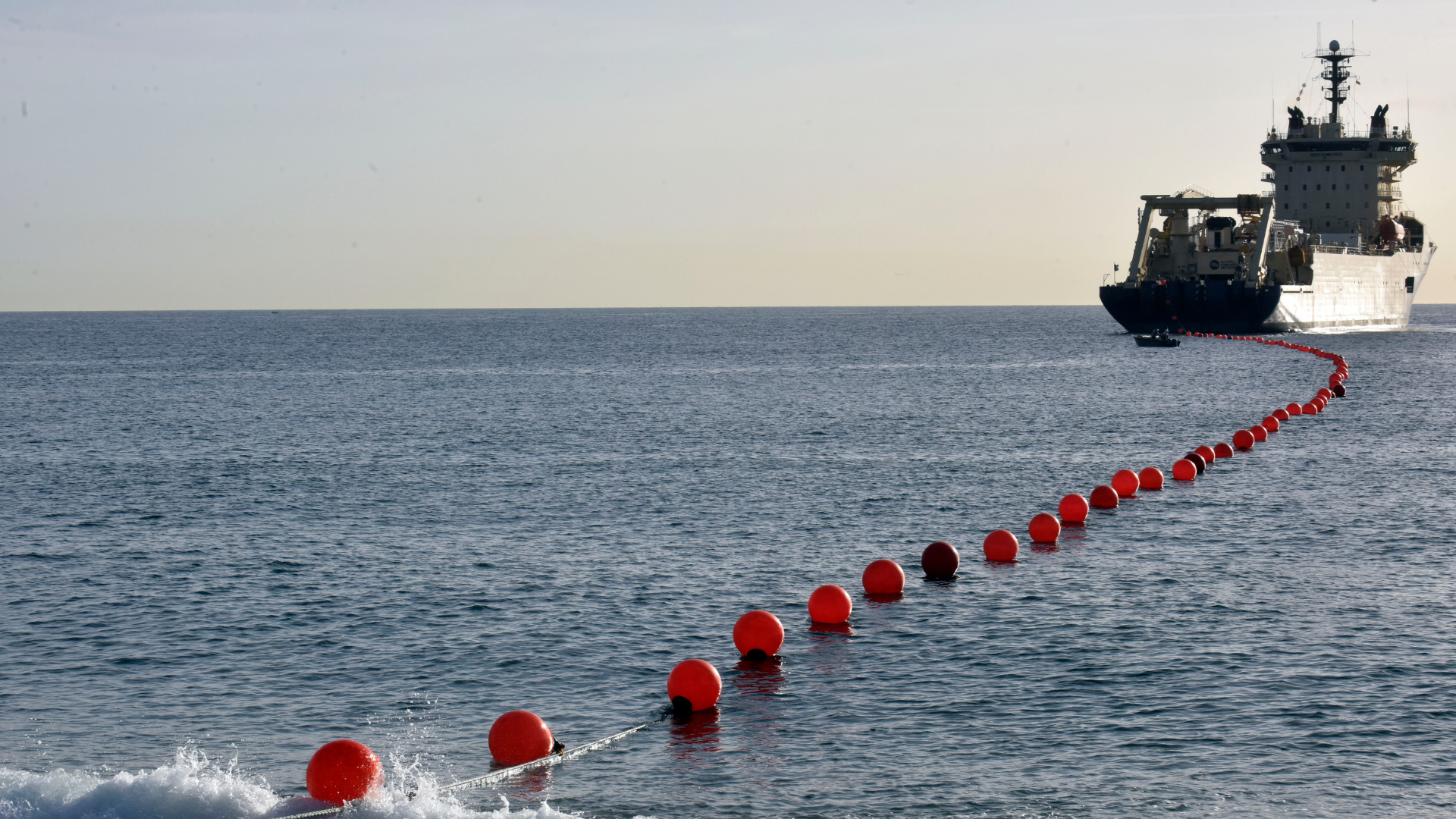
Meta’s Africa2 undersea cable project, which was meant to connect African coastal states to Europe and Asia, is facing a major roadblock due to the ongoing U.S.-Israel-Iran conflict. According to Bloomberg, Alcatel Submarine Networks (ASN), the company contracted to lay the fiber-optic cables for the project, declared force majeure, saying that it can no longer safely operate in the Persian Gulf.
While Meta announced the completion of the core of the project, it’s still working on the Pearls section of the network, which was intended to connect Persian Gulf states, including Iraq, Kuwait, Saudi Arabia, Bahrain, Qatar, United Arab Emirates, and Oman, as well as Pakistan and India, to the rest of Africa and several European countries. The publication says that the bulk of the undersea cable has already been laid but is yet to be connected to the onshore landing stations.
This isn’t the first time that the Africa2 project has experienced disruption. Late last year, the project’s Red Sea section was delayed due to Houthi strikes in the area, alongside permitting issues. Because conflicts increase the danger to life and property, there are fewer operators willing to operate in such theaters, and those that do often charge a heavy premium to account for the higher risk and more expensive insurance costs. Aside from that, it also increases the chance that existing undersea cables will get damaged, and that military action in the area will cause repairs to be delayed for several months.
Article continues belowThe Pearls extension is considered to be a good substitute for the Red Sea corridor, which has been experiencing instability due to attacks from Houthi rebels from Yemen. In fact, the section is scheduled to go online this year, until the U.S.-Israel military action against Iran derailed Meta’s plans. The Africa2 undersea cable project isn’t the only tech infrastructure that has been affected by the 2026 Iran war — we’ve already seen several Amazon Web Services data centers deliberately hit by Iranian drone attacks, and the country has also threatened several tech firms based in the Middle East. We’ve also seen Stryker, a major American medical technology company, hit by a cyberattack that resulted in the disruption of its global operations.
Aside from the trouble in the Middle East, undersea cables in Europe and East Asia are constantly under threat from being cut by ships that are part of “shadow fleets” — vessels with murky ownerships but often indirectly controlled by states like Russia and China conducting hybrid warfare. Because of this, Meta has been planning to build a 50,000-km (30,000-mile) long undersea cable that will bypass current geopolitical hotspots called Project Waterworth. But despite being announced for 2025, it’s expected that it will take several more years before it is completed and goes online.
Follow Tom's Hardware on Google News, or add us as a preferred source, to get our latest news, analysis, & reviews in your feeds.
Get Tom's Hardware's best news and in-depth reviews, straight to your inbox.
Jowi Morales is a tech enthusiast with years of experience working in the industry. He’s been writing with several tech publications since 2021, where he’s been interested in tech hardware and consumer electronics.
Facts Only
Meta’s 2Africa undersea cable project is delayed due to the U.S.-Israel-Iran conflict.
Alcatel Submarine Networks (ASN) declared force majeure, stating it can no longer safely operate in the Persian Gulf.
The Pearls extension of the project aims to connect Persian Gulf states, Pakistan, and India to Africa and Europe.
The bulk of the undersea cable has been laid but is not yet connected to onshore landing stations.
The Red Sea section of the project was previously delayed by Houthi attacks and permitting issues.
The Pearls extension was scheduled to go online in 2024 before the current conflict disrupted plans.
Amazon Web Services data centers have been targeted by Iranian drone attacks.
Iranian threats have also affected other tech firms in the Middle East.
A cyberattack disrupted global operations of Stryker, a U.S. medical technology company.
Undersea cables in Europe and East Asia face threats from "shadow fleets" linked to Russia and China.
Meta is planning Project Waterworth, a 50,000-km undersea cable to bypass geopolitical hotspots, announced for 2025 but expected to take longer.
Executive Summary
Meta’s 2Africa undersea cable project, designed to connect African coastal states to Europe and Asia, is facing significant delays due to the escalating U.S.-Israel-Iran conflict. Alcatel Submarine Networks (ASN), the contractor responsible for laying the fiber-optic cables, has declared force majeure, citing unsafe operating conditions in the Persian Gulf. The project’s Pearls extension, intended to link Persian Gulf states, Pakistan, and India to Africa and Europe, remains incomplete, with most of the cable laid but not yet connected to onshore landing stations. This disruption follows earlier delays in the Red Sea section caused by Houthi attacks and permitting issues. The conflict has also impacted other tech infrastructure, including Amazon Web Services data centers targeted by Iranian drone strikes and cyberattacks on companies like Stryker. Additionally, undersea cables in Europe and East Asia face threats from "shadow fleets" linked to state actors like Russia and China. Meta is planning a new 50,000-km undersea cable, Project Waterworth, to bypass geopolitical hotspots, though completion is expected to take several years beyond its 2025 announcement.
The situation highlights the vulnerability of global tech infrastructure to geopolitical tensions, with conflicts increasing operational risks, insurance costs, and repair delays. While the 2Africa project aims to enhance connectivity, its progress is now entangled in broader regional instability, raising questions about the resilience of critical digital infrastructure.
Full Take
The strongest version of this narrative underscores the fragility of global digital infrastructure in the face of geopolitical conflict. The delays in Meta’s 2Africa project are not isolated but part of a broader pattern where regional instability disrupts critical tech infrastructure. The declaration of force majeure by ASN is a rational response to heightened risks, reflecting the real-world consequences of conflict on commercial operations. The article also highlights the cascading effects of such disruptions, from cyberattacks to physical threats against data centers, painting a picture of a tech sector increasingly vulnerable to geopolitical shocks.
However, the narrative leans heavily on framing the conflict as a primary driver of these disruptions, which may oversimplify the complexities of undersea cable deployment. While the U.S.-Israel-Iran conflict is a significant factor, the article does not explore alternative explanations, such as pre-existing logistical challenges or economic considerations. The mention of "shadow fleets" linked to Russia and China introduces a geopolitical dimension but lacks concrete evidence of direct involvement in cable threats. This could risk amplifying a narrative of systemic vulnerability without sufficient nuance.
Root cause: The paradigm here is one of infrastructure as a casualty of conflict, where tech projects are collateral damage in larger geopolitical struggles. The unstated assumption is that connectivity is inherently apolitical, yet the reality is that undersea cables are strategic assets, often entangled in national security concerns. Historically, this echoes Cold War-era disruptions to global supply chains, where infrastructure became a battleground for influence.
Implications: The delays in 2Africa and similar projects could widen the digital divide, particularly for African nations relying on improved connectivity. The costs are borne by consumers and businesses dependent on stable internet access, while the benefits of disruption may accrue to states leveraging infrastructure as a tool of coercion. Second-order consequences include increased insurance premiums, rerouting of data traffic, and potential acceleration of alternative connectivity solutions like satellite internet.
Bridge questions: What role do private tech companies play in mitigating geopolitical risks to infrastructure? How might the reliance on undersea cables shift if conflicts persist? What evidence would change the assessment of "shadow fleets" as a primary threat?
Counterstrike scan: If this were part of a coordinated influence campaign, the playbook would emphasize the vulnerability of Western tech infrastructure to "rogue states" like Iran, while downplaying the role of Western military actions in escalating tensions. The actual content aligns with this pattern by framing the conflict as a unilateral disruption rather than a reciprocal dynamic. However, the article does not engage in overt fear-mongering or exaggeration, so the alignment is partial rather than full.
Patterns detected: ARC-0024 Ambiguity (vague attribution of threats to "shadow fleets"), ARC-0043 Motte-and-Bailey (implied blame on Iran without exploring broader context).
Sentinel — Human
The article shows strong signs of human authorship, including stylistic quirks, digressions, and informal interjections, with no clear markers of AI-generated text.