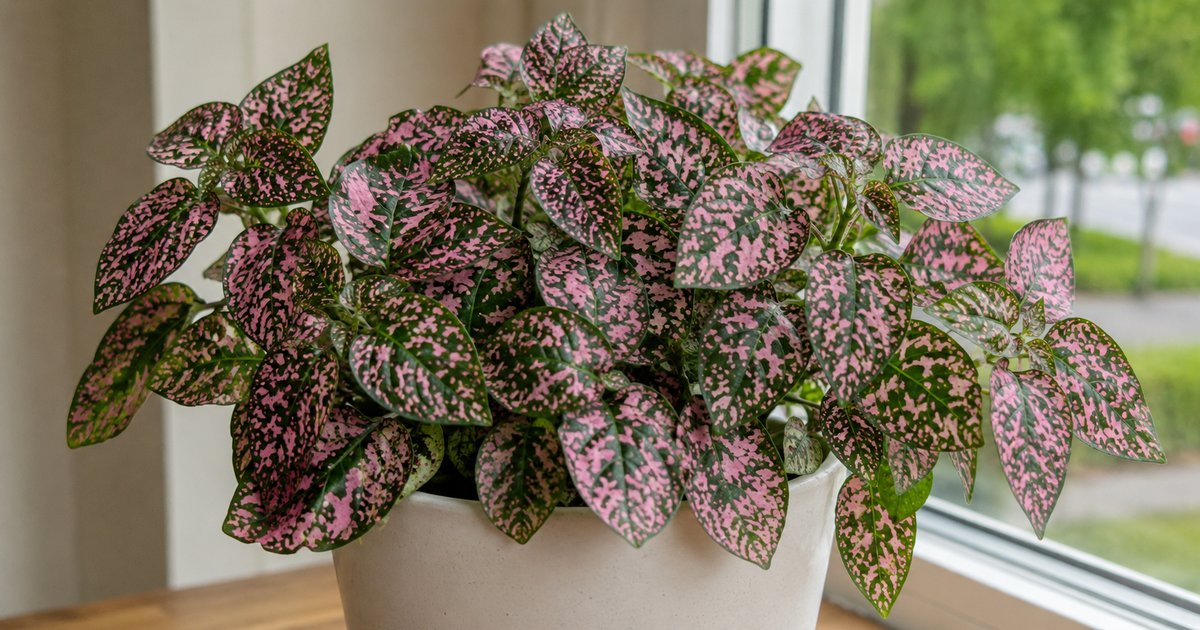
Not every memorable garden plant relies on flowers. Some earn their place through color alone. Hypoestes — commonly known as the Polka Dot Plant — brings a cheerful, almost painterly energy to containers and shaded garden spaces with its speckled leaves in shades of pink, white, red, and green.
In Fort Collins, where strong sunlight can overwhelm delicate foliage plants, Hypoestes offers something refreshingly different: vivid color designed for softer light and sheltered corners. Its compact shape and whimsical leaf patterns make it ideal for adding texture and brightness to porches, patios, and mixed containers that might otherwise feel flat during the height of summer.
There is something unmistakably joyful about it.
The Appeal of the Polka Dot Plant
Hypoestes has a lighthearted quality that feels perfectly suited to modern container gardening. Its leaves appear almost hand-flecked with watercolor paint, creating visual interest even when nearby flowers are between bloom cycles.
Unlike dramatic tropical foliage plants that can dominate a design, Hypoestes acts more like an accent — a colorful supporting player that ties an arrangement together.
- Best Use: Shaded containers, porch planters, indoor-outdoor arrangements, and mixed foliage displays.
- Fort Collins Tip: Protect Hypoestes from intense afternoon sun, which can scorch its delicate leaves at high altitude.
- Maintenance: Pinch back stems occasionally to encourage a fuller, bushier shape.
Color Without Flowers
One of the greatest strengths of Hypoestes is that it provides season-long color without depending on blooms. Its foliage remains vibrant from spring through early autumn, making it especially useful in containers where flowering plants may ebb and flow throughout the season.
Pink-speckled varieties create a soft cottage-garden look, while white and green forms feel crisp and contemporary. Red-toned selections pair beautifully with darker foliage plants and warm terra cotta containers.
In shaded Front Range patios or north-facing entryways, Hypoestes can provide exactly the visual lift a space needs.
A Perfect Plant for Layered Containers
Because Hypoestes stays relatively compact, it works beautifully as a “middle layer” in professionally styled container arrangements.
Its mounded shape softens transitions between upright focal plants and trailing spillers, helping containers feel lush and cohesive rather than rigidly structured.
Perfect Pairings for a Better Homes Look
- Coleus: Together, Hypoestes and Coleus create a rich tapestry of foliage colors and patterns ideal for shaded patios.
- Bacopa: The delicate trailing blooms of Bacopa soften container edges beneath Hypoestes’ vibrant leaves.
- Impatiens: Their continuous flowers provide complementary color while thriving in similar light conditions.
- Asparagus Fern: Fine, airy foliage contrasts beautifully with the bold speckled leaves of Hypoestes.
- Caladium: Large tropical leaves create dramatic scale differences that make smaller Hypoestes foliage stand out even more.
Thriving in the Front Range Climate
Colorado’s dry air can be challenging for foliage plants, but Hypoestes performs well when given consistent moisture and protection from harsh sun exposure.
Container-grown plants may require more frequent watering during hot summer stretches, especially in sheltered patios where reflected heat builds quickly.
- Keep soil evenly moist but never soggy.
- Use quality potting soil with good drainage.
- Shelter from strong afternoon sun and drying winds.
- Light fertilizing every few weeks helps maintain vivid foliage color.
Though often treated as an annual outdoors in Fort Collins, Hypoestes can also transition indoors before autumn frost and continue growing as a cheerful houseplant through winter.
A Small Plant with Outsized Personality
Some garden plants create drama through size. Hypoestes succeeds through personality.
Its speckled foliage catches the eye immediately, softening shaded corners and bringing unexpected brightness to porches, patios, and container groupings. In landscapes dominated by sun-loving annuals and rugged Colorado textures, the Polka Dot Plant introduces a gentler, more playful note.
And sometimes, that touch of whimsy is exactly what a summer garden needs.
Facts Only
Hypoestes, also called the Polka Dot Plant, features speckled leaves in pink, white, red, and green.
It is suitable for shaded containers, porches, and patios, particularly in areas with strong sunlight like Fort Collins, Colorado.
The plant provides season-long color without relying on flowers, remaining vibrant from spring through early autumn.
Its compact shape makes it ideal for layered container arrangements, often used as a "middle layer" between upright and trailing plants.
Hypoestes pairs well with Coleus, Bacopa, Impatiens, Asparagus Fern, and Caladium in mixed plantings.
It requires consistent moisture, protection from intense afternoon sun, and well-draining soil.
In Fort Collins, it is typically grown as an annual but can be moved indoors before frost to continue growing as a houseplant.
Pinching back stems encourages a bushier growth habit.
The plant’s delicate leaves can scorch in high-altitude sunlight without proper shelter.
It thrives in shaded or north-facing locations where other plants may struggle.
Executive Summary
Full Take
The article presents Hypoestes as a charming, low-maintenance plant that offers visual appeal through foliage rather than flowers, positioning it as an ideal choice for shaded gardens and containers. The narrative emphasizes its versatility, ease of care, and ability to provide consistent color in environments where flowering plants may falter. While the piece is largely informational, it subtly frames Hypoestes as a solution for gardeners seeking vibrant, textured plants without the upkeep of blooms.
**Pattern Scan:** The article employs a soft-sell approach, highlighting the plant’s aesthetic and practical benefits without overt persuasion. There is no detectable manipulation, but the framing leans toward idealization, presenting Hypoestes as a near-perfect solution for shaded spaces. This could be seen as a mild form of **ARC-0024 Ambiguity**, where potential drawbacks (e.g., sensitivity to sun, need for frequent watering) are acknowledged but downplayed in favor of its strengths.
**Root Cause:** The narrative reflects a broader trend in gardening media that celebrates low-effort, high-impact plants, catering to modern preferences for convenience and visual appeal. The assumption is that gardeners prioritize color and texture over traditional blooms, particularly in challenging climates like Colorado’s Front Range.
**Implications:** For gardeners, Hypoestes offers a practical way to enhance shaded spaces, but its care requirements (moisture, shade) may limit its suitability for some environments. The article’s focus on its benefits could lead readers to overlook potential challenges, such as its annual status in colder climates or its need for protection from wind and sun.
**Bridge Questions:**
How does Hypoestes compare to other shade-tolerant foliage plants in terms of longevity and maintenance?
What are the trade-offs between using Hypoestes as an annual versus attempting to overwinter it indoors?
Could the plant’s popularity reflect a broader shift in gardening aesthetics toward foliage over flowers?
**Counterstrike Scan:** If this were part of a coordinated campaign, it might promote Hypoestes as a must-have plant for shaded gardens, downplaying its limitations to drive sales. However, the article provides balanced care tips and acknowledges its seasonal constraints, suggesting no alignment with manipulative tactics.
Patterns detected: none
Sentinel — Human
The text exhibits a strong, localized voice and specific domain knowledge, suggesting human authorship, although it employs highly polished, organized structures often favored by advanced content generation.