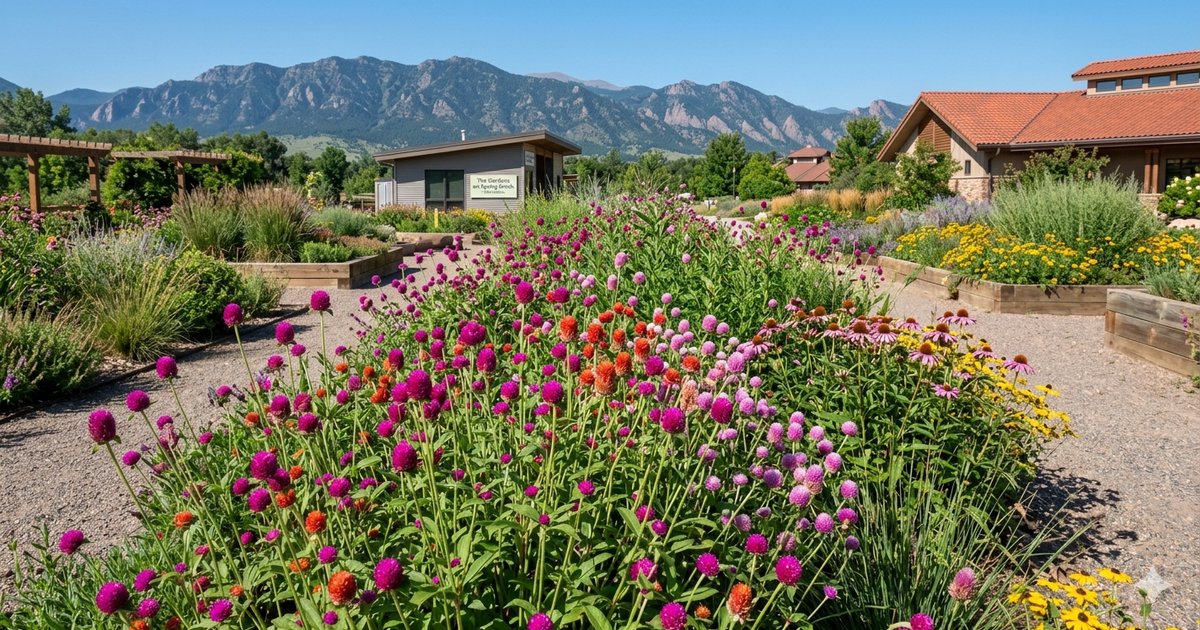
Some flowers demand constant attention. Others seem to flourish precisely because they ignore adversity. Gomphrena — often called Globe Amaranth — belongs to the second category. With its clover-like blooms, silver-green foliage, and remarkable drought tolerance, Gomphrena has become one of the quiet heroes of Front Range summer gardens.
In Fort Collins, where intense sun, drying winds, and unpredictable rainfall challenge even experienced gardeners, Gomphrena offers something increasingly valuable: reliable beauty without fuss. Its jewel-toned blooms float above tidy mounds of foliage like tiny lanterns, bringing movement, texture, and long-lasting color to containers and flower beds alike.
The Charm of Globe Amaranth
At first glance, Gomphrena appears almost old-fashioned — the sort of flower one imagines growing beside a white fence or spilling from a cottage garden path. But modern varieties have transformed it into a sophisticated landscape performer equally suited to contemporary patios and structured container arrangements.
The flowers themselves are not soft petals but papery bracts, giving them a uniquely crisp texture and exceptional longevity. Even under the relentless Colorado sun, the blooms retain their color for months.
- Best Use: Sunny borders, pollinator gardens, patio containers, and low-maintenance landscapes.
- Fort Collins Tip: Gomphrena thrives in heat and actually performs better once summer temperatures intensify.
- Maintenance: Minimal deadheading is required. The plant continues blooming steadily with very little intervention.
A Flower Built for the Front Range
Many flowering annuals wilt during July heat along the Front Range. Gomphrena seems to interpret those same conditions as encouragement.
Its deep root system and tough foliage make it remarkably resilient during dry spells, while its compact habit keeps containers looking neat even late in the season. Unlike thirstier annuals, Gomphrena rarely appears stressed during afternoon heat, making it ideal for gardeners seeking both beauty and practicality.
For water-conscious landscapes in Northern Colorado, few flowering annuals provide so much visual reward with so little maintenance.
The Colors of Late Summer
Traditional Gomphrena varieties are known for rich purple blooms, but newer selections now include vivid magenta, bright white, rose pink, fiery orange, and even soft lavender.
These saturated colors pair especially well with the warm earth tones common throughout Fort Collins architecture and landscaping. In evening light, the blooms seem almost to glow against gravel pathways, stone retaining walls, and weathered cedar fencing.
Their rounded shape also creates an appealing visual rhythm when planted in groups, giving garden beds a natural sense of cohesion.
Perfect Pairings for a Better Homes Garden
Because Gomphrena provides rounded texture and compact structure, it pairs beautifully with plants that add height, softness, or dramatic foliage.
Ideal Companion Plants
- Angelonia: The upright flower spikes of Angelonia contrast elegantly with Gomphrena’s globe-shaped blooms.
- Sweet Potato Vine: Its trailing foliage softens containers and adds rich contrast beneath the bright flowers.
- Zinnias: Together, Zinnias and Gomphrena create a vibrant, pollinator-friendly display full of classic summer energy.
- Ornamental Grasses: Fine-textured grasses bring movement and help balance Gomphrena’s tidy mounding form.
- Agastache (Hyssop): Both thrive in Colorado’s dry climate, creating a layered planting rich with pollinator activity.
A Favorite of Pollinators — and Florists
Bees and butterflies are irresistibly drawn to Gomphrena throughout the summer. Its nectar-rich blooms provide a steady food source during the hottest months when some other flowers begin to fade.
It is also one of the best flowers for drying. The papery blooms retain both shape and color remarkably well, making them popular for wreaths and dried arrangements long after the gardening season ends.
Simply cut stems before the first frost and hang them upside down in a cool, dry room. Weeks later, the flowers still look nearly fresh.
Quiet Confidence in the Summer Garden
Not every garden plant needs drama to be memorable. Gomphrena succeeds through steadiness — through endurance, color, and a kind of cheerful resilience perfectly suited to life along the Front Range.
In a Fort Collins garden, where weather can shift from cool mornings to blazing afternoons in a matter of hours, Gomphrena remains unfazed. It blooms through heat waves, stands tall in drying winds, and continues coloring the landscape long after more delicate flowers begin to fade.
For gardeners seeking effortless beauty with lasting character, few annuals feel more perfectly adapted to Colorado summer.
Facts Only
Gomphrena, also called Globe Amaranth, is a flowering plant known for its drought tolerance and clover-like blooms.
It thrives in Fort Collins and along the Front Range, where conditions include intense sun, drying winds, and unpredictable rainfall.
The plant features silver-green foliage and papery bracts that retain color for months.
Gomphrena is low-maintenance, requiring minimal deadheading and performing better in summer heat.
It is suitable for sunny borders, pollinator gardens, patio containers, and low-maintenance landscapes.
Traditional varieties are purple, but newer selections include magenta, white, pink, orange, and lavender.
Ideal companion plants include Angelonia, Sweet Potato Vine, Zinnias, Ornamental Grasses, and Agastache.
Gomphrena attracts bees and butterflies and is popular for dried arrangements due to its long-lasting blooms.
The plant's resilience makes it a reliable choice for Colorado summer gardens.
Executive Summary
Full Take
Gomphrena’s portrayal as a "quiet hero" of Front Range gardens taps into a broader cultural appreciation for resilience and low-maintenance beauty in gardening. The article frames the plant as a solution to environmental challenges—drought, heat, and unpredictable weather—while emphasizing its aesthetic and practical benefits. This narrative aligns with a growing trend toward sustainable, water-conscious landscaping, particularly in regions like Colorado where water scarcity is a pressing concern.
The piece avoids overt manipulation but subtly reinforces a paradigm of "effortless beauty," which could be critiqued as an idealized marketing angle. While the facts about Gomphrena’s hardiness and pollinator benefits are well-supported, the framing leans toward an uncritical celebration of the plant’s virtues without exploring potential drawbacks, such as its suitability for all soil types or its interactions with native ecosystems. The absence of counter-perspectives—such as whether Gomphrena might outcompete native species or require specific conditions to thrive—leaves the narrative somewhat one-dimensional.
A deeper question arises: Does the promotion of drought-tolerant non-native plants like Gomphrena inadvertently discourage the use of native species that might offer even greater ecological benefits? The article’s focus on practicality and visual appeal could reflect a broader tension in gardening culture between human-centric design and ecological stewardship. For readers, this invites reflection on what "low-maintenance" truly means in a garden—convenience for the gardener or harmony with the local environment?
Patterns detected: none
If this narrative were part of a coordinated influence campaign, it might resemble a subtle push toward commercial gardening trends, emphasizing ease and aesthetics over ecological impact. However, the content itself does not exhibit signs of manipulation, instead presenting a straightforward celebration of a plant’s adaptability. The lack of critical counterpoints is notable but not necessarily indicative of bad faith.
Sentinel — Likely Human
The text is highly polished and logically structured, exhibiting strong pattern recognition and cohesive advocacy, suggesting it was either written by an expert or heavily guided by an advanced generative model focusing on persuasive garden advice.