Plus how the Tea Party was misunderstood, N.Y.C. media, and Andy Beshear’s presidential campaign
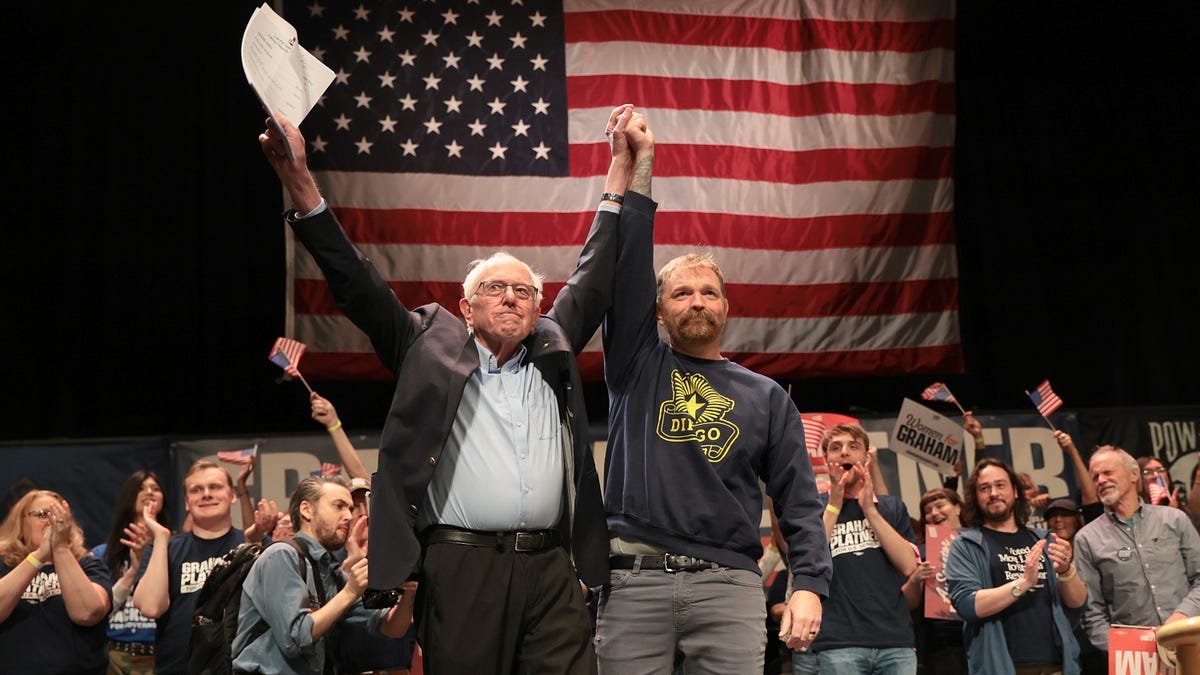
Almost all of the questions today were about Democrats’ ongoing tea party moment in primaries, which got me thinking about the actual Tea Party of the Obama years.
At the time, the Tea Party talked an enormous amount about government spending and budget deficits, and mainstream Republicans largely treated it as a movement about fiscal conservatism. A desire to harness Tea Party energy was part of why Mitt Romney picked Paul Ryan as his running mate and challenged Obama on a platform of steep spending cuts rather than Moderate Massachusetts Mitt pragmatism. Around this time, I worked with Vanessa Williamson’s husband and I knew Theda Skocpol from college, so I was aware of the book the two of them wrote in 2013 called “The Tea Party and the Remaking of Republican Conservatism.” It was a sociological deep dive into Tea Party activism and featured the striking and contrarian claim that actually the number one issue motivating the movement was immigration. Very few people in 2013 agreed with that, but after watching Donald Trump’s 2016 primary win, I think everyone familiar with this literature reached the conclusion that Williamson and Skocpol were right all along.
I raise this because, while we’ve had a ton of takes about what is driving the restive left on the Democratic side, I don’t think we’ve had anything equivalent to Williamson and Skocpol in the sense of a genuinely good-faith, curiosity-motivated look at what’s going on. This is not to say I have my own secret theory. I also don’t want to overread the analogy. Just because the Tea Party seemed to be about one thing and turned out to be about another doesn’t mean the left insurgency is like that. It may just be that it’s actually a bad analogy. But I do want to draw the distinction between disinterested scholarly inquiry and factional or partisan combat. A lot of influential figures in right-wing politics really wanted it to be the case that the Tea Party was about widespread demand for entitlement cuts, and they successfully imposed that interpretation on the world for a period of years until it all blew up in their face.
lindamc: I’m a Common Sense Dem at the end of my tether. I split my time between DC, with an incoming socialist mayor, and Ann Arbor MI, where socialists are seeking to unseat the local government that has (as noted in a recent mailbag) finally started building here. Everyone knows about the Senate race 😩. Many/most youngs I know are self-described socialists with little/no understanding of what that means in historic terms, and the overwhelming majority of my fellow olds are Heather Cox Richardsonians. Virtually every social gathering I attend features someone making a glib, ignorant complaint about data centers. A “swing dancing in the park” event I attended a few days ago started out with pronouns and cultural appropriation and never made it to demonstrating actual dance steps. Things seem to somehow get worse and worse.
How do you cope with this? Despite fighting hard against it, I feel something like actual despair a lot of the time.
I’m feeling a little bit untethered myself this summer.
But one thing that I try to remind myself of is that a lot of what I am experiencing ambiently is not so much a real political trend as the output of the extraordinary New York-centricity of the national media.
Keep reading with a 7-day free trial
Subscribe to Slow Boring to keep reading this post and get 7 days of free access to the full post archives.
Sentinel — Human
The text exhibits the style and voice of a reflective, personally invested writer engaging in philosophical comparison, strongly indicating human authorship.