Open to all readers.
By Karl Sinclair
July 6, 2026, © Leeham News: Boeing’s path to recovery rests largely with Boeing Commercial Airplanes (BCA).
BCA accounted for about 65% of Boeing’s profits in 2018, the last year of normal operations before the March 2019 crash of a second 737-8 MAX, which began a series of crises that lasted through 2024.
Historically, 737 sales have represented 80%-85% of unit sales pre-crisis, so BCA’s profitability rests primarily on this airplane. Sales of the 787 come next, followed by the 777.
Part 1 examined the P&L of the 737 program. Part 2 examines overall division performance, the 787 and 777 programs.
Production of the 787 is heading toward 12-14/mo beginning in 2028. Officials ponder a rate as high as 16/mo, although the current backlog does not support the latter rate. (It does if options and Letters of Intent are converted to orders.)
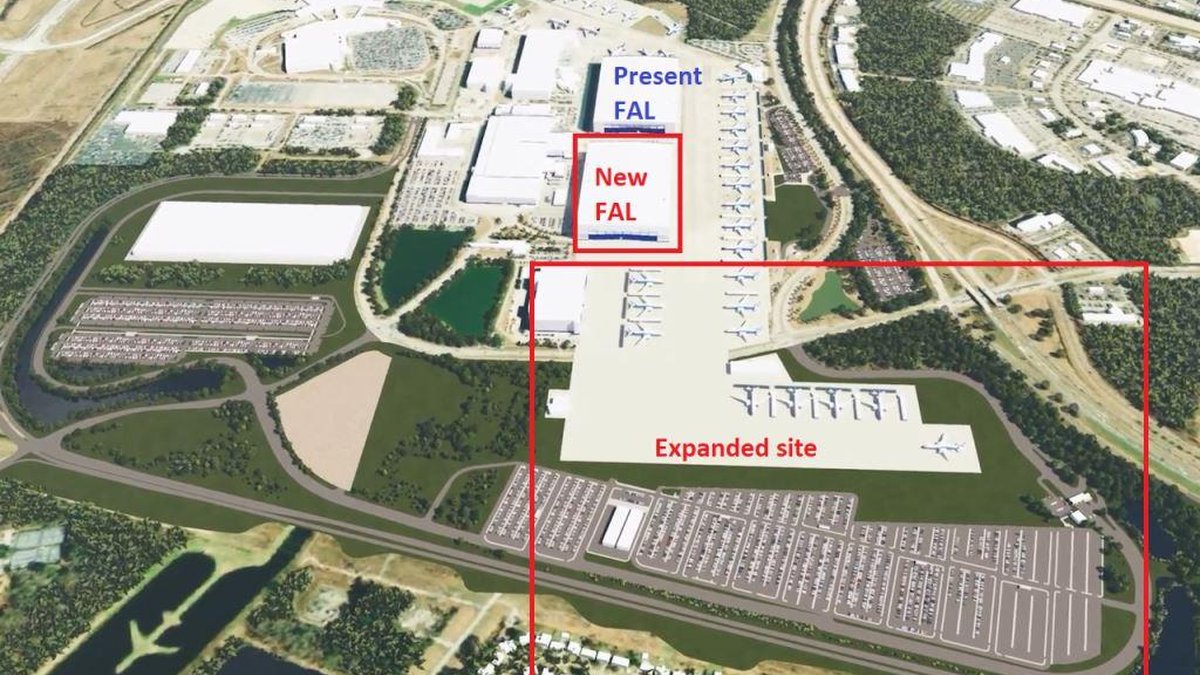
Boeing is building a second final assembly line in Charleston (SC) for the 787s, doubling the size of the current plant, which can assemble 10 planes a month. The second building will have surplus space that will be used for staging areas in addition to a new assembly line.
Boeing plans to reach a rate of 10/mo this year. The previous peak was 14/mo. Is 10 enough to restore profitability to the line?
In 2018, BCA generated $60.715bn in revenues and earned $7.879bn (program accounting figures), resulting in a 13% operating margin. It did so with a combination of narrowbody (NB) and widebody (WB) deliveries.
At the time, the 747 program was winding down, handing over just six aircraft that year. The 767 production line was averaging a rate of about two per month, while the real heavyweights in the WB niche were the 777 and the 787.
The Dreamliner team could not get the aircraft into customers’ hands fast enough, delivering 12 jets/mo in 2018 and 158 jets the following year.
The asterisk to that 13/mo 787 rate in 2019 is that Boeing was producing the plane in two locations, the Pacific Northwest and South Carolina.
Fast-forward to the present: the 767 and 777 will end production for commercial customers at the end of 2027 due to more stringent emission and noise restrictions. The 787 is solely produced in Charleston (a decision made in 2020), where the plant is now undergoing a billion-dollar expansion. The follow-on 777X is struggling its way through a protracted certification process.
What BCA did not want is any of the widebody programs to be a drag on profits, as the 737 MAX program generated the lion’s share of earnings.
The motto of the two WB programs should have been, “Do no harm.” But the 787 and 777X have cost the division a combined $26.095bn in write-offs, charges, adjustments, abnormal production costs, and one-time charges.
About $22bn of that has come since 2020, costing more than the 737 MAX write-offs.
What BCA needs now is regular, boring, day-in, day-out production, where parts and employees come in one set of doors and aircraft roll out the other side.
Despite early struggles, the 787 program has been a smashing sales success story for the company.
The program is certain to top 1,300 deliveries in 2026. From 2015-2019, production never dipped lower than 135 handovers. BCA holds 1,150 unfilled orders for the 787 in its backlog.
Gross margin on the type is estimated to be in the $34m range. The fine print is that production must be rolling smoothly to get there, which has not been true since 2019.
Truncated production, delivery halts, storing and reworking aircraft, and site expansions only increase production costs. This strains a model that analysts have said is priced very close to break-even points.
LNA‘s analysis concludes that producing 787s at a rate of 10/mo is insufficient to achieve profitability in South Carolina. If it were, BCA’s task would be to smooth out the supply chain snarls, deliver 120 units per year, and then count the earnings.
Based on data from Cirium at the end of last year, Boeing’s firm backlog barely supported a rate of 14/mo. However, when options and letters of intent were calculated, higher rates could be achieved with more sales. Through May, the most recent reporting period, Boeing booked orders for 111 787s.
A $1bn investment in PPE (plant, property, and equipment) would require a $1m margin per aircraft over 1,000 deliveries (not including financing costs).
You do not make that investment unless you must. Boeing sees a demand for a production rate of at least 12/mo and up to 14/mo. However, there is enough room in the second building to eventually accommodate a new airplane program. Demand for the 787 will inevitably taper off as it gets older. Charleston, with half the space of Boeing’s giant Everett plant, will be well-positioned for new airplane programs.
If Boeing can stabilize past the 10/mo limit currently imposed at Charleston, each 12/yr delivery bump would add ~$420m in gross margin, at an estimated $35m per unit.
Even if BCA was able to generate a reduced $30m gross margin, moving from 10 to 14/mo, would add $1.44bn in gross margin.
In 2025, BCA reported a loss of $7.079bn on deliveries of 600 aircraft. The Dreamliner team handed over 88 airframes, averaging 7.33/mo.
Adding another 36 units (3/mo) to reach the 10/mo rate would add an estimated $1.26bn in annual margin (at $35m gross margin). This is the current full production capacity of the Charleston facility.
That would not get the division back into the black, hence the expansion plans.
Profitability at BCA lies within a combination of 737 MAX, 787, and 777X handovers.
At this point, the 777X program is seven years behind schedule.
The 2019 grounding of the MAX prompted the Federal Aviation Administration to revisit all certification work on the 777X to that point. Since then, through a combination of problems revealed by flight testing of the airplane and its engines, and meticulous FAA oversight, the first delivery is now expected next year.
When production comes online, the 777 line in Everett will initially produce five aircraft a month. The peak rate with the 777-300ER was 8.6/mo. Is a rate of five enough to be profitable? The program has already written off $15.729bn.
Once the aircraft is certified and deliveries begin in earnest, the ensuing quarters will be a sea of red ink for the program.
Boeing has about 30 aircraft built and stored (read: costing money), which will require change incorporation and re-work. This will hamper financial results, combined with the inevitable low-rate initial production as the program ramps up.
The 777 (Classic) program was widely estimated to have earned BCA a gross margin of about $40m per delivery (more on that later).
This provides a starting point.
Once production normalizes and deliveries hit 5/mo, the 777X would earn $2.4bn in gross margin for the division.
Would Boeing push production past 60/yr, to take advantage of the higher margins that an increased delivery tempo would produce? Is rate 100/yr in the program’s future? The peak production rate for the 777-300ER was 103 a year.
As it stands, the answer is no.
The 777 Classic will top 1,800 deliveries once the final 40 777F orders are completed. However, for most of its life, that aircraft operated in its own space, unhindered by competition.
The Airbus A330 sat across from the 787, the A380 went up against the 747 and the A340 was a four-engined aircraft that did not match up well with the 777; only 377 were delivered.
In today’s environment, the A350, which entered service in 2015, has about 1,600 orders and 720 deliveries.
No North American legacy carrier has placed a follow-on order for the 777X, after all of them operated the 777 Classic. (United Airlines is said to be interested in perhaps 20 of the 777-9s in the inventory, almost certainly at a sharp discount.) The bulk of the 777X orders (64%) are in the hands of two airlines, Emirates (270) and Qatar Airways (124), with a backlog of 619. Of the total backlog, 63 are for the 777X freighter variant.
Given the stop-start nature of the program, with a promised EIS in 2020, one can infer that Boeing is not receiving top dollar for those aircraft. Factor in the roughly 30 inventoried jets, and initial margins look bleak.
Thus, we come to the estimated gross margin figures for the type.
Given the low backlog, the protracted development, and order concentration, Boeing will not push production to the same heights as the 777 Classic. Therefore, it follows that BCA will be earning a lower gross margin on this type.
It has been confirmed that until EIS and a production ramp-up, the program will cost Boeing another ~$2bn in cash through 2026 and 2027. The company will undoubtedly add those amounts to the deferred production costs balance and then write them off when it determines the funds are unrecoverable.
Losses on the program could top $18bn, before a single aircraft is handed over.
Overall, 2028 cannot arrive soon enough for BCA. It is in a state of transition.
By then, it hopes to have:
Once all of BCA’s travails are behind it, the margin potential (mostly driven by the 737 MAX program) is impressive.
When the 737 MAX hits 53/mo, the 787 is at 10/mo, and the 777X is delivering 5/mo, gross margins have the potential to offset increased research and development spending and general and administrative costs.
Push the new North line to 15/mo and the 787 rates closer to 14/mo, and the numbers improve further. This is undoubtedly the target management is looking at – hitting 800 deliveries per year and beyond.
Given heavy discounting and customer compensation, an extended certification timeline, rising input costs, and uneven production output, margins are likely to be significantly pressured until the end of the decade.
In the short term, many of these items will cost the company money until a smooth production and delivery process is achieved. Until then, expect choppy financial performance, fluctuating margins, and cash usage.
Scott Hamilton contributed to this article.
Seeing the overall ageing global fleet, its great to see Boeing stepping up.
Though allow me not yet to go for popcorn, seeing plenty of announcements (also by Airbus) followed by poorer real delivery no.
Hope Key suppliers incl. Seat and Enginemakers also get the memo.
I think the NB’s will be the bread and butter for Boeing, Airbus and Comac (future). Generating cash flow, covering costs, economies of scale, long term after market revenues.
Boeing pushing out 737 replacement (https://aviationweek.com/aerospace/manufacturing-supply-chain/interview-why-boeings-ceo-sees-next-narrowbody-moving-right is a risky approach IMO. The A220-300/500 and A321 variants seem strong and it seems Airbus isn’t holding back on development, despite their market dominance, huge backlog.
Boeing can’t set it’s strategy in isolation. There’s the moderately loyal global customer base & strong competition.
The past has shown that even confirmed orders aren’t holy & the OEM’s want to remain friends i.s.o. suing customers.
It’s going to be very interesting to see where RR’s Ultrafan first gets fitted. If that’s to an Airbus and not 787, that could make a strategy for Boeing difficult…
Which is the oldest program soon coming to 20 years since first rollout?
From the article:
“Given heavy discounting and customer compensation, an extended certification timeline, rising input costs, and uneven production output, margins are likely to be significantly pressured until the end of the decade.”
Yesterday’s article (737MAX) painted a similar 2030-ish timeline for net profit to start normalizing.
I very much doubt that the average BA analyst/investor is aware of this four-year slog yet to come.
A lot of unforeseen things can happen in 4 years. Just look at the last 4 years.
LNA may be missing something with respect to the 787 line. The margins on the 787 were seriously compromised by the fuselage disassembly and reshimming on the last SEVERAL HUNDRED 787s produced for years. Whisper numbers of 12 to 15 million per airplane were tossed around, and Ive heard even higher. Since this is non normal work and that effort recently terminated, isn’t it reasonable to remove this terminated long term expense from the 787. The margin improvement on a per ship basis should happen nearly overnight as there is no scaling of improvement over time needed, just a return to a correct assembly process.
The beauty of program accounting is to “disconnect” unit costs with profits/losses recorded.