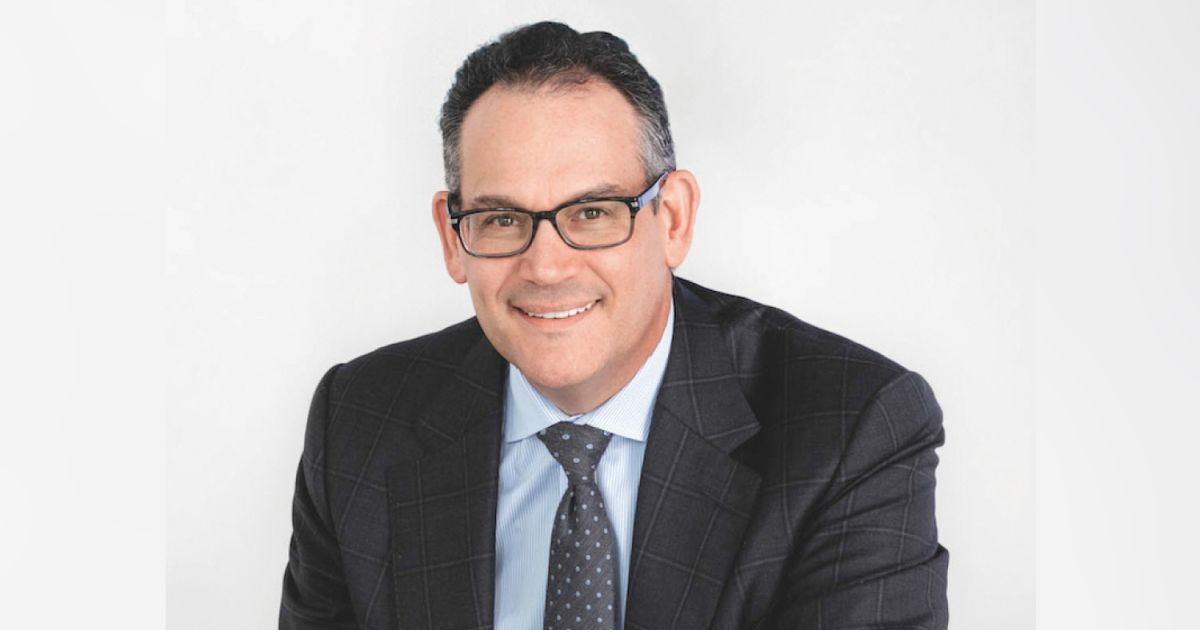
We don’t really enjoy kicking off Sunday Summary with a downer, but there was an important piece of grim news for students of commercial real estate last week.
David Simon, scion of a great retail family, chief executive of Simon Property Group, and all-around master of the mall, died of cancer on March 22 at the premature age of 64.
Simon did not talk to the press much (save this interview from the Wall Street Journal from June when he already had been diagnosed with cancer, in which we learned that one of his two favorite books is Portnoy’s Complaint — respect) but in Simon’s case actions spoke louder than words, and Simon was quite clamorous.
Last year, Commercial Observer took a dive into SPG’s doings and discovered a company that was performing exceptionally well despite a shell-shocked retail environment: occupancy at 96.4 percent; ownership of 26 of the 46 best-performing malls in the country; a dozen locations with a net operating income of $100 million; and a market capitalization of $68 billion — which was more than triple of what it was when the pandemic started.
While others sensibly cut bait during the worst of COVID, SGP took the opposite tack — they went on a buying spree. In late 2020, they laid down $3.4 billion to buy 26 malls from Taubman Realty Group, taking an 80 percent interest in the company. (They have since taken over the company in full.) With partners, SPG also snapped up some of the best known (but struggling) brands in retail: Nautica, Eddie Bauer and JCPenney, which prevented a mass exodus from their properties during the touch-and-go days of 2021 and `22.
Succession now falls to Eli Simon, Simon’s eldest son, who was being groomed to take over, and was appointed the REIT’s CEO and president. Larry Glasscock was appointed non-executive chairman of the board.
We don’t know a ton about Eli, except that he is a less blunt version of his father, as per the WSJ. (Even Simon’s admirers will note a gruffness in protecting the REIT’s interests; Todd Kahn, the chairman of Coach, told the WSJ that when he tried to back out of some store openings, “There was no shortage of profanity” from David Simon. But, the WSJ added, there was charm and intelligence as well.)
We’re interested to see where Eli Simon takes the REIT, but there’s no question that the heir apparent was left with an exceptional legacy.
While we’re feeling cruddy…
If you’ve been curious about the performance of your stocks over the last week or so, do yourself a favor: Don’t look. It’s just not going to be pretty. Looking isn’t going to change anything.
Yes, the war in Iran left a big mark on the stock market last week, and we’re starting to feel the effects in real estate, too. Residential mortgage rates have shot up 60 basis points since the war started a month ago. That might also explain why 13.7 percent of houses that went into contract in February were canceled in March. (It’s not a crazy figure, but noticeably higher than the same time in 2025, when the number was 12.8 percent.)
And, if you want to get even more antsy, think about the commercial mortgage-backed securities loans that are getting ready to reset.
According to Trepp, delinquency rates on office CMBS loans in particular reached an all-time high in January, and Morningstar DBRS is estimating that $100 billion of these loans will come due this year.
“These loans are still cash flowing, but you simply can’t refinance them in today’s rate environment, with the valuation differences,” said Lisa Knee of the global accounting firm EisnerAmper. “It’s not that people aren’t servicing debt. The paper is coming due, but there’s nothing to replace it that can make sense.”
On top of that, there have been signs of investor fatigue in CMBS.
Now just a doggone second!
Whatever fatigue investors might be suffering from, it must have arose from activity.
“The CMBS market for single-asset, single-borrower … [Class A office properties] is fully open, with very strong investor demand, and that continues to be the case,” said Bank of America’s Matthew McQueen in last week’s Sit-Down. McQueen had his name on the Tishman Speyer refinancing of Rockefeller Center that reignited the CMBS market.
“We’ve seen strength in markets that are doing well, and we’ve seen strength in assets that are doing well,” McQueen continued. “When it comes to single-asset office properties, New York is the biggest market, so there’s a lot more single-asset office to do in New York than in most cities. We’ve seen continued office strength in the CMBS market in New York, particularly in the Class A sector.”
Indeed, the CMBS SASB market certainly didn’t treat SL Green Realty badly last week. The REIT secured $1.65 billion in CMBS refinancing for its Midtown gem, One Madison Avenue, from Wells Fargo, Goldman Sachs, J.P. Morgan, Bank of America, Deutsche Bank and Crédit Agricole.
Beyond the world of CMBS there were some titanic loans last week, and some major sales.
The biggest one has to be Cain and Eldridge Industries securing a total of $4.3 billion in construction financing for One Beverly Hills. The financing package consists of $2.8 billion for a senior loan from J.P. Morgan Chase and another $1.5 billion for the mezzanine piece from Vici Properties.
And another big Los Angeles deal was struck last week when Brookfield sold the Bank of America Plaza office tower in Downtown Los Angeles to Capital Group for around $210 million.
Not to be left out, South Florida saw a flare-up of activity. The prominent British Reuben Brothers and Crown Onyx pocketed a 128,779-square-foot retail complex called Esplanade at 150 Worth Avenue in Palm Beach for $200 million.
Japanese developer Kasumigaseki Capital picked up a parcel of buildable land at Miami Worldcenter for $88.8 million.
And Sculptor Diversified Real Estate Income Trust is placing a big bet on the JW Marriott Marco Island Beach Resort, along with two 18-hole golf courses, with $835 million, making it one of the biggest hospitality trades in the state in years. (Not all hospitality folk had as good a week. Pharrell Williams and David Grutman are being sued for $149.3 million by CIM Group as part of a foreclosure lawsuit over the Miami Beach Goodtime Hotel.)
Relax this Sunday
Next week is April Fool’s Day, Passover, Good Friday and Easter. We wish our best to all who observe.
And, if a holiday is a time to reflect, there were a lot of musings at the conferences we recently attended. We listened to Karen Purcell talk about J.P. Morgan Chase’s 2026 strategies; we took a run with Purcell’s colleague Kurt Stuart; and we pondered the health care industry’s financial challenges.
See you next week!
Facts Only
David Simon, CEO of Simon Property Group (SPG), died of cancer on March 22 at age 64.
SPG owns 26 of the 46 best-performing malls in the U.S., with 96.4% occupancy and a $68 billion market cap.
In 2020, SPG acquired 26 malls from Taubman Realty Group for $3.4 billion, later taking full control.
SPG also acquired brands like Nautica, Eddie Bauer, and JCPenney to retain tenants during the pandemic.
Eli Simon, David’s eldest son, has been appointed SPG’s new CEO and president.
Residential mortgage rates rose 60 basis points since the start of the Iran war, contributing to a 13.7% contract cancellation rate in March.
Office CMBS loan delinquencies hit an all-time high in January, with $100 billion in loans maturing in 2024.
SL Green secured $1.65 billion in CMBS refinancing for One Madison Avenue in New York.
Cain and Eldridge obtained $4.3 billion in financing for One Beverly Hills, including a $2.8 billion senior loan from J.P. Morgan.
Brookfield sold Bank of America Plaza in Los Angeles to Capital Group for $210 million.
The Reuben Brothers and Crown Onyx purchased Esplanade at 150 Worth Avenue in Palm Beach for $200 million.
Sculptor Diversified Real Estate Income Trust acquired the JW Marriott Marco Island Beach Resort for $835 million.
Pharrell Williams and David Grutman face a $149.3 million foreclosure lawsuit over the Goodtime Hotel in Miami Beach.
Executive Summary
Full Take
**STEELMAN**: The narrative presents a nuanced view of commercial real estate: a sector grappling with structural challenges (rising rates, office vacancies) yet still capable of high-stakes deals and resilience in premium assets. David Simon’s death underscores the human dimension behind these financial maneuvers, while the succession to Eli Simon highlights continuity in leadership. The article avoids sensationalism, acknowledging both risks (CMBS resets, investor fatigue) and bright spots (Class A office demand, major refinancings).
**PATTERN SCAN**: The piece leans into a "balanced but cautious" framing, avoiding emotional exploitation or distortion. However, the juxtaposition of Simon’s legacy with market turmoil subtly reinforces a "great man" narrative, potentially overshadowing systemic risks. The mention of Pharrell Williams’ lawsuit adds celebrity intrigue, a mild form of **ARC-0012 Attention Hijacking**, though it’s tangential to the core analysis.
**ROOT CAUSE**: The narrative assumes that market volatility is primarily driven by macroeconomic forces (rates, geopolitics) rather than deeper structural shifts in retail and office demand. It implicitly endorses the idea that "quality assets will always find buyers," a paradigm that may underestimate long-term secular changes.
**IMPLICATIONS**: For human agency, the story highlights how leadership (Simon’s strategy) and capital access (CMBS refinancing) can mitigate crises—but also how systemic risks (loan resets) threaten broader stability. The beneficiaries are institutional players with deep pockets (SPG, SL Green), while smaller investors or distressed borrowers bear disproportionate costs.
**BRIDGE QUESTIONS**:
1. How might the CMBS crisis reshape ownership concentration in commercial real estate?
2. Could Eli Simon’s leadership diverge from his father’s aggressive acquisition strategy, and what would that signal about the sector’s future?
3. Are the "bright spots" in Class A office properties a temporary refuge or a sustainable trend?
**COUNTERSTRIKE SCAN**: A coordinated influence campaign might exaggerate either doom (to trigger panic selling) or resilience (to lure overconfident investors). This article avoids both extremes, presenting data-driven tensions without pushing a singular agenda. No structural alignment with manipulation detected.
Patterns detected: ARC-0012 Attention Hijacking (minor)
Sentinel — Human
The provided text shows signs of being human-written. It exhibits irregular sentence lengths, a personal voice, and no evidence of coordinated synthetic production.