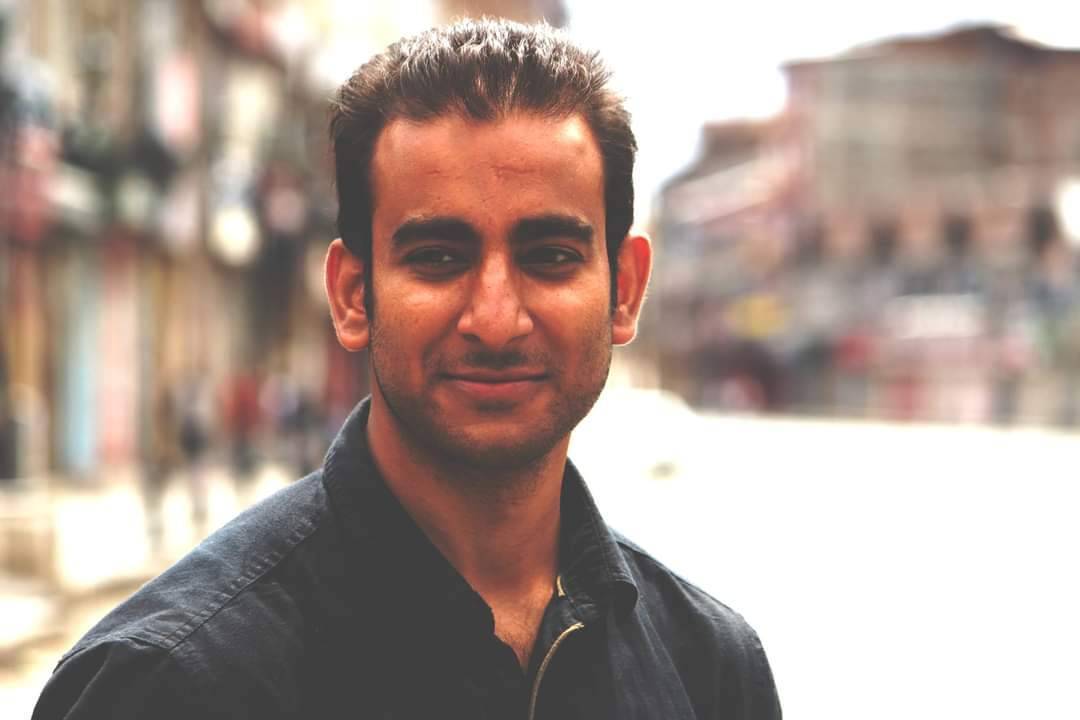
The Committee to Protect Journalists has joined 32 civil society organizations in a statement calling for the immediate and unconditional release of Kashmiri journalist Irfan Mehraj, who marked three years in arbitrary pre-trial detention on March 20.
In the joint statement, the organizations said Mehraj’s detention reflects a pattern of persecution of journalists and human rights defenders in Indian-administrated Jammu and Kashmir. They urged Indian authorities to repeal the Unlawful Activities (Prevention) Act and the Jammu and Kashmir Public Safety Act — which have been used to silence journalists and activists — to enable an environment for civil society and the news media to operate freely in the region.
CPJ research shows at least 15 journalists have been charged since 2014 under the Unlawful Activities (Prevention) Act, an anti-terror law that allows for detention without trial or charge for up to 180 days.
India currently holds two journalists in prison, according to CPJ’s latest data.
Read the full statement here.
Facts Only
* The Committee to Protect Journalists joined a statement.
* The statement concerns Irfan Mehraj, a Kashmiri journalist.
* Mehraj has been detained for three years.
* The detention is being called “arbitrary pre-trial.”
* 32 civil society organizations joined the statement.
* The Unlawful Activities (Prevention) Act is cited.
* The Jammu and Kashmir Public Safety Act is cited.
* At least 15 journalists have been charged since 2014 under the Unlawful Activities (Prevention) Act.
* Two journalists are currently imprisoned according to CPJ data.
* The statement alleges persecution of journalists and human rights defenders.
* The organizations are urging Indian authorities to repeal the relevant acts.
* The situation is occurring in Indian-administered Jammu and Kashmir.
Executive Summary
Full Take
The narrative presented is fundamentally a legal and human rights advocacy piece, leveraging the established credibility of the Committee to Protect Journalists to amplify a specific grievance. The core steelman argument, as presented, is that the detention of Irfan Mehraj represents a systemic violation of fundamental freedoms within the Indian-administered Jammu and Kashmir, specifically due to the application of the Unlawful Activities (Prevention) Act and the Jammu and Kashmir Public Safety Act. The pattern recognition here leans heavily into the established history of human rights concerns surrounding Kashmir, linking the current situation to a larger trend of suppression of dissent. This employs a Motte-and-Bailey technique – presenting the most palatable version of the argument (that Mehraj's detention is unjust) while simultaneously elevating the broader issue of legal overreach. The invocation of CPJ data creates a sense of urgency and quantifiable evidence, bolstering the claim of a systemic problem.
The underlying paradigm driving this narrative is likely a liberal human rights framework, assuming that arbitrary detention and the suppression of free expression constitute fundamental breaches of human dignity. This echoes historical patterns of international scrutiny regarding India's human rights record in Kashmir. There’s an implicit assumption that the Indian authorities are acting in bad faith, motivated by political control and a desire to silence critical voices.
The implications are that this case, if successful in generating public pressure, could contribute to a broader movement demanding legal reforms within India and potentially influence international diplomatic pressure. However, it also risks exacerbating tensions between India and Pakistan, given the contested status of Kashmir. The root cause, beyond the immediate legal issue, is likely the complex political and territorial dispute surrounding Kashmir, a situation where access to information and freedom of expression are consistently challenged. Questions that remain include the specific evidence upon which Mehraj was detained, the scope of the “unlawful activities” allegedly committed, and the broader impact of these laws on journalists and activists in the region. A potential counterstrike pattern – if this were part of a coordinated campaign – might involve leveraging social media to amplify the story, utilizing hashtags like #FreeIrfanMehraj and #KashmirFreedom, aiming to create a viral narrative of injustice. The alignment here is weak: the content focuses purely on the legal and human rights aspects, without explicitly framing the situation as a geopolitical conflict or engaging in broader strategic messaging.
Sentinel — Likely Human
This article presents a factual account of a journalist's detention, supported by data from the Committee to Protect Journalists. While the writing style is somewhat polished, it lacks distinctive stylistic flourishes that would indicate AI generation.