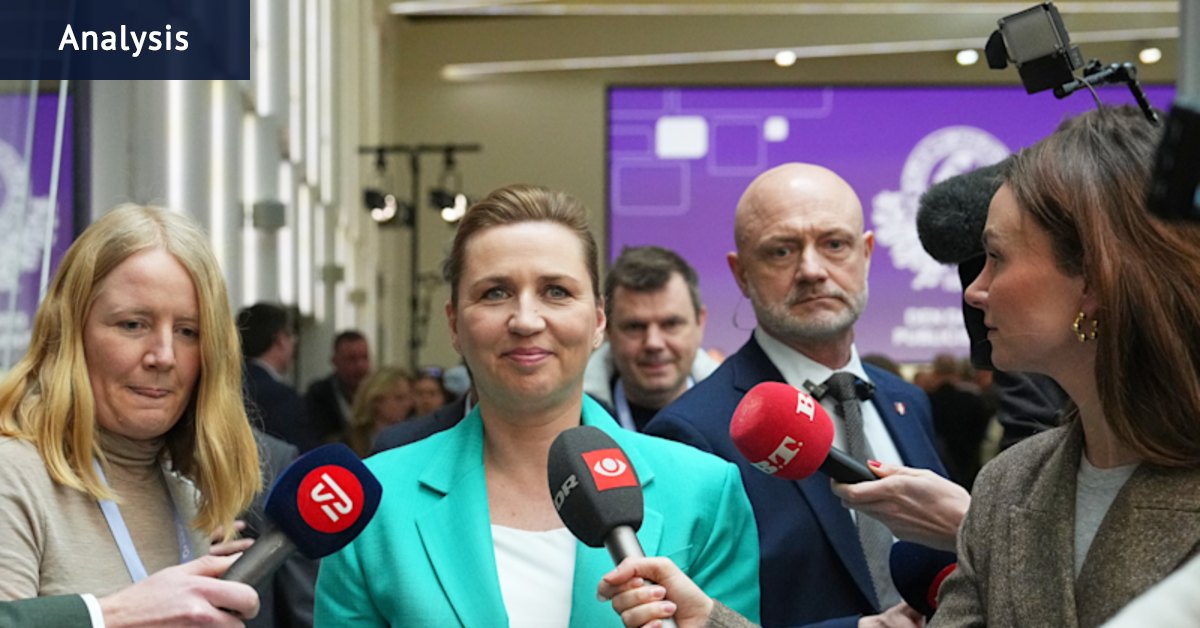
London: She defended Greenland and defied Donald Trump, but Mette Frederiksen has almost lost the most important battle of all: keeping voters happy.
The Danish prime minister is heading into a long and painful negotiation to keep her job after voters turned against her in a national election on Tuesday, forcing her to find new coalition partners if she is to hold on to power.
The silver lining, after the worst result for her Social Democrat party in more than a century, is that Frederiksen remains the most likely prime minister because no other political leader did any better.
Frederiksen called the election months earlier than needed and sought to make the most of her record on national security after her clash with the US president, when he said in January he wanted to take over Greenland.
The surprise was that she struggled to turn this into a campaign victory, says Marlene Wind, professor of political science at the University of Copenhagen.
“There’s not been any real, fundamental debate about her handling of international politics,” says Wind. “I think generally all Danes think she did a great job, but it’s not been something she has been able to benefit from in the election.”
Standing up to Trump helped Frederiksen in some ways. Support for the Social Democrats was even lower in the polls before the Greenland stoush, so her decision to call an early election probably paid off.
But two factors worked against the prime minister, says Wind. One was that she had been in power for seven years, risking a sense of fatigue.
A second was that she surprised voters three years ago by scrapping a springtime national holiday, known as Great Prayer Day, to save money and help fund defence. This was a breach of trust and some voters never forgave her.
‘No big excitement’
“It’s a very muddy and unclear result, and there’s no big excitement about any candidate,” says Wind. “So it’s not like we have a clear winner.”
For all the noise about Trump, domestic issues dominated the campaign. Frederiksen proposed a tax on the wealthy, which antagonised small business owners and drew objections from other parties.
She also put forward a ban on spraying pesticides near groundwater, upsetting farmers and intensifying a debate over the environment.
Support for the Social Democrats tumbled from 27.5 per cent to 21.9 per cent at this election, but they remain the single biggest party. Frederiksen will likely need at least four other parties to back her in a confidence vote in the Folketing, the national parliament, if she is to form a government.
“The Danes have spoken,” Frederiksen said on Wednesday. “They have given us a playing field that, to put it mildly, is a bit tricky to handle when it comes to forming a government.”
The ultimate measure of the voter backlash is that the Social Democrats had 50 seats before the election but now have 38. In an assembly with 179 seats, they can form a minority government but need 90 members to back them on a confidence vote.
Rather than shifting left or right, voters did both. The Green Left increased their seats from 15 to 20, making them a likely partner in a ruling coalition. And the Danish People’s Party, a populist group that opposes migration and the European Union, leapt from seven to 16 seats, in the biggest gain of the campaign.
Another loser on Tuesday was one of the coalition partners in the last government, the Liberal Party, also known as Venstre. It has shrunk from 23 to 18 seats and appears opposed to forming another coalition with Frederiksen – although things can change when power is at stake.
One of the winners, however, was another member of the last coalition: foreign minister Lars Løkke Rasmussen, another key player in the stoush over Greenland. His party, the Moderates, went from 12 to 14 seats.
Rasmussen, a former prime minister, is now seen as the kingmaker in any potential coalition.
Frederiksen began her career on the progressive left but now straddles the centre. She took the Social Democrats into new territory by taking a hard line against migration. She also became a foreign policy hawk and strong supporter of Ukraine, pledging to increase spending on defence.
While this raised her standing in European talks on security, there seemed to be no political dividend from her migration policies. And it did not stop the Danish People’s Party making big gains.
Wind says this shows that a centrist party cannot necessarily take the wind out of the sails of a populist party by copying its policies.
Michelle Pace, professor of global studies at Roskilde University, says the migration debate also sets up serious hurdles for Frederiksen in forming a coalition with left-wing parties.
“Even if Frederiksen pivots back to the left, she would face difficult negotiations – especially on migration, where her government has moved closer to the right than many of her potential partners are comfortable with,” says Pace.
“Migration policy is no longer a clean left-right divider in Denmark: it is a cross-bloc constraint.”
Pace, who also has a non-resident fellow’s position at Deakin University in Victoria, says the Social Democrats have “mainstreamed” the restrictive migration policies that used to be associated with the right. This alienates some parties on the left just when Frederiksen may need them most.
“Frederiksen remains in a paradoxical position: weakened electorally, but still structurally central to any government,” says Pace.
“This election confirms a longer-term shift in Danish politics: fragmentation, a strong centre, and a migration consensus that cuts across blocs, making government formation more complex but also more flexible.”
In a meeting in Copenhagen on Wednesday, party leaders decided Frederiksen should have the first go at forming a coalition. The negotiations are likely to take weeks.
Get a note directly from our foreign correspondents on what’s making headlines around the world. Sign up for our weekly What in the World newsletter.
Facts Only
Election: Danish national election held on Tuesday, June 6, 2019
Prime Minister: Mette Frederiksen of the Social Democrat party
Diplomatic spat: between Denmark and US over Greenland in January 2019
Early call for election: made by Frederiksen in March 2019
Seats lost: Social Democrats went from 50 to 38 seats in the Folketing, the national parliament
Coalition partners: Liberal Party and Moderates, coalition partners in the last government
Kingmaker: foreign minister Lars Løkke Rasmussen of the Moderates
Executive Summary
Full Take
The election results suggest a shift in Danish politics towards fragmentation, a strong center, and a migration consensus that cuts across blocs. The Social Democrats have mainstreamed restrictive migration policies previously associated with the right, alienating some potential left-wing coalition partners. Meanwhile, the populist Danish People's Party gained seats, reflecting ongoing concerns about migration and EU membership among some voters. As Frederiksen struggles to form a new government, these dynamics will shape the negotiation process and potentially lead to a more complex and flexible governing structure.
Patterns detected: ARC-0024 Ambiguity (the article does not clarify whether the election results reflect broader trends in Danish politics or are unique to this particular election), ARC-0043 Motte-and-Bailey (Frederiksen's diplomatic stance on Greenland can be seen as a strong position against Trump, but also as a pragmatic response to domestic concerns).
Sentinel — Human
This article appears to be written by a human journalist with a strong understanding of the subject matter.