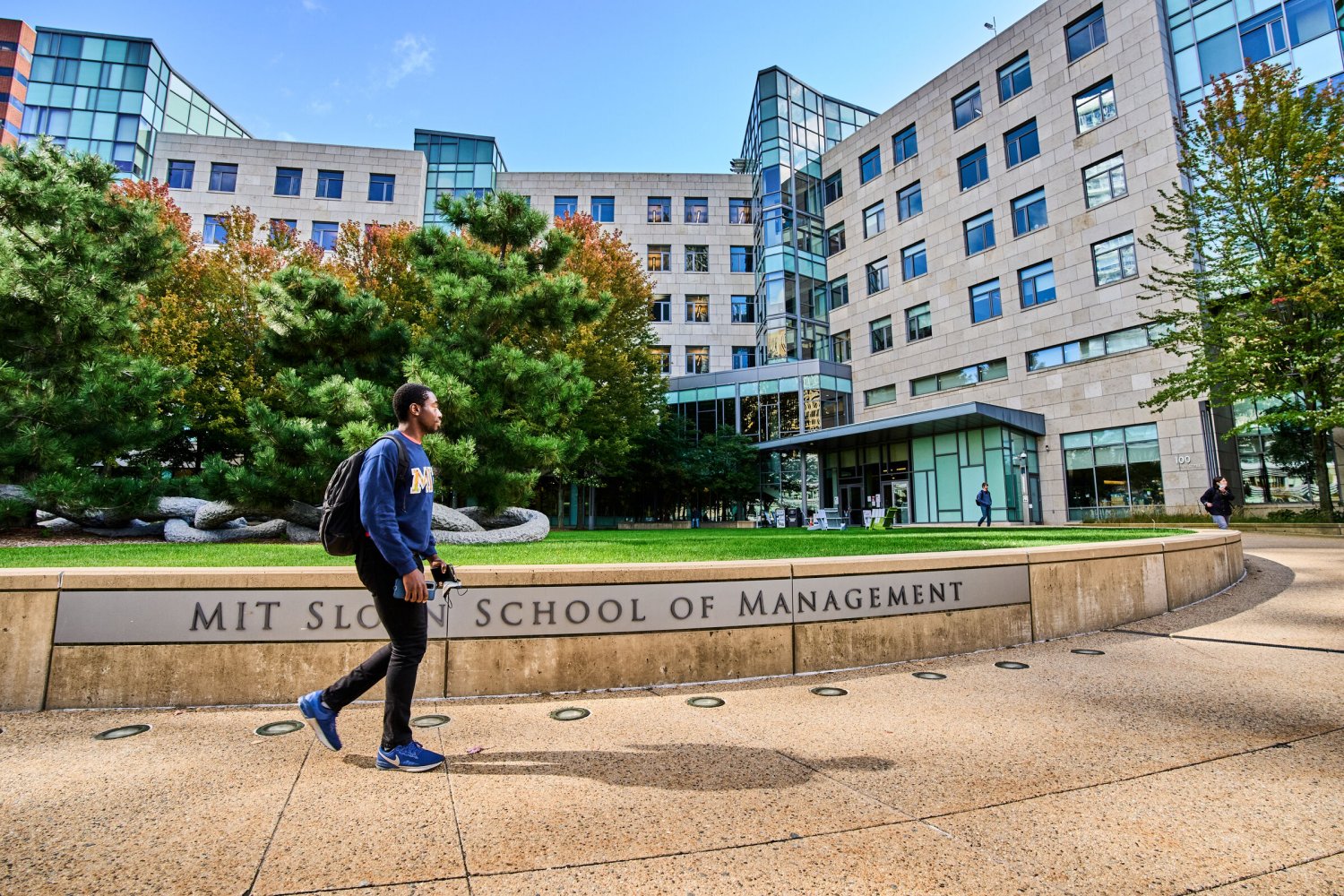
The Financial Times has placed MIT Sloan School of Management at the top of its recently released 2026 Global MBA Ranking. It is the school’s first time gaining the No. 1 spot in the list.
In its announcement of the rankings, the publication noted MIT’s school of management tops the list “at a time of sharpening focus from students on the importance of technology, including artificial intelligence, as they prepare for disruptions in the workplace.”
Global education editor Andrew Jack said in the Financial Times News Briefing podcast that MIT is “very much at the center of the tech revolution that we are seeing.” He added, “there’s no question that we’re talking more and more about artificial intelligence and expertise around some of the technical skills related and notably how you might apply AI in the workplace. That certainly reflects both its technical and engineering computer science skills historically. And [MIT Sloan] is doing a lot with those other departments in the university. So I think that says something very much about how the wider job market and the aspirations of students are evolving.”
“MIT Sloan operates at the intersection of management and technology,” says Richard Locke, the John C Head III Dean of the MIT Sloan School of Management. “Our students and alumni are employing artificial intelligence to solve complex problems in the world and across industries. At MIT Sloan, we focus on doing that work in a way that centers human capabilities, ensuring artificial intelligence extends what humans can do to improve organizations and the world.”
To determine its rankings, the Financial Times considers 21 criteria. Eight of those — accounting for 56 percent of the ranking’s weight — are determined by surveying alumni three years after they have completed their MBA program. School data are used for 34 percent percent of the rank. The remaining 10 percent measures how often full-time faculty publish in top journals.
MIT Sloan ranked fourth for its alumni network, which measures how effectively alumni support one another through career advice, internships, job opportunities, and recruiting efforts.
“This ranking underscores the strength of our global alumni community,” says Kathy Hawkes, senior associate dean of external engagement. “'Sloanies Helping Sloanies' isn’t just a phrase — it’s a lived experience. Our 31,000 alumni actively open doors, share expertise, and invest in each other’s success.”
Facts Only
* MIT Sloan School of Management is ranked No. 1 in the Financial Times 2026 Global MBA Ranking.
* This is the school’s first time achieving the top spot.
* The Financial Times cited a student focus on technology, including artificial intelligence.
* Andrew Jack, editor, noted MIT’s central role in the “tech revolution.”
* Eight ranking criteria account for 56% of the total weight.
* Alumni surveys three years post-MBA account for 56% of the ranking.
* School data account for 34% of the ranking.
* Faculty publication frequency in top journals accounts for 10% of the ranking.
* MIT Sloan ranked fourth for its alumni network.
* “Sloanies Helping Sloanies” program is actively utilized.
* The school has 31,000 alumni.
Executive Summary
Full Take
The Financial Times’ elevation of MIT Sloan to the top of the Global MBA ranking represents a strategic recalibration, reflecting a significant shift in the perceived value of technical proficiency within business education. The emphasis on “sharpening focus” amongst students regarding AI suggests a recognition – arguably an anticipated one – that traditional management models are becoming increasingly vulnerable to disruption. Richard Locke's framing of Sloan as operating at the "intersection of management and technology" reveals a deliberate attempt to position the school not simply as a producer of managers, but as architects of an AI-driven future. However, the reliance on alumni surveys – a 56% weighting – introduces a potentially tautological dynamic. The ranking essentially validates the choices already made by successful Sloan graduates, creating a self-fulfilling prophecy. Furthermore, the school’s fourth-place ranking for its alumni network suggests a competitive landscape where other institutions are also vying for top talent and engagement, indicating a crowded field within a rapidly evolving area of expertise. The implicit assumption underpinning this ranking is that future success in the workplace *requires* AI skills. A deeper question is whether this framing sufficiently addresses the broader ethical and societal implications of widespread AI adoption – the “human capabilities” focus mentioned by Locke is a potentially crucial counterpoint, but one that isn't heavily weighted in this ranking. The narrative leans heavily towards a celebratory, almost triumphalist, depiction of MIT Sloan, leaving open the question of whether this reflects a genuinely objective assessment or a carefully cultivated brand image.
Patterns detected: ARC-0024 Ambiguity (The emphasis on "student interests" obscures the underlying forces driving curriculum changes; it’s not necessarily a reflection of objective market demand but a response to perceived student desires.)
Sentinel — Likely Human
This article presents a straightforward announcement of MIT Sloan's top ranking in the Financial Times Global MBA Ranking, supported by quotes from key figures. While the language is polished, subtle stylistic patterns suggest a degree of production assistance rather than purely human authorship.