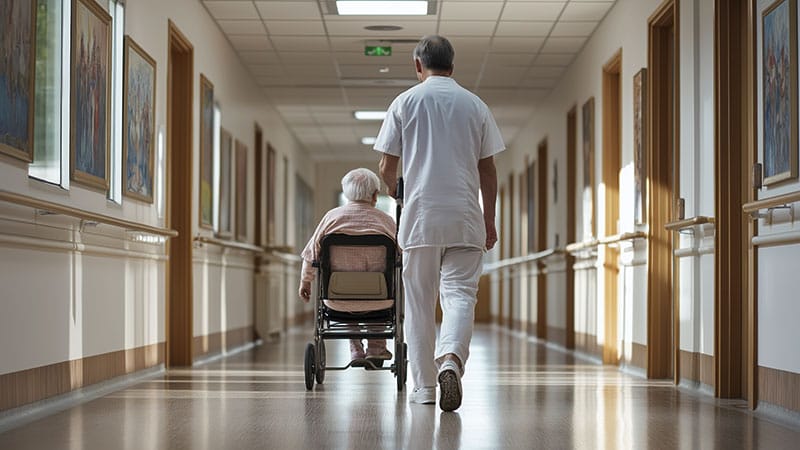
Nursing homes are inappropriately diagnosing residents with schizophrenia and prescribing antipsychotic drugs to make them easier to manage and to manipulate Medicare quality ratings, a federal watchdog reported.
In an analysis of documentation and data from a nationwide sample of 40 nursing homes, the US Department of Health and Human Services (HHS) Office of Inspector General (IG) found that medical directors who prescribed antipsychotics failed to monitor adverse events, despite known dangers of use in older adults with dementia.
“Our review found alarming instances of antipsychotic drug use,” wrote the inspectors in one of two reports. “We found that nursing homes gave antipsychotic drugs to residents with dementia to manage their behavior for the benefit of staff, despite an FDA warning that these drugs may increase the risk of death for these residents,” they wrote.
In another report, the HHS IG detailed rampant use of false schizophrenia diagnoses, which allowed nursing homes to skirt reporting requirements in a national database used by caregivers and patients to compare Medicare providers.
“We found that nursing homes inappropriately diagnosed schizophrenia to mask their misuse of antipsychotic drugs, artificially inflate their star rating, and skirt established safeguards meant to protect residents,” report authors wrote. “As a result, nursing homes compromised residents’ care.”
Long-Time Concerns
Studies have long shown that antipsychotic use in older patients with dementia is associated with increased risk for mortality and stroke, heart attack, fracture, and a range of other severe health problems.
In 2012, concerns about overuse prompted the Centers for Medicare & Medicaid Services (CMS) to begin requiring nursing homes to report the percentage of long-stay residents receiving antipsychotics. This measure goes into the calculation of a facility’s star rating on Care Compare, a tool that allows patients and caregivers to compare Medicare providers.
However, if a resident has a diagnosis of schizophrenia, the prescription is not recorded for the quality measure.
CMS conducts on-site inspection surveys of nursing homes in all 50 states to ensure compliance with federal regulations. The HHS IG reports included an analysis of a purposive sample of those surveys from 40 nursing homes across the US, completed by CMS between 2018 and 2021.
The inspectors documented numerous cases of questionable use of antipsychotics, including an incident in which a 102-year-old resident described as “combative to care” when her brief was being changed was given antipsychotics until a nurse found that “simply explaining what was happening…calmed her down.”
At another facility, a resident was prescribed an antipsychotic when she had a urinary tract infection, known to cause delirium. The nursing home knew of the infection but did not reevaluate the patient or discontinue the antipsychotic.
One director of nursing acknowledged that the facility “routinely added schizophrenia diagnoses” to medical records when it showed a high percentage of residents receiving antipsychotics.
The inspectors determined that it was “company policy” to add the diagnoses at many facilities, and that in some cases, a medical director had made a diagnosis without seeing a patient or “simply signed off on schizophrenia diagnoses without question.”
Antipsychotic Use Probably Underreported
CMS has acknowledged that antipsychotic use is probably underreported. State surveyors were notified in 2025 that the agency would now audit more claims data to measure use. CMS estimated then that 14.6% of nursing home residents received antipsychotics but said that figure would probably rise to almost 17% with the new requirements.
A 2023 study coauthored by Harvard Medical School Professor of Health Care Policy David Grabowski, PhD, supports that estimate. Grabowski has for at least a decade been studying what appears to be inappropriate coding by nursing homes to facilitate antipsychotic use, which has been associated with worse outcomes for residents.
He and colleagues reported in 2025 that almost 20% of antipsychotic use in nursing homes went unreported. They said that nursing homes that had a low use of antipsychotics also had fewer hospitalizations and fewer schizophrenia diagnoses, and less use of restraints.
The HHS IG’s findings are not surprising, Grabowski told Medscape Medical News.
Once antipsychotic use was incorporated into quality measures, “nursing homes had this incentive to increase their use of schizophrenia as a diagnosis, to basically mask the inappropriate use of these antipsychotics,” he said.
Report Methodology Questioned
A nursing home industry organization questioned the IG’s methodology, noting that investigators analyzed reports from just 40 facilities that had been flagged for issues with dementia care. There are some 15,000 long-term care facilities in the US.
The reports “are based on a very small subset of specifically selected nursing homes and are not indicative of national trends,” said Holly Harmon, senior vice president at the American Health Care Association, in a statement provided to Medscape Medical News.
She said that nursing homes had been working with federal officials and other stakeholders through the CMS National Partnership to Improve Dementia Care in Nursing Homes to reduce unnecessary use of antipsychotics.
“Antipsychotic medications are sometimes deemed necessary and beneficial to certain residents based on their clinical condition and shared decision-making with the resident and their medical provider,” she said.
The IG acknowledged that examples included in the report aren’t representative of all nursing homes.
“However, they reveal vulnerabilities in nursing home care that have implications for the wider nursing home population and must be addressed to improve care and better protect residents,” the report authors wrote.
CMS Recommendations
The report calls for the CMS to increase its oversight of nursing homes and step up efforts to ensure medical directors and nursing home pharmacists reduce inappropriate antipsychotic prescribing and increase transparency with residents and caregivers about prescribing practices.
In response to the recommendations, CMS said it had limited authority to hold medical directors or pharmacists more accountable, and that it did not have the resources to provide more direct assistance to nursing homes to come into compliance. The agency said that its 2025 directive to state surveyors would help detect underreporting of antipsychotic use.
Reports that the Trump administration is considering loosening restrictions on prescribing of the medications is cause for concern, said Grabowski, who noted that antipsychotics raise the risk for hospitalization and early mortality.
“I would hope that we could figure out models where we can increase staffing and increase better care on the ground for nursing home residents with dementia, vs allowing this overmedication,” he said.
Grabowski reported no relevant financial relationships.
Alicia Ault is a Saint Petersburg, Florida-based freelance journalist whose work has appeared in many health and science publications, including Smithsonian.com. You can find her on X @aliciaault and on Bluesky @aliciaault.bsky.social.
Facts Only
Nursing homes are inappropriately diagnosing residents with schizophrenia
Antipsychotic drugs are being prescribed to nursing home residents with dementia
These drugs are being used to manage behavior and potentially manipulate Medicare quality ratings
The FDA has warned that antipsychotics may increase the risk of death for residents with dementia
CMS began requiring nursing homes to report the percentage of long-stay residents receiving antipsychotics in 2012
CMS conducts on-site inspection surveys of nursing homes to ensure compliance with federal regulations
The HHS IG analyzed a purposive sample of CMS surveys from 40 nursing homes across the US
Investigators documented numerous cases of questionable use of antipsychotics
False schizophrenia diagnoses were found to be used to mask inappropriate use of antipsychotics and skirt reporting requirements
Executive Summary
Full Take
The HHS IG's report raises concerns about the inappropriate use of antipsychotics in nursing homes and the potential manipulation of Medicare quality ratings. The use of false schizophrenia diagnoses to mask the inappropriate use of antipsychotics is a troubling pattern that undermines the integrity of the national database used by caregivers and patients to compare Medicare providers. This pattern aligns with ARC-0024 Ambiguity, as the use of false diagnoses creates ambiguity about the true reasons for antipsychotic use and the quality of care provided by nursing homes. The report also highlights the need for increased oversight and transparency in the prescribing practices of nursing homes. It is crucial for CMS to take action to address these issues and ensure the safety and well-being of nursing home residents.
Bridge questions: What measures can be taken to increase oversight and transparency in the prescribing practices of nursing homes? What steps can be taken to protect nursing home residents from inappropriate use of antipsychotics?
Counterstrike scan: It is unlikely that this report is part of a coordinated influence campaign, as it is a report from a federal watchdog agency and does not present a clear attack pattern or coordinated messaging.
Sentinel — Human
The article appears to be human-written, with coherent and balanced content that includes personal voice and idiosyncratic emphasis, as well as citations to reputable sources. However, the article does contain a moderate amount of hedging, suggesting a degree of caution or qualification in its statements.