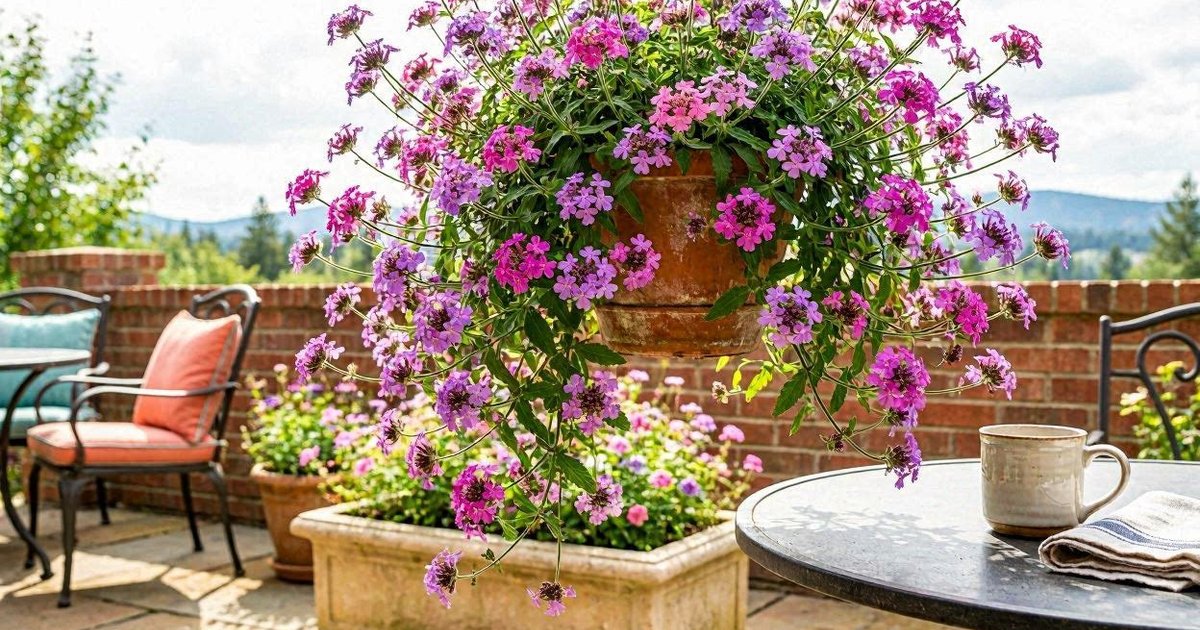
Trailing verbena is one of the most effortlessly graceful summer annuals available to gardeners. With its low, spreading habit and clusters of small, vibrant flowers, it creates a continuous carpet of color that spills beautifully over containers, hanging baskets, and sunny borders. In Fort Collins and across the Front Range, it is especially valued for its ability to thrive in heat, resist drought stress, and bloom steadily through the long Colorado summer.
Where some trailing plants demand constant attention, verbena offers a more relaxed kind of performance—steady, reliable, and quietly abundant.
At [Plantorium.com](https://plantorium.com?utm_source=chatgpt.com trailing verbena is frequently used in container designs where long bloom duration and heat tolerance are essential.
Why Trailing Verbena Performs So Well in Northern Colorado
Verbena is naturally adapted to warm, open environments with strong sunlight and well-drained soil. That makes it an excellent match for the Front Range climate, where summer is defined by intense sun, dry air, and fluctuating moisture levels.
It performs well because:
- It thrives in full sun and heat
- It tolerates drought once established
- It produces long-lasting flower clusters
- It maintains color through stressful conditions
Flower colors are typically vivid and include:
- Purple
- Pink
- Red
- White
- Lavender
- Bi-color combinations
The low, spreading habit allows it to function both as a spiller in containers and as a soft groundcover in garden beds.
When to Plant Trailing Verbena in Fort Collins
Trailing verbena should be planted after the last frost date, typically mid-May in Fort Collins and surrounding areas.
Once planted in warm soil, it establishes quickly and begins spreading outward as temperatures rise. By early summer, it often forms dense mats of foliage covered in blooms.
Sunlight Requirements
Full sun is essential for strong flowering and compact growth.
In Northern Colorado:
- Provide at least 6–8 hours of direct sunlight daily
- Ensure open exposure for airflow
- Avoid shaded areas, which reduce bloom density
In full sun, trailing verbena becomes one of the most floriferous plants in the summer garden.
Soil and Growing Conditions
Verbena prefers well-draining soil and performs best in relatively lean conditions.
For optimal growth:
- Use well-draining potting mix in containers
- Amend heavy soils with compost and grit
- Avoid areas with standing water
Overly rich soil can encourage excessive foliage growth at the expense of flowers.
Watering in a Front Range Climate
Trailing verbena is moderately drought tolerant once established, making it well suited to Colorado’s dry conditions.
Recommended watering approach:
- Water deeply during establishment
- Allow soil to dry slightly between waterings
- Avoid constant moisture or soggy conditions
- Increase watering during extended heat or wind
In containers, regular monitoring is important during peak summer temperatures.
Fertilizing for Continuous Bloom
Verbena benefits from light, consistent feeding to maintain its long bloom season.
A balanced fertilizer every few weeks supports:
- Continuous flowering
- Strong spreading growth
- Healthy foliage density
Avoid excessive nitrogen, which can reduce flowering and lead to overly lush growth.
Garden Role and Design Use
Trailing verbena is primarily used as a soft-spreading color layer in garden design.
It works especially well in:
- Hanging baskets
- Patio containers
- Window boxes
- Sunny garden borders
- Mass planting schemes
In Fort Collins landscapes, it is often used to soften edges and connect stronger upright plants into cohesive compositions.
Pollinator Value
Verbena is highly attractive to pollinators throughout the summer.
It supports:
- Butterflies
- Bees
- Other beneficial insects
Its long bloom period makes it a steady nectar source during peak summer activity.
Handling Colorado Weather
Trailing verbena is well adapted to Front Range summer conditions.
It tolerates:
- Heat
- Dry air
- Strong sunlight
- Wind exposure
It is sensitive to:
- Poor drainage
- Prolonged overwatering
- Frost (not cold hardy)
Even after stress, plants often recover quickly and resume blooming.
Companion Planting
Trailing verbena pairs well with a wide range of sun-loving annuals.
Excellent companions include:
- Petunias
- Calibrachoa
- Salvia
- Rudbeckia
- Angelonia
- Lantana
- Portulaca
Its spreading habit makes it especially useful for blending transitions between different plant forms.
A Reliable Spreader of Summer Color
Trailing verbena is one of the most dependable low-growing flowering plants for Colorado gardens. It combines resilience with long-lasting color, making it ideal for gardeners who want continuous performance without constant maintenance.
In Fort Collins and across the Front Range, it remains a staple for containers and sunny beds where steady color and soft texture are essential throughout the summer season.
Explore seasonal availability and additional annuals at [Plantorium.com’s full plant catalog](https://plantorium.com/all-plants/?utm_source=chatgpt.com
Facts Only
Trailing verbena is a summer annual with a low, spreading habit and small, vibrant flowers.
It is adapted to warm, open environments with strong sunlight and well-drained soil.
In Fort Collins and the Front Range, it thrives in heat, resists drought, and blooms steadily through summer.
Flower colors include purple, pink, red, white, lavender, and bi-color combinations.
It should be planted after the last frost date, typically mid-May in Fort Collins.
Full sun (6–8 hours daily) is essential for strong flowering and compact growth.
It prefers well-draining soil and performs best in lean conditions.
Watering should be deep during establishment, with soil allowed to dry slightly between waterings.
Light, consistent feeding with balanced fertilizer supports continuous blooming.
It is used in hanging baskets, containers, garden borders, and mass plantings.
Trailing verbena attracts pollinators like butterflies and bees.
It tolerates heat, dry air, and wind but is sensitive to poor drainage and frost.
Companion plants include petunias, calibrachoa, salvia, and lantana.
Executive Summary
Trailing verbena is a resilient and low-maintenance summer annual that thrives in the Front Range climate of Northern Colorado, particularly in Fort Collins. Known for its spreading habit and vibrant flower clusters, it performs well in full sun, tolerates drought, and blooms continuously through the summer. The plant is valued for its adaptability to heat, dry air, and fluctuating moisture levels, making it ideal for containers, hanging baskets, and garden borders. It should be planted after the last frost, typically mid-May, and requires well-draining soil to prevent overwatering. Trailing verbena attracts pollinators like butterflies and bees, supports companion planting with other sun-loving annuals, and is often used to soften edges in garden designs. While it recovers quickly from stress, it is not cold-hardy and sensitive to poor drainage. Its long-lasting color and resilience make it a staple for gardeners seeking steady performance with minimal upkeep.
The article highlights its practical uses in local gardening, emphasizing its role in sustainable, water-efficient landscapes. However, it does not address potential challenges such as pest susceptibility or regional soil variations, which could affect its performance in specific microclimates.
Full Take
This piece presents trailing verbena as an ideal plant for Northern Colorado’s climate, emphasizing its resilience and low-maintenance appeal. The strongest version of this narrative highlights its practical benefits—drought tolerance, pollinator support, and versatility in garden design—while acknowledging its limitations (e.g., frost sensitivity). The framing aligns with broader trends in sustainable gardening, where water efficiency and pollinator-friendly plants are prioritized.
However, the analysis could benefit from addressing potential counterpoints, such as regional soil variations or pest pressures, which might affect its performance. The narrative leans heavily on its adaptability without exploring scenarios where it might struggle, such as in overly rich soil or shaded areas. This could be an example of **ARC-0024 Ambiguity**, where the focus on strengths obscures potential weaknesses.
The root cause of this narrative is likely the growing demand for resilient, low-water plants in arid climates, reflecting broader environmental concerns. The implications for gardeners are clear: trailing verbena offers a reliable, colorful option with ecological benefits. Yet, the piece assumes uniform growing conditions, which may not hold true for all microclimates in the region.
Bridge questions: How might trailing verbena perform in different soil types across the Front Range? What pests or diseases could challenge its resilience? Would its benefits outweigh potential drawbacks in a high-maintenance garden setting?
Counterstrike scan: If this were part of a coordinated campaign, it might promote trailing verbena as a universal solution without nuance. However, the content does not exhibit manipulative patterns; it presents a balanced view of the plant’s strengths and limitations.
Sentinel — Human
The article functions as high-quality, well-organized horticultural advice, likely written by a human expert or carefully guided by human intent, focusing on established climate and plant science.