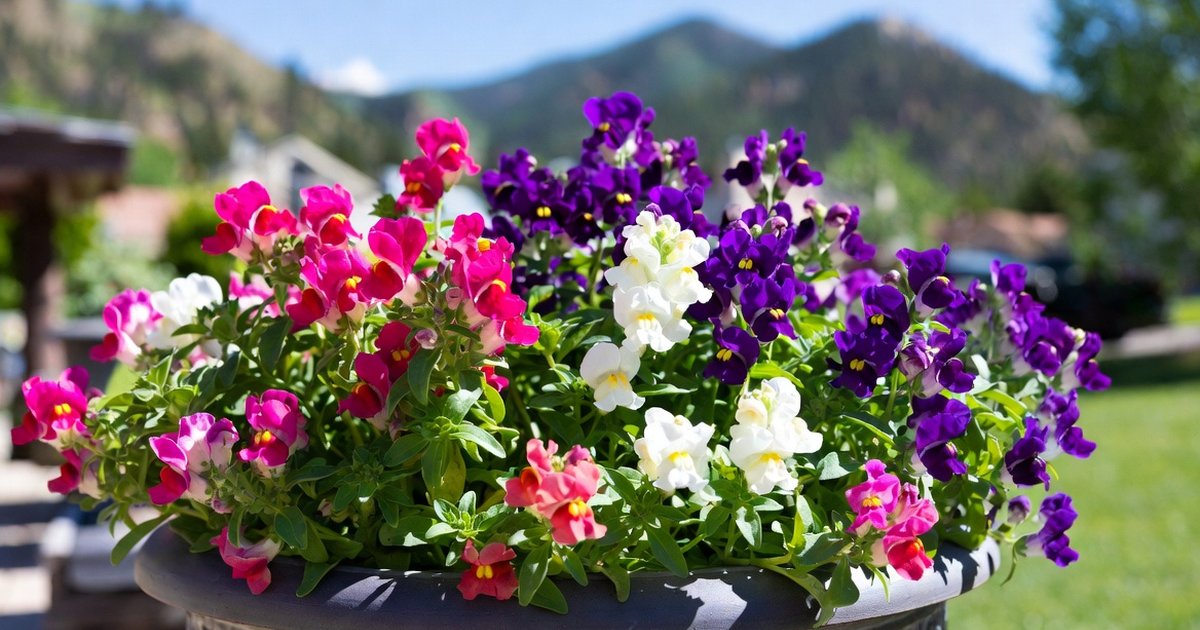
Nemesia (Nemesia strumosa, N. caerulea, and hybrids) is a charming, cool-season annual prized for its abundant, snapdragon-like flowers in a wide range of bright colors — blue, purple, pink, white, orange, yellow, and bicolors. Many varieties are sweetly fragrant and make excellent “fillers” or “spillers” in containers.
It pairs beautifully with your existing collection: the cool blues and purples complement Lobelia and Alyssum, contrast nicely with warm Marigolds and Lantana, and add delicate texture near the bold foliage of Sweet Potato Vine, Creeping Jenny, Millet, and Juncus.
Growing Conditions in Fort Collins
Nemesia loves Colorado’s cool springs and falls, making it an ideal plant for shoulder-season color.
- Hardiness: Grown as a tender annual in Zone 5b. It will not survive winter outdoors.
- Planting time: Early to mid-May (tolerates light frost better than many annuals). Great for early spring planting and again in late summer for fall color.
- Sun: Full sun to partial shade. In Fort Collins’ intense summer sun, afternoon shade or an eastern exposure helps prevent heat stress and prolong blooming.
- Soil: Well-draining, rich, slightly acidic to neutral soil. Performs best in containers with high-quality potting mix.
- Water: Keep soil evenly moist but not waterlogged. Consistent moisture is important — it can wilt quickly if allowed to dry out, especially in dry Colorado air.
Care Tips
- Growth habit: Compact mounds or trailing types, usually 6–12 inches tall and wide. Trailing varieties (like ‘Sunsatia’ or ‘Karma’) work great as spillers.
- Bloom time: Excellent in spring and fall. It may slow down during midsummer heat but often rebounds in late summer/fall.
- Maintenance: Deadhead or shear lightly when blooms fade to encourage fresh flowers. Pinch young plants for bushier growth.
- Fertilizer: Moderate feeder. Use a balanced or bloom-boosting fertilizer every 2–3 weeks in containers.
- Pests/Diseases: Generally easy and low-maintenance. Watch for aphids or botrytis in overly crowded/wet conditions. Deer-resistant.
Fort Collins Pro Tip: Nemesia is perfect for early-season color in your mixed containers. Combine it with trailing Alyssum, Lobelia, Creeping Jenny, and Sweet Potato Vine around a central Millet or Juncus for a stunning, long-lasting pot.
Would you like specific variety recommendations (e.g., ‘Sunsatia’, ‘Aromance’, or ‘Fruit Crush’ series) or full container combination ideas using all the plants you’ve asked about?
Facts Only
* Nemesia (*Nemesia strumosa*, *N. caerulea*, and hybrids) is a cool-season annual.
* Flowers come in colors such as blue, purple, pink, white, orange, yellow, and bicolors.
* It is used as a filler or spiller in containers.
* Growing conditions in Fort Collins favor cool springs and falls.
* Hardiness: Grown as a tender annual in Zone 5b; it will not survive winter outdoors.
* Planting time is early to mid-May, tolerating light frost.
* Sun requirement is full sun to partial shade, with afternoon shade or eastern exposure recommended in intense summer sun.
* Soil must be well-draining, rich, slightly acidic to neutral.
* Water must be kept evenly moist but not waterlogged.
* Maintenance requires deadheading blooms and pinching young plants.
* Fertilizer use should be moderate, with a balanced or bloom-boosting fertilizer applied every 2–3 weeks in containers.
* Pests include aphids or botrytis in crowded/wet conditions.
* The plant is deer-resistant.
Executive Summary
Full Take
Sentinel — Human
The text is exceptionally well-structured and informative, exhibiting high coherence typical of LLM output, but the depth of localized, practical horticultural advice suggests a foundation in human domain knowledge.