City state’s prime minister says trip ‘short but meaningful’ and calls for closer cooperation to boost regional growth
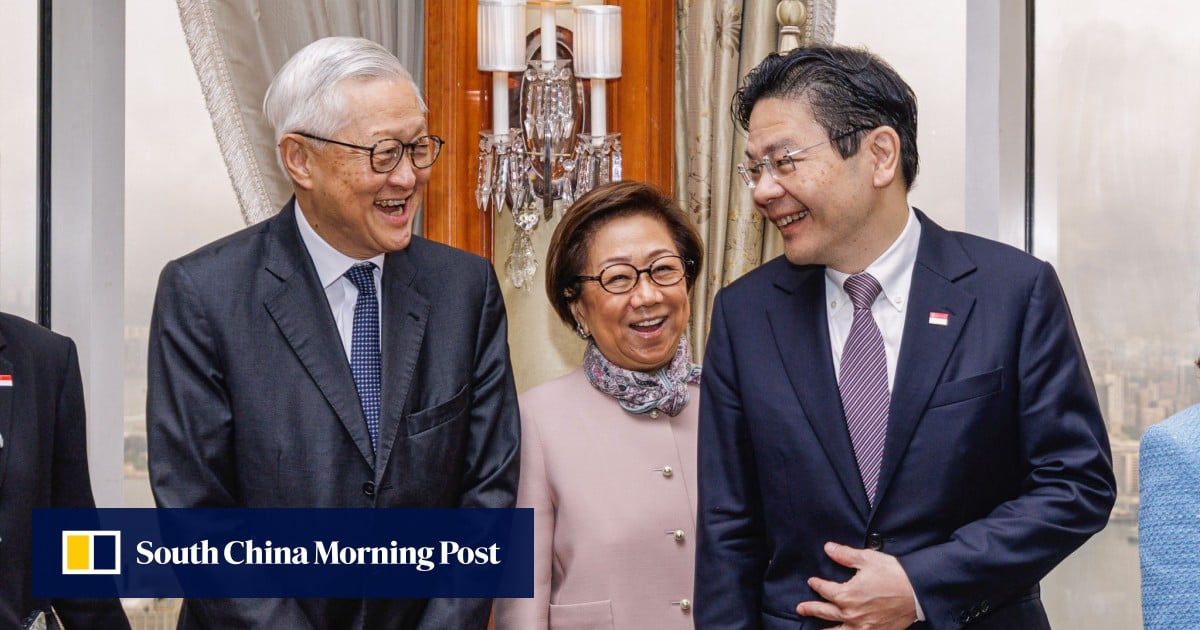
Singapore Prime Minister Lawrence Wong has met Hong Kong political heavyweights and business leaders – including former Chief Justice Andrew Li Kwok-nang and Richard Li Tzar-kai, the son of tycoon Li Ka-shing – in what he described as a “short but meaningful visit” to the city.
Wrapping up his first official visit to the city since he became prime minister in 2024, Wong said in a Facebook post on Saturday that closer cooperation between the two Asian financial centres would contribute to the region’s growth and resilience.
“A short but meaningful visit to Hong Kong,” Wong wrote of his three-day visit. “The city feels familiar yet renewed, with a clear sense of dynamism.”
Apart from Richard Li, who is chairman of Pacific Century Group, Wong also spoke to other influential business leaders, including Sino Group chairman Daryl Ng Win-kong, Kerry Properties chairman Kuok Khoon Hua and Rosewood Hotel Group CEO Sonia Cheng Chi-man.
Wong also met Regina Ip Lau Suk-yee, convenor of the government’s key decision-making Executive Council, Ronnie Chan Chi-chung, honorary chairman of Hang Lung Group, former lawmaker Martin Liao Cheung-kong and ex-chairwoman of Hong Kong Exchanges and Clearing Laura Cha Shih May-lung.
Wong said he had “good exchanges” with figures from the public and private sectors, with discussions centred on regional developments and areas for collaboration between the two Asian financial hubs, including the digital economy, technology, innovation, and sustainability.
“Singapore and Hong Kong each have our strengths. By working more closely, we can reinforce one another and contribute to the wider region’s growth and resilience,” he said.
Facts Only
Singapore Prime Minister Lawrence Wong visited Hong Kong for three days in 2024.
The visit was his first official trip to Hong Kong since becoming prime minister.
Wong met with former Hong Kong Chief Justice Andrew Li Kwok-nang.
He also met with Richard Li Tzar-kai, chairman of Pacific Century Group and son of tycoon Li Ka-shing.
Other business leaders Wong engaged with included Daryl Ng Win-kong of Sino Group, Kuok Khoon Hua of Kerry Properties, and Sonia Cheng Chi-man of Rosewood Hotel Group.
Political figures met included Regina Ip Lau Suk-yee, convenor of Hong Kong’s Executive Council, and Ronnie Chan Chi-chung, honorary chairman of Hang Lung Group.
Former lawmaker Martin Liao Cheung-kong and ex-chairwoman of Hong Kong Exchanges and Clearing Laura Cha Shih May-lung were also among those Wong spoke with.
Discussions centered on regional developments and collaboration in the digital economy, technology, innovation, and sustainability.
Wong described the visit as "short but meaningful" in a Facebook post.
He stated that closer cooperation between Singapore and Hong Kong could contribute to regional growth and resilience.
Wong noted that Hong Kong felt "familiar yet renewed, with a clear sense of dynamism."
Executive Summary
Singapore Prime Minister Lawrence Wong concluded his first official visit to Hong Kong since assuming office in 2024, describing it as "short but meaningful." During the three-day trip, he met with prominent political and business figures, including former Chief Justice Andrew Li Kwok-nang, tycoon Richard Li Tzar-kai, and other influential leaders such as Daryl Ng Win-kong of Sino Group and Kerry Properties chairman Kuok Khoon Hua. Discussions focused on regional developments and potential collaboration between the two financial hubs, particularly in areas like the digital economy, technology, innovation, and sustainability. Wong emphasized that closer cooperation between Singapore and Hong Kong could enhance regional growth and resilience, noting the city's renewed dynamism. The visit underscored the shared strengths of both cities and their potential to complement each other in driving economic progress.
The meetings also included key Hong Kong officials and business leaders, such as Regina Ip Lau Suk-yee of the Executive Council and Ronnie Chan Chi-chung of Hang Lung Group. Wong’s engagements highlighted the ongoing dialogue between the two cities, which have historically been major financial centers in Asia. While the visit was framed as a diplomatic and economic outreach, it also reflected the broader geopolitical and economic dynamics in the region, where both cities seek to maintain their competitive edge amid global uncertainties.
Full Take
**STEELMAN:** The narrative presents a straightforward account of diplomatic and economic engagement between two major Asian financial hubs. Singapore’s Prime Minister Lawrence Wong’s visit to Hong Kong is framed as a constructive effort to strengthen ties, with a focus on mutual benefits in technology, innovation, and sustainability. The emphasis on collaboration and regional resilience aligns with the stated goals of both cities to maintain their economic relevance. The inclusion of high-profile meetings with business and political leaders lends credibility to the narrative, suggesting a genuine effort to foster partnerships.
**PATTERN SCAN:** The article avoids overt manipulation patterns, but it leans into a subtle framing of "renewal" and "dynamism" in Hong Kong, which could serve as a soft counter-narrative to recent criticisms of the city’s political and economic challenges. The focus on elite figures—tycoons, former officials, and corporate leaders—may implicitly reinforce a top-down view of governance and economic development, potentially sidelining broader societal perspectives. However, the piece does not engage in emotional exploitation, distortion, or bad faith tactics. The tone remains neutral, though the selection of sources and themes could be seen as reinforcing a pro-establishment narrative.
**ROOT CAUSE:** The underlying paradigm here is the competition-cooperation dynamic between Asian financial centers. Both Singapore and Hong Kong are vying to maintain their positions as global hubs amid shifting geopolitical and economic currents. The unstated assumption is that closer ties between the two will inherently benefit the region, without addressing potential tensions or divergent interests. Historically, this echoes the post-colonial rivalry and collaboration between the two cities, where economic pragmatism often trumps ideological differences.
**IMPLICATIONS:** For human agency, the narrative highlights the role of elite networks in shaping regional economic policies, which may marginalize grassroots or alternative voices. The beneficiaries are likely the business and political classes in both cities, while the costs—such as potential inequality or lack of broader public input—are less visible. Second-order consequences could include deeper integration of financial and technological systems between Singapore and Hong Kong, which may strengthen their collective bargaining power but also entrench existing power structures.
**BRIDGE QUESTIONS:**
How might this collaboration address (or exacerbate) economic disparities within each city?
What perspectives from civil society or smaller businesses are missing from this dialogue?
If the goal is regional resilience, how are risks like geopolitical tensions or market volatility being accounted for?
**COUNTERSTRIKE SCAN:** If this were part of a coordinated influence campaign, the playbook would likely emphasize elite consensus, downplay dissent, and frame cooperation as an unassailable good. The actual content aligns with this to some extent—focusing on high-profile meetings and avoiding critical voices—but it does not cross into overt propaganda. The piece remains within the bounds of standard diplomatic reporting, though it could be more transparent about potential trade-offs or opposing viewpoints.
Patterns detected: none
Sentinel — Human
The article appears likely to be human-written, showing signs of varied sentence length and lexical diversity, while also displaying a balanced and fluent but not overly passionate tone. However, the absence of a clear argumentative structure or talking points matching known templates indicates some degree of coordination.