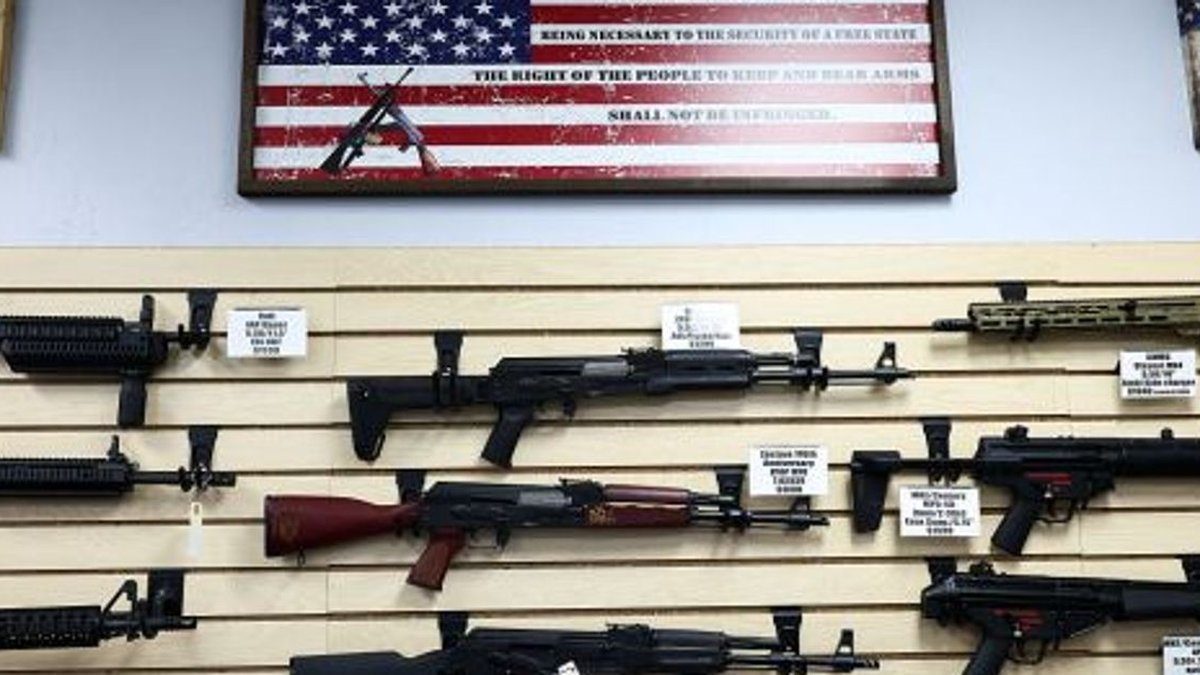
In previous articles, I explored two of the biggest unanswered questions in the Second Amendment space: Who are “the people,” and what constitutes “Arms”? Both of these questions seemingly emerge from the text of the amendment itself, which states that “[a] well regulated Militia, being necessary to the security of a free State, the right of the people to keep and bear Arms, shall not be infringed.” But these are not the only open questions.
In the landmark case of District of Columbia v. Heller, Justice Antonin Scalia made clear that, while there was an individual right to keep a handgun in one’s home for self-defense, the court had not yet done a historical analysis to determine “the full scope of the Second Amendment” and, in particular, “nothing in [the opinion] should be taken to cast doubt on longstanding prohibitions on the possession of firearms by felons and the mentally ill, or laws forbidding the carrying of firearms in sensitive places such as schools and government buildings.” This was requoted in the recent decision of Wolford v. Lopez, which struck down a Hawaii law making it a crime for firearm owners to bring their guns onto private property open to the public absent express permission.
This article dives into the Second Amendment and those limits placed on the categories raised above: sensitive places and firearm possession by felons and the mentally ill.
Sensitive places
Sensitive places cases generally raise two questions: (1) What, exactly, constitutes a sensitive place? and (2) Which such places are sensitive enough to justify restricting a person’s constitutional right to carry firearms within them?
Although the term sensitive places came up briefly in Heller, as noted above, the justices did not address the issue again until a mention in the 2022 case of New York State Rifle & Pistol Association v. Bruen. In Bruen, the court acknowledged that, historically, there were very few locations where weapons were completely prohibited (such as legislative assemblies, polling places, and courthouses), and judges should analogize to these historical regulations when considering whether restrictions concerning other locations are constitutionally permissible.
The lower courts have grappled with this issue in a variety of contexts. In 2023, for example, the U.S. Court of Appeals for the 2nd Circuit evaluated a challenge to New York regulations prohibiting guns in places of worship, parks, zoos, bars, theaters, and treatment centers. In a 261-page opinion, the court considered each type of location separately. Ultimately, the 2nd Circuit upheld the sensitive place restrictions as to urban public parks, zoos, places licensed for alcohol consumption, theaters or other entertainment venues, and treatment centers – finding that the government had shown an analogous historical tradition of regulation as to such places. The court did not uphold the regulation as it applied to places of worship (though it ultimately rested that part of the decision on First Amendment grounds instead of conducting a Second Amendment analysis).
The U.S Court of Appeals for the 7th Circuit conducted a similar inquiry in 2025’s Schoenthal v. Raoul, which involved a challenge to an Illinois law that prohibited carrying a loaded firearm on public transportation. The 7th Circuit found that Illinois’ law was consistent with a historical tradition of regulating firearms in “crowded and confined locations,” both in how and why it regulated individual’s Second Amendment rights. In this regard, the court also noted that such a regulation imposed only a temporary burden on the right to carry, since a person is on public transport for a limited amount of time, and the law allowed them to have their firearm so long as it was unloaded.
Similar challenges have been considered by other lower courts, including the U.S. Court of Appeals for the 3rd, 4th, and 9th Circuits. In each of these cases, the courts have upheld some aspects of the relevant sensitive place laws and struck down others, generally agreeing that places like parks, healthcare facilities, and establishments that serve alcohol are sensitive places in which firearms can be prohibited.
Felons
Felon-in-possession laws have also resulted in several challenges to the Second Amendment. According to 18 U.S.C. § 922(g), anyone convicted of a felony (being “a crime punishable by imprisonment for a term exceeding one year”) may not lawfully possess a firearm. In light of Bruen, the government has been tasked with demonstrating a historical tradition to support felon disarmament.
The Supreme Court has not squarely addressed the constitutionality of a felon-in-possession law but there has been brief discussion of it in some Second Amendment opinions. For example, the plurality opinion in 2010’s McDonald v. City of Chicago – which held that the Second Amendment applies to state and local governments in addition to the federal government – repeated the “assurances” from Heller that the holding of the case was not meant to “cast doubt” on certain types of regulations like prohibitions on the possession of firearms by felons. Similar references were made in the majority opinions in 2024’s United States v. Rahimi and Wolford v. Lopez, though without any substantive explanation. And in United States v. Hemani, which was handed down this term only days before Wolford, the majority specifically disclaimed that it was addressing the constitutionality of Section 922(g)’s felon provision but focused instead on whether illegal users of certain drugs could be categorically banned from having guns.
The lower courts have taken different approaches to this issue. In the 2023 case of United States v. Jackson, a defendant argued that Section 922(g) was unconstitutional as applied to him because the underlying felony on which he was prosecuted was for a non-violent drug offense, and he thus posed no danger to any other citizens. The U.S. Court of Appeals for the 8th Circuit pointed to the Heller language that identified the felon-in-possession prohibition as presumptively lawful and noted that Bruen did not disturb this assertion. The court then moved to the historical evidence. There, it considered historical regulations that prohibited certain groups from possessing firearms such as Catholics and Native Americans, as well as individuals who committed “non-violent hunting offenses” or “non-violent offenses involving deceit and wrongful taking of property.”
The 8th Circuit saw two ways to understand this evidence. One way would be to conclude that the government has discretion to exclude categories of people from possessing firearms due to a perceived threat “to an orderly society and compliance with legal norms” – not simply on the basis of an increased risk of violent behavior. The other way would be to view the historical regulations as attempts to address dangerousness which was done on a class-wide basis, not by individualized determinations. But regardless of how the historical record was classified, the 8th Circuit concluded that it supported the constitutionality of the federal statute banning felons from possessing handguns. The U.S. Courts of Appeals for the 2nd, 4th, 9th, 10th, and 11th Circuits have taken a similar categorical approach.
Other courts of appeals have tackled this issue differently. The U.S. Court of Appeals for the 6th Circuit, for example, rejected a defendant’s Second Amendment challenge to Section 922(g)(1) in 2024’s United States v. Williams, but also held that courts must evaluate the nature of the underlying felony in such cases. History, according to the circuit court, demonstrated that individuals could be disarmed on the basis of dangerousness, but such a determination needed to be “guided by some benchmarks” such as “the attestations of others, or some other statutory criteria.”
Unlike the 8th Circuit’s more categorical holding, the 6th Circuit said that when making this determination, judges should therefore focus on the specific attributes of the individual and their specific criminal record. Certain crimes such as murder or assault may carry “an irrebuttable presumption of dangerousness” because they were the sorts of offenses punishable by death at the founding. Other crimes (like drug trafficking or burglary) may be less obvious but could still justify a dangerousness finding because they create an increased risk of violence to others. The court indicated that a final category of crimes, including fraud or making false statements, would be much more difficult to justify. The U.S. Court of Appeals for the 3rd and 5th Circuits have also rejected a categorical approach in favor of a case-by-case analysis.
Given this, the fate of a Second Amendment challenge brought by a convicted felon depends enormously on the circuit where they are located. And that divide will undoubtedly remain until the Supreme Court provides some actual guidance on this issue.
Mentally ill
Along with felons, Section 922(g) prevents any individual who has been either “adjudicated as a mental defective” or “committed to a mental institution” from possessing a firearm or ammunition. The Bureau of Alcohol, Tobacco, Firearms, and Explosives has interpreted “committed to a mental institution" to mean that the statute only applies to individuals who have been committed involuntarily.
Perhaps surprisingly, this restriction has generated very little case law. In Hemani, the majority opinion noted that Section 922(g)’s prohibition on certain “mentally ill” persons from possessing firearms “involve[s] some manner of pre-deprivation process before an individual’s Second Amendment rights are lost,” but added nothing more.
As for the lower courts, in 2025’s United States v. Gould, the 4th Circuit evaluated a challenge to this provision brought by a defendant who had been involuntarily committed to mental health facilities and was then found with a firearm and charged under that statute. The court began its opinion by acknowledging that there are not a great deal of historical regulations addressing firearm possession by individuals with mental illnesses. This is so, according to the 4th Circuit, because the founding generation’s understanding of mental health was vastly different from our own: “[t]he forms, causes, and treatments” of mental illness were mostly unknown in the 18th century, and so the treatment was often “ad hoc and informal,” provided by family members or people in the community. That said, the court attempted to identify a number of historical comparisons.
The first set of historical sources the circuit court relied on was evidence of legislatures banning incapacitated individuals from owning firearms where their mental illness “posed a danger to themselves or others.” The other set of historical sources comprised of regulations where legislatures disarmed groups of people deemed to be “dangerous,” primarily religious and racial minorities. From this, the court concluded that since early “legislatures had the authority… to disarm categories of people based on a belief that the class posed a threat of dangerousness” and that those experiencing mental illness were deemed dangerous when they “posed a threat to themselves or others,” there was “an unambiguous history and tradition” of disarming individuals suffering from such conditions. The 4th Circuit, however, did not indicate what forms of mental illness fit into this bucket, or the process owed to such persons.
Another largely unexplored issue in this area is whether a lifetime ban is permissible for persons who once suffered from mental illness, or if the Second Amendment demands providing a process for individuals who no longer do so to regain their Second Amendment rights. Lower courts are split on this issue. The 6th Circuit, for example, concluded that the government had not shown sufficient evidence justifying the need for a lifetime ban on possession of firearms for some persons who had once been adjudicated mentally ill. The 9th Circuit, on the other hand, relied on scientific evidence that demonstrated a heightened risk of violence after an individual is released from involuntary commitment and concluded it was permissible for Congress to impose a lifetime ban as a result of this increased risk.
***
So where does this leave us? Lower courts are enmeshed in a wide range of Second Amendment challenges, including to whom, what, and where the right extends. Some see the court’s relative lack of guidance as poorly reflecting its approach to the Second Amendment, while others believe this is simply part of the process of a developing area of constitutional law. In any event, for now, the lower courts are stuck taking whatever breadcrumbs they receive from the court, in the hope that some clearer guidance lies ahead.
Recommended Citation: Alex Rivenbark, The limits of the Second Amendment , SCOTUSblog (Jul. 10, 2026, 10:30 AM), https://www.scotusblog.com/2026/07/the-limits-of-the-second-amendment/
Facts Only
*Heller* established an individual right to keep a handgun in one's home for self-defense.
The court did not perform a historical analysis of the full scope of the Second Amendment.
Prohibitions on firearm possession by felons and the mentally ill are cited as limitations that should not cast doubt on longstanding prohibitions against carrying firearms in sensitive places or in schools/government buildings.
*Wolford v. Lopez* struck down a Hawaii law prohibiting firearm owners from bringing guns onto private property open to the public absent express permission.
The U.S. Court of Appeals for the 2nd Circuit upheld restrictions on firearms in urban public parks, zoos, licensed alcohol establishments, theaters, and treatment centers, finding analogous historical regulation.
The U.S. Court of Appeals for the 7th Circuit found an Illinois law prohibiting carrying a loaded firearm on public transportation consistent with historical regulation in "crowded and confined locations."
Lower courts have upheld or struck down various sensitive place laws across the 3rd, 4th, and 9th Circuits.
The U.S. Court of Appeals for the 6th Circuit examined Section 922(g)(1) and held that judges must evaluate the nature of the underlying felony when assessing disqualification.
In *United States v. Jackson*, the 8th Circuit considered historical regulations related to non-violent offenses when evaluating felon-in-possession laws, finding they supported the constitutionality of the federal statute banning handgun possession by felons.
The U.S. Court of Appeals for the 3rd and 5th Circuits rejected a categorical approach in favor of case-by-case analysis regarding felon status.
In *United States v. Gould*, the 4th Circuit considered historical sources regarding firearm possession by individuals with mental illnesses, relying on evidence that legislatures disarmed groups based on perceived danger to themselves or others.
The 6th Circuit concluded that determining disqualification for felons should focus on the specific attributes of the individual and their criminal record.
The 9th Circuit relied on scientific evidence demonstrating increased risk of violence following release from involuntary commitment when considering lifetime bans for mentally ill individuals.
Executive Summary
The discussion surrounding the Second Amendment centers on defining "the people" and "Arms," concepts rooted in the text of the amendment, which mandates that the right to keep and bear arms is necessary for a well-regulated militia. Landmark cases like *Heller* established an individual right to self-defense, but the full scope of the Amendment remains historically debated. The analysis focuses on specific constitutional limits imposed by the text, specifically concerning restrictions on carrying firearms in sensitive places and prohibitions against felons and the mentally ill, as referenced by the framework established in *Heller*.
Regarding sensitive places, lower courts have evaluated regulations prohibiting firearms in locations such as public parks, zoos, bars, theaters, and treatment centers. Some rulings upheld these restrictions based on historical traditions of regulation, while others focused on First Amendment considerations regarding places of worship. In instances involving public transportation, courts have found consistency with historical traditions regulating firearms in crowded settings.
For felon-in-possession laws, the government must demonstrate a historical tradition to support disarmament, as referenced by *Bruen*. Lower courts exhibit diverging approaches: some circuits adopted a categorical approach based on historical evidence regarding dangerousness, while others favored case-by-case analysis focusing on the specific nature of the underlying criminal history. Similarly, the status of firearm possession for those adjudicated mentally ill is subject to differing views on whether lifetime bans are permissible or if due process for regaining rights is required, with lower courts presenting split opinions.
Full Take
The evolution of Second Amendment jurisprudence reveals a tension between an individual right rooted in self-defense and the government's interest in public safety, particularly as applied through historical context. The fragmentation seen across lower courts regarding felon and mental health restrictions suggests that when high-level constitutional guidance is absent, judicial outcomes are heavily dependent on regional interpretive philosophies rather than uniform legal principles.
The divergence in approaches to felon law—from categorical findings based on broad class-based threats in one circuit to highly individualized assessments based on specific criminal records in another—highlights a fundamental disagreement on whether historical precedent should guide specific statutory prohibitions or be subordinated to individualized risk assessment. This procedural split means that the constitutional validity of firearm restrictions is currently more contingent on geography than on an overarching national standard, which can create unpredictable legal landscapes for individuals.
Furthermore, the consideration of "sensitive places" demonstrates an ongoing struggle to define the scope of constitutional accommodation against governmental regulation. The process involves analogizing modern concerns to historical actions, but as seen in the differing opinions regarding public spaces versus private property or specific venues, the application risks becoming a mechanism where different legislative priorities are carved out based on which historical strand—First Amendment tradition, public safety precedent, or group-based disarming—is prioritized by the reviewing court. This creates a system where constitutional certainty is deferred into local judicial interpretation.
What further inquiry is needed to bridge this gap between decentralized rulings and the foundational text? If lower courts are currently "stuck taking whatever breadcrumbs they receive," what systemic pressure is necessary to establish a more coherent, principles-based methodology for applying historical review when addressing contemporary social concerns embedded within the text of an amendment? How do we assess the long-term impact on individual agency when rights are adjudicated based on circuit-specific application rather than unified constitutional understanding?
Sentinel — Human
The text is a detailed, legally oriented analysis that synthesizes complex, disparate case law to explore the boundaries of Second Amendment jurisprudence, exhibiting strong analytical depth characteristic of human legal commentary.