Bang Bắc Carolina của Mỹ đã đệ đơn kiện hãng xe điện VinFast với cáo buộc công ty không thực hiện các cam kết xây dựng nhà máy xe điện và pin tại bang này, theo tuyên bố của Tổng chưởng lý Jeff Jackson.
Trong tuyên bố được đăng trên website chính thức của Văn phòng Tổng chưởng lý Bắc Carolina vào hôm thứ Năm 21/5 (giờ địa phương), VinFast bị cáo buộc đã ngừng triển khai việc xây dựng tại khu đất dự án trong hơn một năm qua.
Kế hoạch xây dựng nhà máy tại Bắc Carolina được VinFast công bố vào tháng 3/2022 với bản ghi nhớ giữa công ty và chính quyền.
Lúc bấy giờ, Tổng thống Mỹ Joe Biden đã hoan nghênh kế hoạch đầu tư của VinFast. Ông viết trên trang Facebook vào cuối tháng 3/2022: "Hôm nay, VinFast thông báo sẽ xây dựng một nhà máy sản xuất xe điện và pin tại bang Bắc Carolina – khoản đầu tư 4 tỷ USD, tạo ra hơn 7.000 việc làm. Đây là ví dụ mới nhất cho thấy chiến lược kinh tế của tôi đang phát huy hiệu quả."
Vào tháng 2/2023, VinFast đã được cấp phép xây dựng nhà máy tại Bắc Carolina với cam kết tạo ra 7.500 việc làm.
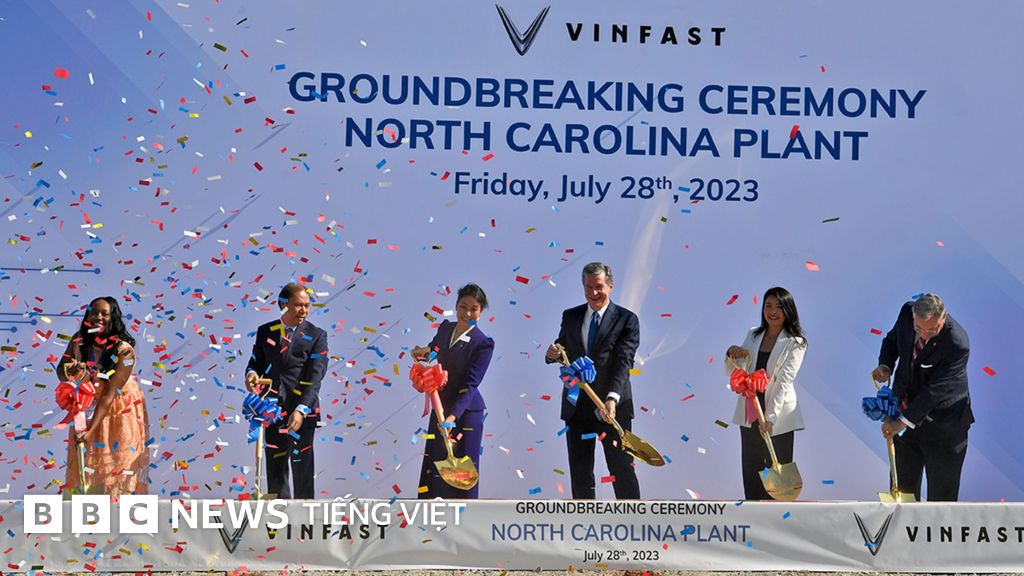
Đến ngày 28/7/2023, VinFast đã làm lễ động thổ nhà máy tại hạt Chatham, bang Bắc Carolina.
VinFast ban đầu dự tính hoàn thành xây dựng nhà máy vào tháng 7/2024, nhưng sau đó đã dời thời điểm đưa nhà máy vào vận hành tới năm 2025, rồi tiếp tục dời sang năm 2028.
Tới tháng 3/2026, VinFast thông báo dự kiến nối lại việc xây dựng nhà máy "4 tỷ USD" trong năm nay.
Nguyên nhân khiến dự án nhà máy tại Mỹ bị trì hoãn nhiều lần được đánh giá là do những thách thức về tài chính và thị trường.
Chính quyền kiện gì và VinFast phản hồi ra sao?
"VinFast đã vi phạm các thỏa thuận với bang, và việc tiếp tục không có hành động nào từ phía VinFast gần như chắc chắn sẽ dẫn tới các vi phạm tiếp theo trong thời gian tới," tuyên bố của Văn phòng Tổng chưởng lý Bắc Carolina nêu rõ.
Chính quyền bang này cũng đang yêu cầu thu hồi lại khu đất dự án.
Tuyên bố cho biết bang Bắc Carolina đang thực hiện quyền được nêu trong hợp đồng để lấy lại tài sản nhằm bảo vệ tiền thuế của người dân, sau khi VinFast không đáp ứng các nghĩa vụ quan trọng trong dự án.
"VinFast đã đồng ý xây dựng nhà máy và tạo việc làm cho người dân Bắc Carolina – nhưng họ đã không làm được cả hai," ông Jackson nói. "Khi Bắc Carolina ký một thỏa thuận, chúng tôi luôn có cơ chế bảo vệ người nộp thuế. VinFast đã vi phạm thỏa thuận, vì vậy chúng tôi đang sử dụng cơ chế đó để tìm một dự án khác cho khu đất này nhằm tạo việc làm."
Thống đốc bang Josh Stein cho biết hành động pháp lý này nhằm "bảo vệ người nộp thuế và đưa khu đất quy mô lớn tại hạt Chatham trở lại thị trường để phục vụ các công việc sản xuất có thu nhập tốt trong tương lai."
Liên quan tới kế hoạch nối lại việc xây dựng nhà máy nói trên của VinFast, hãng tin Bloomberg dẫn lời ông Michael Smith, Giám đốc Trung tâm Phát triển Kinh tế hạt Chatham, cho biết kế hoạch mới chỉ dự kiến có khoảng 1.400 lao động, thấp hơn khoảng 80% so với cam kết ban đầu.
Trong email trả lời đề nghị bình luận từ BBC News Tiếng Việt vào ngày 22/5, đại diện VinFast cho biết mới chỉ nắm thông tin liên quan thông qua truyền thông đại chúng và hiện chưa nhận được bất kỳ văn bản chính thức nào từ chính quyền bang Bắc Carolina.
Đại diện VinFast nói: "Chúng tôi sẽ xem xét và phản hồi chính thức sau khi nhận được đầy đủ các tài liệu liên quan từ phía bang.
"Trong thời gian vừa qua, những thay đổi về chính sách cho ngành xe điện tại Mỹ đã ảnh hưởng đến tiến độ dự án, khiến chúng tôi cần thêm thời gian để đánh giá các điều kiện triển khai phù hợp. Hiện các hợp đồng với nhà thầu đã được VinFast ký kết và sẽ sớm được triển khai xây dựng theo kế hoạch."
Facts Only
* North Carolina filed a lawsuit against VinFast.
* The lawsuit alleges VinFast failed to implement commitments regarding the construction of an EV and battery plant in the state.
* VinFast announced the construction plan in March 2022 with a memorandum of understanding.
* VinFast initially committed to 4 billion USD investment and 7,500 jobs.
* VinFast obtained building permits in February 2023.
* VinFast held a groundbreaking ceremony for the plant in Chatham County, North Carolina, on July 28, 2023.
* The planned completion date was initially July 2024, then postponed to 2025, and finally to 2028.
* VinFast announced a plan to resume construction of the 4 billion USD plant in March 2026.
* The state is seeking to reclaim the project land to protect taxpayer money.
* The state claims VinFast violated the agreement by not fulfilling job commitments.
* Bloomberg reported that the revised plan for the factory only anticipated 1,400 workers, significantly less than the initial commitment.
* VinFast stated it is reviewing the matter and will respond after receiving official documents from the state.
Executive Summary
Full Take
The conflict highlights a systemic tension between corporate promises, governmental expectations, and market realities. The pattern observed is the strategic use of large-scale public commitments (like job creation and investment) to secure land access and facilitate political objectives, which are then leveraged against the corporation when delays occur. The narrative shifts the focus from a contractual obligation (building a factory) to a violation of public trust (failing to create promised jobs), allowing the state to assert jurisdiction and reclaim assets. This dynamic is driven by the economic challenge: while VinFast cites financial and market hurdles as reasons for delay, the state's action suggests that these hurdles are interpreted as a failure to meet a public good obligation.
The counter-narrative is one of transactional relationship: the state provides the location and the framework, and the company provides the capital and execution. When execution falters, the state utilizes its sovereign power to renegotiate or terminate the terms. The use of "violation of agreement" frames the issue not merely as a construction delay but as a breach of a social contract, which elevates the legal claim beyond simple commercial dispute. This process demonstrates how institutional actors (government bodies) exert pressure on private entities to align their operational timelines with public priorities, even when the underlying causes are complex market forces.
What is the true cost of these delays? The implication is that public investments in infrastructure, often driven by state incentives, are subject to immediate revocation when private entities struggle with complex logistical and financial execution. This raises questions about the responsibility of state entities in setting ambitious goals and the mechanisms available for redress when those goals are unmet, particularly when large-scale economic development is at stake. What mechanisms should exist to ensure that future public-private agreements incorporate more flexible risk assessments that account for external market volatility, preventing legal action from becoming the default response to logistical slowdowns?
Sentinel — Human
The text demonstrates the structure and factual grounding of human-written journalism, focusing on verifiable timelines and attributed claims regarding a specific legal and corporate dispute.