https://vid.arc-codex.com/public/batch/PMm4JgowML3YAib0aJg3MQ
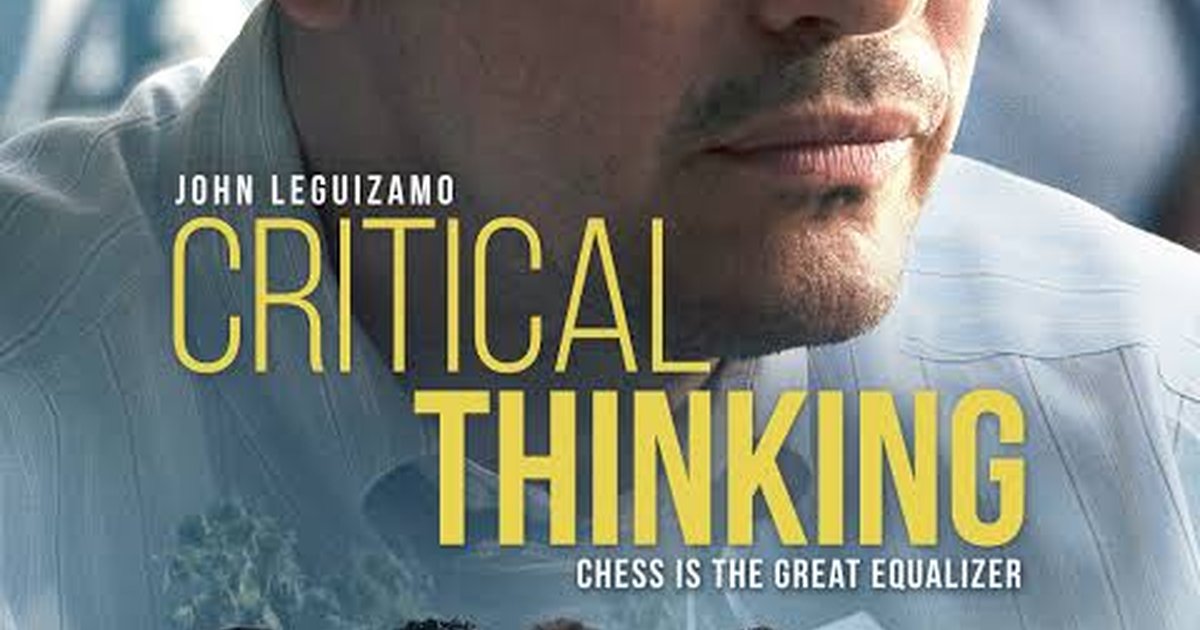
Critical Thinking is a 2020 American biographical drama film based on the true story of the 1998 Miami Jackson High School chess team, the first inner-city team to win the U.S. National Chess Championship.
Critical Thinking was directed by John Leguizamo (in his directorial debut), written by Dito Montiel, executive produced by Carla Berkowitz and Harvey Chaplin, and stars Leguizamo alongside Jorge Lendeborg Jr., Angel Bismark Curiel, Will Hochman, Corwin Tuggles, Jeffry Batista, Ramses Jimenez, Rachel Bay Jones and Michael K. Williams. It was released on September 4, 2020 by Vertical Entertainment.[2]
Facts Only
* Film Title: Critical Thinking
* Genre: Biographical drama film
* Subject Matter: Based on the true story of the 1998 Miami Jackson High School chess team.
* Event: The team won the U.S. National Chess Championship.
* Location: Miami Jackson High School (setting); Miami, Florida (context).
* Date of Event: 1998 (team achievement).
* Release Date: September 4, 2020.
* Director: John Leguizamo.
* Writer: Dito Montiel.
* Executive Producers: Carla Berkowitz and Harvey Chaplin.
* Starring Actors: John Leguizamo, Jorge Lendeborg Jr., Angel Bismark Curiel, Will Hochman, Corwin Tuggles, Jeffry Batista, Ramses Jimenez, Rachel Bay Jones, and Michael K. Williams.
Executive Summary
Full Take
The presentation of a true historical event as a biographical drama film involves the act of translation and interpretation, which inherently shapes public understanding. While the source material details an actual achievement—the 1998 Miami Jackson High School chess team winning the U.S. National Chess Championship—the narrative framing necessarily selects moments, emphasizes conflicts, and structures the timeline to maximize dramatic tension for an audience. This process transforms verifiable facts into a mediated experience, inviting viewers to assign emotional meaning to strategies and personal struggles that may not be fully represented in the historical record.
The implication is how we value narrative truth versus experiential truth. The focus on drama (the "how" of their struggle) necessarily overshadows the pure factual outcome (the achievement itself). This dynamic raises questions about authority: who gets to define which aspects of a history are worthy of artistic representation, and what intellectual costs are incurred when historical events become consumable media?
The pattern detected is ARC-0024 Ambiguity, related to the gap between documented reality and mediated presentation. The narrative functions as a bridge, connecting the factual event to human experience, but this bridging requires careful scrutiny of which aspects are amplified and which are obscured. This process necessitates asking: what specific assumptions about excellence, conflict, and agency are embedded in the cinematic choice? What lessons are privileged over the raw data of the historical record?
Sentinel — Human
This text displays characteristics of precise, fact-based data presentation rather than creative narrative writing, suggesting a high likelihood of human authorship for informational purposes.