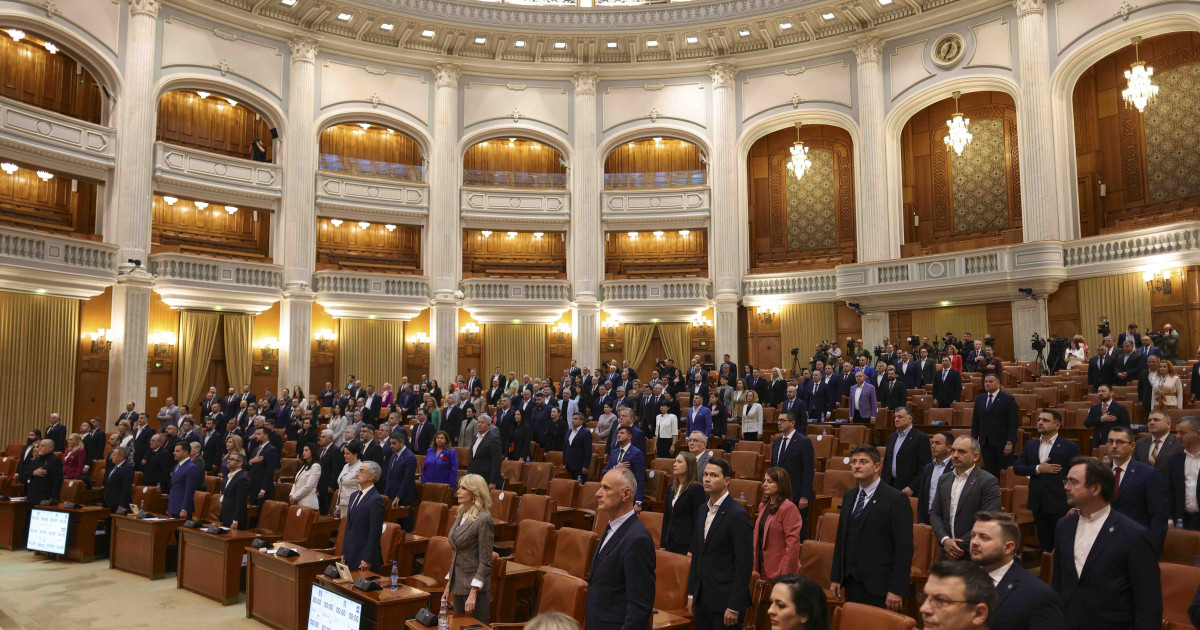
Liderul deputaţilor PNL, Gabriel Andronache, a declarat joi că liberalii fac toate demersurile democratice în Parlament pentru a susţine Guvernul Bolojan şi a determina eşecul moţiunii de cenzură. El susține că nu e deloc clar că această moţiune va trece, acuzând că sunt parlamentari care au fost forţaţi să o semneze.
„Facem toate demersurile democratice în Parlament pentru a susţine Guvernul Bolojan şi a determina eşecul moţiunii de cenzură. Nu toţi cei care semnează o moţiune o şi votează. Sunt parlamentari care au fost forţaţi să semneze moţiunea, chiar dacă nu sunt de acord cu aruncarea ţării în haos de către PSD şi AUR”, arată Gabriel Andronache, într-un mesaj pe Facebook.
Setarile tale privind cookie-urile nu permit afisarea continutul din aceasta sectiune. Poti actualiza setarile modulelor coookie direct din browser sau de aici – e nevoie sa accepti cookie-urile social media
Deputatul PNL arată că „inclusiv parlamentari din PSD sunt contra moţiunii de cenzură, iar ei au posibilitatea să se exprime la vot, fiindcă votul este secret şi nu poate fi controlat de conducerea partidului”.
„Nu e deloc clar că această moţiune va obţine numărul necesar de voturi pe 5 mai”, menţionează Andronache.
Moţiunea de cenzură PSD-AUR a fost citită, miercuri, în plenul comun al celor două Camere ale Parlamentului, de către liderul senatorilor AUR, Petrişor Peiu.
Dezbaterea şi votul pe moţiune vor avea loc marţea viitoare.
Moţiunea de cenzură, intitulată „STOP Planului Bolojan” de distrugere a economiei, de sărăcire a populaţiei şi de vânzare frauduloasă a averii statului!”, este iniţiată de 254 de deputaţi şi senatori, potrivit anunţului din plenul comun.
Editor : C.L.B.
Facts Only
Gabriel Andronache, leader of PNL deputies, declared support for the Bolojan Government.
PNL is working to prevent the success of a no-confidence motion.
Andronache claims some parliamentarians were forced to sign the motion.
The no-confidence motion was initiated by 254 deputies and senators from PSD and AUR.
The motion is titled "STOP Planului Bolojan" and accuses the government of economic mismanagement.
The motion was read in Parliament on Wednesday.
Debates and voting on the motion are scheduled for May 5.
Andronache suggests the motion may not secure enough votes to pass.
The secret ballot allows parliamentarians to vote against party lines.
Some PSD members are reportedly opposed to the motion.
Executive Summary
The leader of the PNL deputies, Gabriel Andronache, has stated that the National Liberal Party (PNL) is actively working within Parliament to support the Bolojan Government and prevent the success of a no-confidence motion. Andronache claims that not all parliamentarians who signed the motion will necessarily vote for it, suggesting some were pressured into signing. He also asserts that even members of the Social Democratic Party (PSD) oppose the motion, noting that the secret ballot allows them to vote against party lines. The no-confidence motion, titled "STOP Planului Bolojan," was initiated by 254 deputies and senators from PSD and AUR, accusing the government of economic mismanagement and corruption. The motion was read in Parliament on Wednesday, with debates and voting scheduled for May 5. The outcome remains uncertain, as Andronache argues the motion may not secure the required votes.
The motion reflects deep political divisions, with PSD and AUR framing it as a response to alleged government failures, while PNL frames it as an attempt to destabilize the country. The secret ballot introduces an element of unpredictability, as individual parliamentarians may vote contrary to their party's official stance. The situation underscores the fragility of Romania's political alliances and the high stakes of parliamentary maneuvers.
Full Take
The strongest version of this narrative is that PNL is framing the no-confidence motion as a politically motivated attack by PSD and AUR, while emphasizing internal dissent within PSD. The claim that some parliamentarians were "forced" to sign the motion introduces a layer of coercion, appealing to sympathy for those who may not genuinely support it. The secret ballot is presented as a mechanism for defiance, suggesting that the motion's failure is plausible despite its broad initial support.
Patterns detected: ARC-0024 Ambiguity (vague claims of coercion without evidence), ARC-0043 Motte-and-Bailey (PNL frames the motion as destabilizing while avoiding direct engagement with its substantive claims).
The root cause appears to be a power struggle between Romania's major political factions, with each side framing the conflict in existential terms—PNL as defenders of stability, PSD/AUR as champions of accountability. The narrative assumes that political loyalty is fragile and that secret ballots can undermine party discipline, which may or may not hold true.
Implications: If the motion fails, it could embolden the Bolojan Government but deepen divisions within PSD. If it passes, it may trigger early elections or a government reshuffle, with uncertain consequences for economic policy. The second-order effect is the normalization of no-confidence motions as tools of political warfare rather than genuine accountability.
Bridge questions: How often do secret ballots in Romania lead to defiance of party lines? What evidence exists that parliamentarians were coerced into signing the motion? Would the motion's success or failure significantly alter Romania's economic trajectory?
Counterstrike scan: A coordinated influence campaign would amplify claims of coercion to discredit the motion while downplaying its substantive critiques. The actual content aligns partially with this pattern, as PNL focuses on procedural irregularities rather than addressing the motion's allegations. However, without evidence of broader manipulation, this remains within typical political rhetoric.
Sentinel — Human
The text exhibits characteristics consistent with standard human political reporting, featuring direct quotes and specific procedural details, resulting in low synthetic confidence.