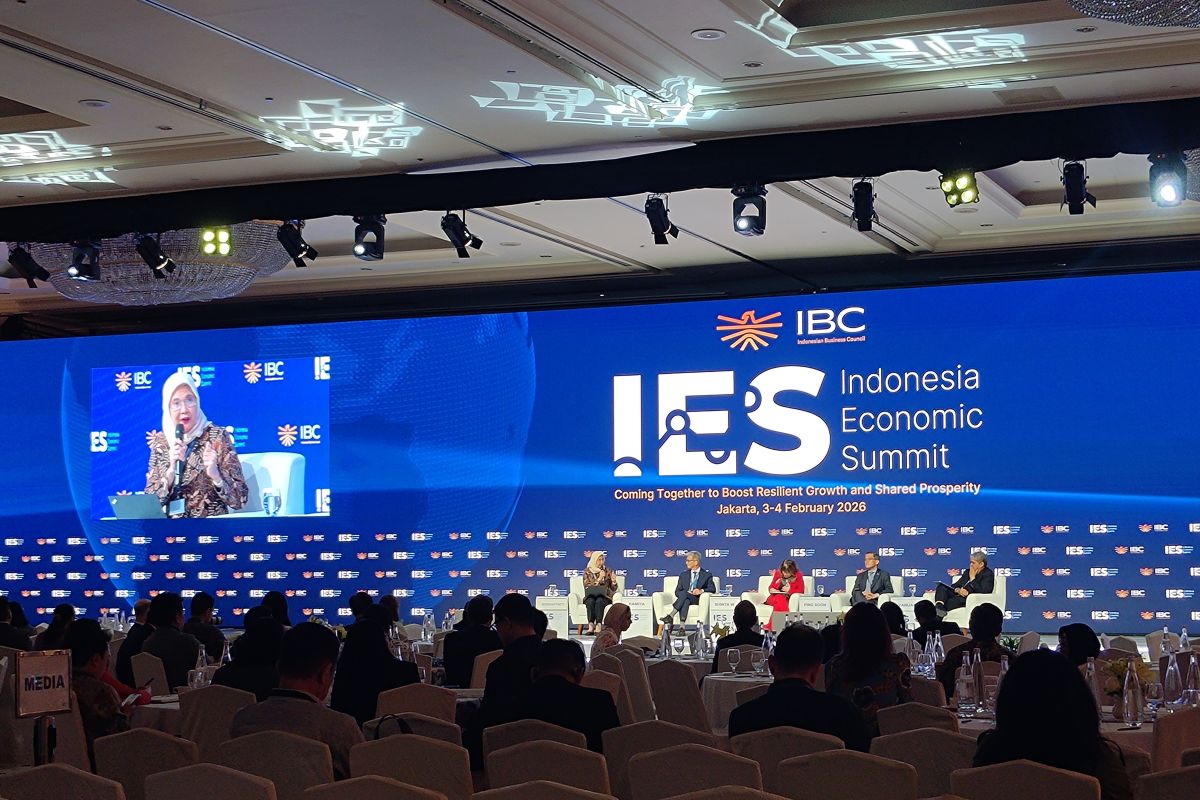
Those two institutions have opened a public consultation forum to gain suggestions and feedback from stakeholders and the community.
"This public consultation is intended to enrich the document's substance, strengthen the linkage between long-term strategic directions and medium-term implementation," the Deputy for Research and Innovation Policy of BRIN, Boediastoeti Ontowirjo, remarked in a statement here on Tuesday.
According to her, the public consultation is also aimed to ensure the national strategic research and innovation agenda that is implemented, collaborative, and has an impact for national development.
Ontowirjo explained that the roadmap is designed as a strategic framework to integrate the national development directions with research and innovation priorities in a measurable, phased, and impact-oriented manner.
Related news: BRIN unveils strategies to curb invasive suckermouth catfish spread
The draft involves a team of 279 members, including 230 experts from universities, ministries/agencies, and industry across various fields, reflecting a multi-stakeholder approach to shape the direction of national research and innovation.
Furthermore, she explained that the document consists of two main parts. Book 1, National Strategic Research Roadmap 2026-2045: A Dynamic and Multi-stakeholder Approach, outlines the long-term transformation of national research.
Meanwhile, Book 2, National Strategic Research and Innovation Agenda 2026-2029: Implementation Plan, translates this direction into a more detailed, measurable, and phased implementation agenda for the initial stage.
Ontowirjo added that the document can be accessed online and the feedback can be submitted through a form until Sunday, May 17, 2026.
"Input and suggestions from stakeholders and the public are important for refining the 2026 Edition of the National Strategic Research Roadmap and Agenda," she said.
Related news: Indonesia’s BRIN pushes major higher education curriculum overhaul
Related news: Bekasi train collision: BRIN studies magnetic fields, rail durability
Translator: Sean, Kenzu
Editor: Fransiska Ninditya
Copyright © ANTARA 2026
Facts Only
BRIN and another institution have opened a public consultation forum.
The consultation seeks suggestions and feedback on a national research and innovation roadmap.
The Deputy for Research and Innovation Policy of BRIN, Boediastoeti Ontowirjo, made a statement on Tuesday.
The public consultation aims to enrich the document's substance and strengthen linkages between long-term strategies and medium-term implementation.
The goal is to ensure the national strategic research and innovation agenda is collaborative and impactful for national development.
The roadmap is designed as a strategic framework integrating national development directions with research priorities.
The draft involves 279 members, including 230 experts from universities, ministries, agencies, and industry.
The document consists of two parts: Book 1 (long-term transformation, 2026-2045) and Book 2 (implementation plan, 2026-2029).
The draft is accessible online, and feedback can be submitted until May 17, 2026.
Public input is deemed important for refining the roadmap and agenda.
Executive Summary
Two Indonesian institutions, including BRIN (National Research and Innovation Agency), have launched a public consultation to gather feedback on a draft national research and innovation roadmap. The initiative aims to align long-term strategic goals with medium-term implementation, ensuring collaboration and measurable impact on national development. The roadmap consists of two parts: a long-term strategic framework (2026-2045) and a detailed implementation plan (2026-2029). A team of 279 members, including experts from universities, government agencies, and industry, contributed to the draft. The public can submit feedback online until May 17, 2026. BRIN emphasizes the importance of stakeholder input to refine the document, reflecting a multi-stakeholder approach to shaping Indonesia's research and innovation priorities.
The consultation underscores BRIN's commitment to integrating national development goals with research priorities in a phased and measurable manner. While the draft is comprehensive, its effectiveness will depend on the quality and diversity of public input, as well as the agency's ability to incorporate feedback meaningfully. The process highlights Indonesia's efforts to modernize its research infrastructure, though the long-term success of such initiatives often hinges on sustained political and institutional support.
Full Take
This public consultation by BRIN represents a structured attempt to democratize the shaping of Indonesia's research and innovation priorities. At its strongest, the initiative reflects a commitment to transparency and multi-stakeholder engagement, recognizing that national development benefits from diverse expertise and public buy-in. The two-part roadmap—long-term vision and short-term implementation—suggests a deliberate effort to bridge the gap between aspiration and action, a common challenge in policy planning.
However, the effectiveness of such consultations often hinges on whether feedback is genuinely incorporated or merely performative. The involvement of 279 experts is impressive, but the risk of institutional inertia or political interference remains. The emphasis on "measurable, phased, and impact-oriented" outcomes is laudable, yet without clear accountability mechanisms, these goals could become hollow buzzwords. The May 17 deadline also raises questions: Is this sufficient time for meaningful public engagement, or does it favor insiders with prior access to the draft?
Root cause: The narrative assumes that top-down planning, even with public input, can effectively direct innovation—a premise that has mixed historical success. Innovation often thrives in decentralized, adaptive systems, not rigid roadmaps. The consultation may inadvertently reinforce a technocratic paradigm where "experts" and institutions retain ultimate control, despite the veneer of participation.
Implications: If successful, this could model a more inclusive approach to national planning. If not, it risks eroding public trust in such processes. The second-order consequence is the potential for innovation priorities to become politicized, with short-term political gains overshadowing long-term needs.
Bridge questions: How will BRIN ensure that public feedback leads to tangible changes in the roadmap? What safeguards exist to prevent the process from being co-opted by vested interests? Would a more iterative, ongoing consultation yield better results than a fixed deadline?
Counterstrike scan: A coordinated influence campaign might exploit this consultation to push specific agendas—e.g., industry lobbyists flooding feedback with self-serving priorities or political actors using it to signal virtue without intent to act. However, the content here does not exhibit signs of such manipulation; it appears to be a genuine, if imperfect, effort at engagement.
Patterns detected: none