Facts Only
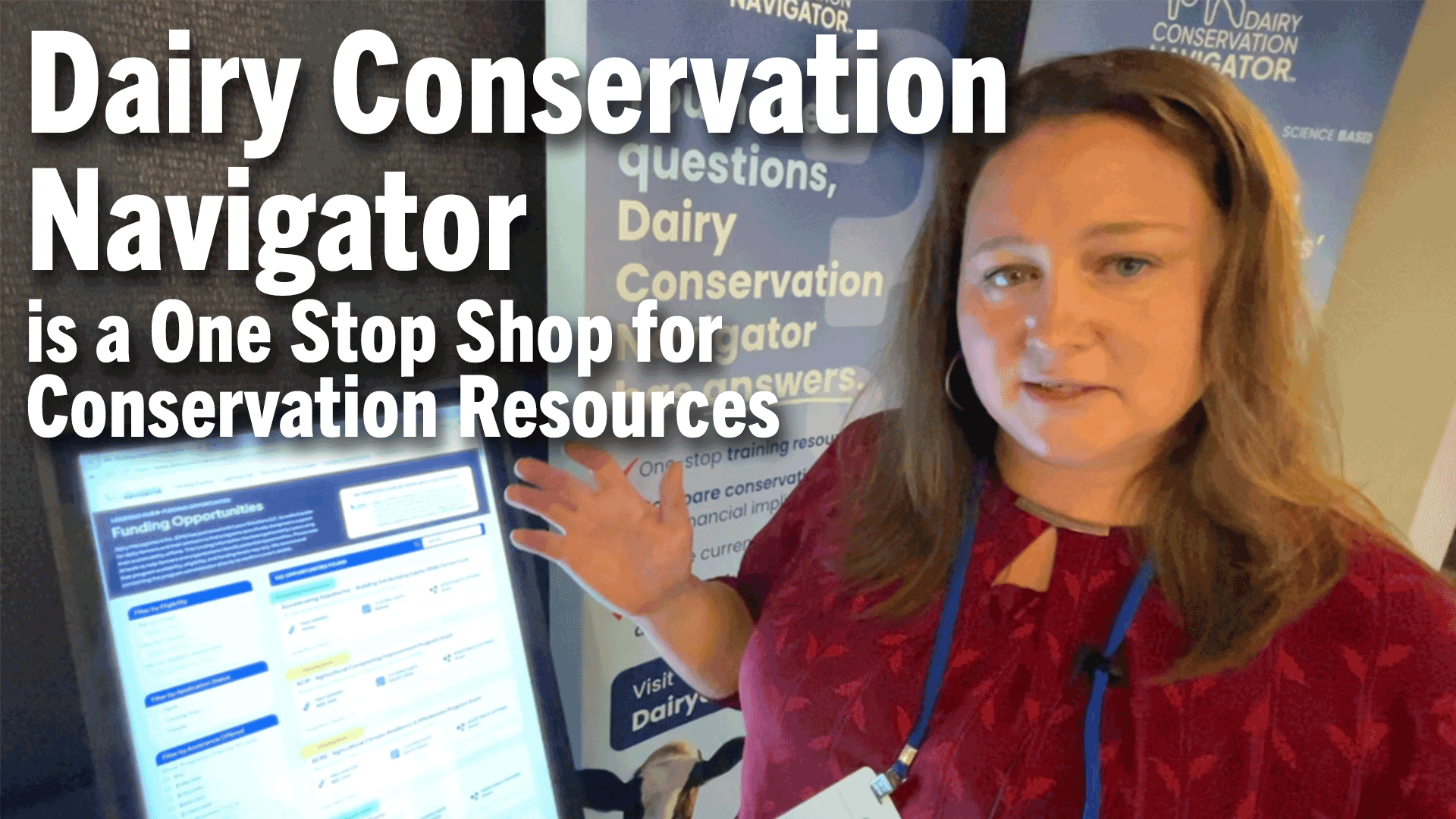
Bridgett Hilshey from Dairy Management Inc. presented the Dairy Conservation Navigator.
The presentation occurred at the Dairy Sustainability Alliance Spring Meeting in Oak Brook, Illinois.
The Dairy Conservation Navigator is an online platform.
The platform was created by the U.S. Dairy Checkoff.
It consolidates science-based information about dairy conservation topics.
The platform focuses on practices and technologies that reduce a farm’s environmental footprint.
It provides educational materials and technical insights.
The goal is to simplify complex sustainability topics for farmers.
The platform is designed to help farms adopt conservation practices.
The event took place in spring, though the exact date is not specified.
The platform is accessible online.
The U.S. Dairy Checkoff is a funding and promotional entity for the dairy industry.
Executive Summary
Bridgett Hilshey of Dairy Management Inc. introduced the Dairy Conservation Navigator at the Dairy Sustainability Alliance Spring Meeting in Oak Brook, Illinois. The online platform, developed by the U.S. Dairy Checkoff, consolidates science-based information on dairy conservation practices and technologies aimed at reducing farms' environmental impact. It simplifies complex sustainability topics by providing educational materials and technical insights. The initiative reflects the dairy industry's efforts to address environmental concerns through accessible, research-backed resources. While the platform's effectiveness remains to be seen, it represents a step toward industry-wide sustainability education and practice adoption.
The Dairy Conservation Navigator is positioned as a tool to bridge the gap between scientific research and on-farm implementation. By centralizing information, it aims to help farmers make informed decisions about conservation practices. The platform's creation aligns with broader trends in agriculture toward sustainability, though its long-term impact will depend on adoption rates and the practicality of the recommended practices. The U.S. Dairy Checkoff's involvement underscores the industry's investment in promoting environmentally responsible dairy production.
Full Take
The introduction of the Dairy Conservation Navigator reflects a strategic effort by the dairy industry to position itself as proactive on sustainability. At its strongest, this narrative presents a credible attempt to bridge the gap between scientific research and practical farm-level implementation. The platform’s focus on consolidating science-based information and simplifying complex topics is a commendable step toward empowering farmers with actionable knowledge. It acknowledges the growing demand for environmentally responsible practices while leveraging the industry’s own resources to drive change.
However, a pattern scan reveals potential for ARC-0024 Ambiguity in how the platform’s effectiveness is framed. The article does not specify metrics for success, such as adoption rates or measurable reductions in environmental impact, which could leave room for overpromising without accountability. Additionally, the U.S. Dairy Checkoff’s role as both promoter and funder of the platform introduces a potential conflict of interest—while the information may be science-based, the curation and emphasis could favor industry-friendly interpretations of sustainability.
The root cause of this narrative is the dairy industry’s need to reconcile economic interests with increasing regulatory and consumer pressure for sustainability. The unstated assumption is that voluntary, industry-led initiatives can sufficiently address environmental concerns without stricter external oversight. This echoes historical patterns of self-regulation in agriculture, where industries preemptively adopt measures to avoid more stringent policies.
For human agency, the platform could democratize access to conservation knowledge, but its impact depends on whether it serves as a genuine tool for farmers or a PR shield for the industry. Second-order consequences may include accelerated adoption of sustainable practices—or, conversely, greenwashing if the platform prioritizes optics over outcomes.
Bridge questions: How will the platform ensure its recommendations remain independent of industry bias? What mechanisms exist to measure its real-world impact on farm sustainability? Would farmers trust this resource more if it were developed in collaboration with environmental NGOs or academic institutions?
Counterstrike scan: If this were part of a coordinated influence campaign, the playbook would emphasize industry-led solutions to preempt criticism, using ambiguity to avoid concrete commitments. The actual content aligns partially with this pattern—promoting a tool without clear accountability metrics—but does not exhibit overt manipulation. The focus on education and science-based practices suggests a legitimate effort, though vigilance is warranted to ensure transparency in implementation and outcomes.
Patterns detected: ARC-0024 Ambiguity
Sentinel — Human
The text is highly factual and structured like standard journalistic reporting, exhibiting low synthetic confidence.