My morning train WFH reads:
• SpaceX Bonds Are Trading Like Junk Bonds. What Does That Mean for Investors? BB-rated bonds are viewed as carrying a substantial credit risk for their holders. While investment-grade bonds have a historical default rate in the range of 0% to 1.02%, the default rate for BB-rated bonds has been about 4.22%, 4X higher than the riskiest investment-grade bonds. SpaceX carries a substantial debt load, about $29 billion in long-term bonds. A useful reminder that even the shiniest private darlings answer to the credit market. (The Globe and Mail)
• 5 Myths About AI’s Economic Impact, and What the Data Actually Shows: The AI economy is full of myths. Here are 5 worth challenging. Morningstar takes a data scalpel to five myths about AI’s economic impact. Sober counterprogramming to the hype cycle. (Morningstar)
• Private-Equity Firms Are Sitting on a Nine-Year Backlog: Investors’ artificial-intelligence worries weigh on efforts to exit software holdings. A nine-year backlog of unsold companies is clogging private equity’s plumbing. The exits everyone assumed would come are simply not coming. (Wall Street Journal)
• Pump.Fun’s Bounties Platform Is a Black Hole of Circular Grifting: The crypto platform claims you can “pay anyone to do anything,” from quitting a job on camera to getting a memecoin-themed tattoo. But it seems like people trying to scam each other. Wired on Pump.Fun’s bounties platform — a black hole of circular grifting, where the crypto grift funds the grift about the grift. (Wired)
• Wikipedia Is Battling for the Soul of the Internet: The internet’s largest stockpile of free knowledge is under threat from MAGA, A.I. and foreign autocrats. A bibliophile ex-ambassador is here to help. Wikipedia — the last great noncommercial site — is battling for the soul of the internet, squeezed by AI scrapers and Elon Musk alike. (New York Times) see also ‘Let’s Go Kill the Internet’ Zuhair Lakhani is creating an army of AI influencers and flooding feeds with “propaganda campaigns.” What could go wrong? Doublespeed is just one of a growing number of start-ups devoted to fabricating genuine virality online, some of which pay Discord users to create clips of podcasts, make fan edits of movie stars, and post glowing praise of whatever pop star has hired them. Lakhani’s pitch is one step beyond this: He wants not only to manufacture the trends but also to replace the real people involved with an army of AI influencers free of the human need for nuisances like payment or sleep. Each account is connected to its own physical phone in order to circumvent TikTok’s bot-detection systems. (New York Magazine)
• Nobody Wants To Earn Their S***: A blunt cultural critique: nobody wants to earn their stripes anymore. Grumpy, yes — but not entirely wrong. (Panoptica)
• There’s a New Way of War, but Is It Evolution or Revolution? Militaries worldwide are grappling with breakneck technological change and the lessons from Ukraine and the Persian Gulf. The WSJ asks whether drone-era warfare is evolution or revolution. Either way, the old playbook is toast. (Wall Street Journal)
• US Air Force Engineer Charged With Sawing Down Flock Surveillance Cameras Receives Thousands of Dollars from Supporters Across the Country: “There’s also no shortage of citizens who prefer a more direct-action approach. Armed with garbage bags, spray paint, and even chainsaws, a not insignificant number of privacy vigilantes have taken the fight to Flock, using any means to free their neighborhoods of the ominous surveillance poles.” An Air Force engineer charged with sawing down Flock surveillance cameras is collecting thousands from supporters. Folk hero or felon — America can’t decide. (Futurism)
• Extreme Heat Isn’t the Only Climate Impact Shocking Scientists: Much of the US just sweltered through the July 4 holiday weekend as an intense heat dome bore down, straining power grids and prompting the cancellation of many events. Wash, DC, saw a high of 102F (39C) on Saturday, a new local record for the date. In Europe, punishing temperatures are set to return days after a deadly heat wave pushed thermometers as high as 43.8C (111F) in France. A troubling pattern has emerged in this summer’s heat: Broken records, it’s done so often by margins far above the previous all-time highs. (Bloomberg free)
• The World Cup gives America a unified look. The rest is complicated: These are images of America, at 250 years old, hosting the world’s grandest sporting event and partying like it’s 1776. But the jersey has never been just a jersey. It is a visual manifesto of a complicated country, and in the upkeep of long-recited ideals, it becomes a battleground. The politics of exclusion have infiltrated these colors, this flag, narrowing perspectives about who counts as a real American and who does not. In response, the politics of inclusion have turned to elitist derision, partly as a shield, but that only makes it easier to exile the faction from national pride. The Athletic on the World Cup’s tidy image of a unified America — and everything messier lurking just beneath the flag-waving. (The Athletic)
Video of the day: The Larry Sanders Show: The Show that Revolutionized TV Comedy – But Devastated Its Star
Be sure to check out our bonus episode of Master’s in Business with David Risher, CEO of Lyft, one of North America’s largest ride-sharing networks. He joined Lyft’s board in 2021 when the firm was burning cash and losing ground to Uber. Lyft has returned to profitability, with its stock rising more than 75% since Risher took the reins as CEO in 2023. In Q1 2026, the firm had 28.3 million active riders and did $4.9B in gross bookings, with $1.7B revs, and $132.8m in EBITDA. Previously, he held senior roles at Microsoft and Amazon.
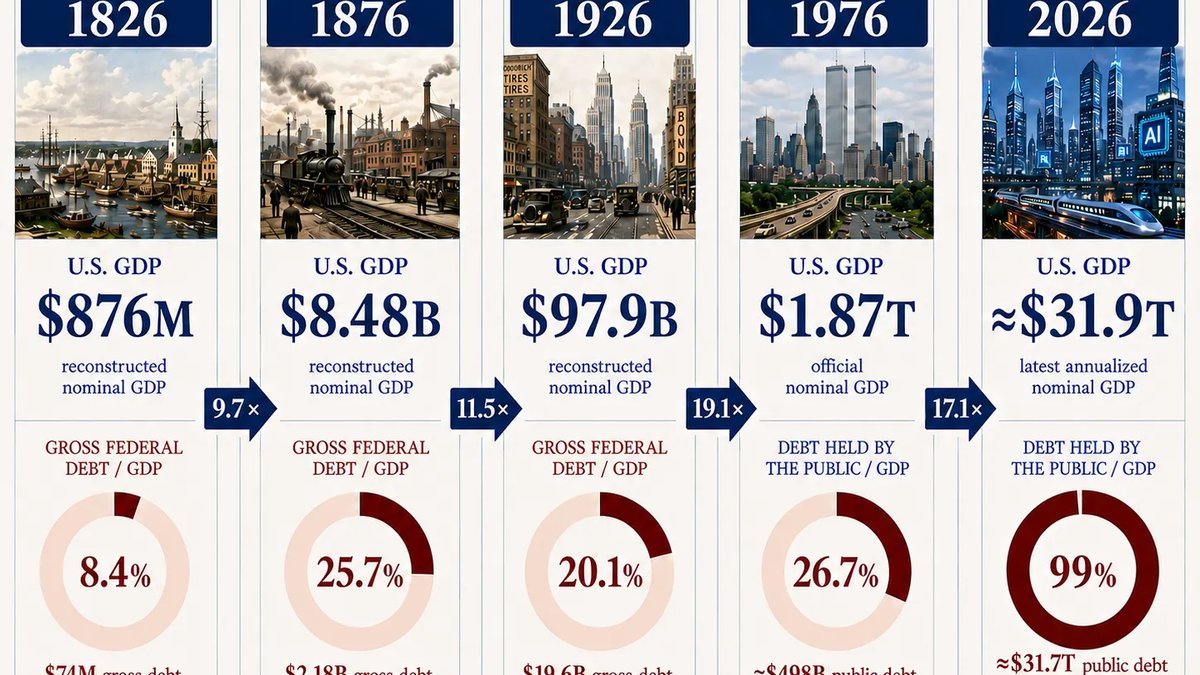
America at 50, 100, 150, 200 & 250
Source: Bruce Mehlman
Sign up for our reads-only mailing list here.
Facts Only
* BB-rated bonds have a default rate of about 4.22%, compared to 0% to 1.02% for investment-grade bonds.
* SpaceX carries approximately $29 billion in long-term bonds.
* Five myths about AI’s economic impact are presented.
* Private equity firms have a nine-year backlog of unsold software companies.
* Pump.Fun’s bounties platform is described as a system of circular grifting involving crypto funds.
* Wikipedia faces threats from AI scrapers and external forces regarding its knowledge base.
* A group is creating AI influencers to fabricate online virality, including circumventing bot detection systems.
* Some citizens are engaging in surveillance activities, such as dismantling Flock cameras for financial gain.
* Extreme heat events have resulted in record high temperatures in the US and Europe.
* The World Cup imagery reflects complex political dynamics regarding American national identity and inclusion.
Executive Summary
Full Take
Sentinel — Human
The text appears to be a compilation of high-interest, opinionated news snippets curated from various sources, exhibiting strong thematic diversity but lacking the smooth, predictable cadence of pure AI generation.