Additional rules raise “a lot of questions,” one private-sector lawyer said.
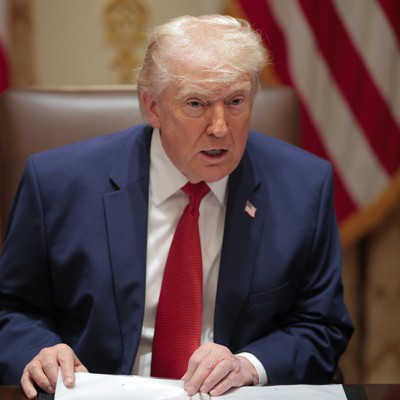
President Donald Trump on Thursday signed an executive order targeting diversity, equity and inclusion programs at companies that are federal contractors.
While contractors are already subject to anti-DEI directives that the president enacted at the start of his second term, Trump wrote that this new order is necessary because “some entities continue to engage in DEI activities and often attempt to conceal their efforts to do so.”
Under the directive, agencies must ensure that contracts and subcontracts, within 30 days, include a clause that states the contractor:
- Will not engage in DEI activities.
- Agrees to provide information and reports to assess compliance.
- Acknowledges that noncompliance with the order could lead to the termination or suspension of the contract and the company being barred from future government contracts.
The order defines “racially discriminatory DEI activities” as “disparate treatment based on race or ethnicity in the recruitment, employment (e.g., hiring, promotions), contracting (e.g., vendor agreements), program participation or allocation or deployment of an entity’s resources.”
While noting that racial discrimination in employment has been illegal for decades, Julia Judish, a special counsel at Pillsbury law firm, said that the inclusion of “recruitment” in the definition is an “about face” for federal contractors.
Government contractors had been required to implement affirmative action programs, but on the second day of his second term, Trump repealed an executive order from the 1960s that mandated such a requirement. That led to cuts at the Office of Federal Contract Compliance, a Labor Department agency that enforced the directive.
“It’s the flip of what had been required of government contractors over decades,” Judish said.
She also predicted that the new order will create uncertainty for contractors.
“Does this mean that, if a government contractor participates in a career fair at a historically Black college or university, is that viewed as a racially discriminatory allocation or deployment of their resources in support of recruitment that is more likely to reach potential applicants based on race or ethnicity?” she said. “So there’s a lot of questions.”
The new directive also requires the Office of Management and Budget, in coordination with the Justice Department, assistant to the president for Domestic Policy and Equal Employment Opportunity Commission, to “identify economic sectors that pose a particular risk of entities engaging in racially discriminatory DEI activities based on current or past conduct and issue additional guidance to contracting agencies regarding best practices to ensure compliance with this order within such sectors.”
Additionally, the order authorizes the Justice Department to sue contractors and subcontractors that violate these requirements and mandates changes to the Federal Acquisition Regulation in order to ensure the rules correspond with the new directive.
The second Trump administration has prioritized cutting employees and programs that officials determine perform work related to DEI.
For instance, the Interior Department this month reminded employees that they should report any suspected DEI activities and that doing so is considered to be a protected whistleblower activity.
Share your experience with us:snewhouse@govexec.com, Signal: seanthenewsboy.45 Sean Michael Newhouse:
NEXT STORY: Defense Business Brief: Pentagon equity stakes FTW?; Hill & Valley Forum takeaways; plus a bit more
Facts Only
President Donald Trump signed an executive order on Thursday targeting DEI programs at federal contractors.
The order requires federal agencies to include contract clauses prohibiting DEI activities within 30 days.
Contractors must agree not to engage in DEI activities, provide compliance reports, and face potential contract termination or debarment for violations.
"Racially discriminatory DEI activities" are defined as disparate treatment based on race or ethnicity in recruitment, employment, contracting, program participation, or resource allocation.
The order reverses prior affirmative action requirements for federal contractors, which were repealed at the start of Trump’s second term.
The Office of Management and Budget, Justice Department, and other agencies must identify high-risk economic sectors and issue compliance guidance.
The Justice Department is authorized to sue contractors violating the order.
The Interior Department recently reminded employees that reporting DEI activities is protected whistleblower activity.
Legal experts highlight uncertainty over whether recruiting at historically Black colleges could be deemed discriminatory under the order.
Executive Summary
Full Take
The strongest version of this narrative frames the executive order as a necessary correction to what the administration views as systemic racial discrimination embedded in DEI programs. By defining recruitment at historically Black colleges as potentially discriminatory, the order challenges long-standing efforts to address racial inequities in hiring, positioning itself as a defense of meritocracy and equal treatment under the law. The inclusion of whistleblower protections for reporting DEI activities suggests a coordinated effort to root out practices perceived as ideologically driven, reinforcing a paradigm that equates equity initiatives with reverse discrimination.
However, the broad and ambiguous definition of "racially discriminatory DEI activities" introduces significant uncertainty, potentially chilling legitimate efforts to foster workplace diversity. The order’s reversal of affirmative action requirements—without clear alternatives—risks creating a vacuum where contractors may avoid any race-conscious practices out of fear of litigation, even those previously encouraged by federal policy. This echoes historical patterns of backlash against civil rights advancements, where progress is framed as overreach, justifying rollbacks under the guise of neutrality.
The implications for human agency are profound: while the order purports to protect individuals from discrimination, it may disproportionately burden marginalized groups by dismantling structures designed to counteract systemic bias. The second-order consequences could include reduced diversity in federal contracting workforces, legal challenges over the order’s constitutionality, and a broader cultural shift in how corporations approach equity initiatives.
Bridge questions: How might this order interact with existing anti-discrimination laws like Title VII? What evidence would shift the debate from ideological framing to measurable outcomes of equity versus discrimination? If the goal is truly race-neutral policies, what mechanisms could replace affirmative action without perpetuating historical inequities?
Counterstrike scan: A coordinated influence campaign pushing this narrative would likely amplify emotional appeals about "fairness" while obscuring the structural advantages that have historically favored certain groups. It might also deploy motte-and-bailey tactics—retreating to narrow legal definitions of discrimination when challenged, while broadly condemning DEI as inherently racist. The actual content aligns with this pattern but stops short of outright distortion, instead leveraging ambiguity to expand the scope of enforcement. The inclusion of whistleblower protections further incentivizes reporting, creating a self-reinforcing cycle of scrutiny.
Patterns detected: ARC-0024 Ambiguity, ARC-0043 Motte-and-Bailey
Sentinel — Human
The article's structure, language, and sourcing indicate a high probability that it is human-written.