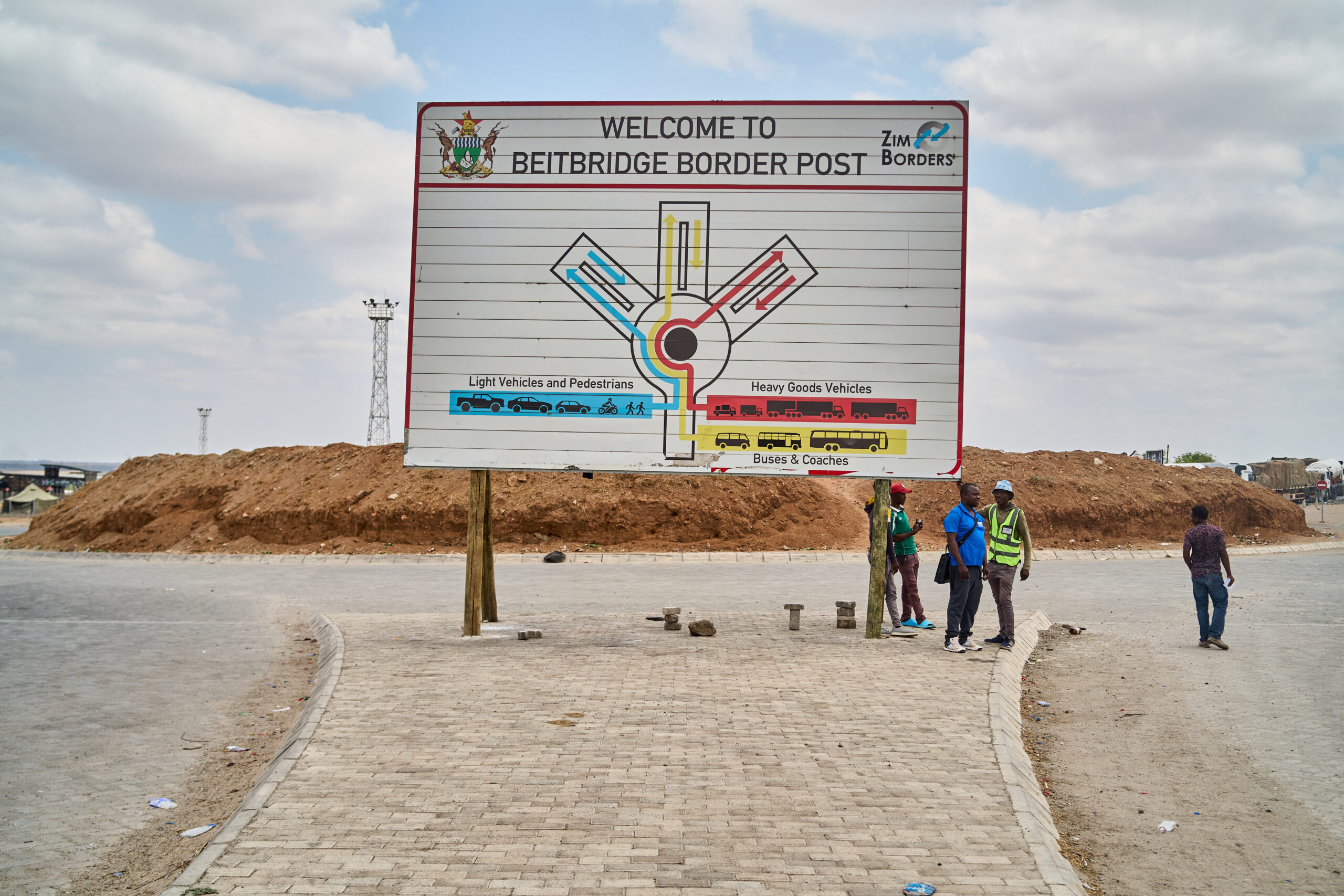
Effective border management relies on both strong infrastructure and intelligence-driven cooperation with neighbouring states. Photo: Supplied
South Africa’s debate on migration has become one of the most emotionally charged public conversations in recent years. Yet beneath the political rhetoric and social tension lies a deeper question that the country has not fully confronted: whether the South African state possesses the institutional capacity to manage migration in an orderly, lawful and humane manner.
Too often, the issue is framed in extremes. On one side, any discussion about illegal migration is quickly labelled xenophobic. On the other hand, anger about service delivery and unemployment is sometimes directed indiscriminately at foreign nationals. Both responses miss the central issue.
Migration management, in any functioning state, requires strong administrative systems, clear policy direction and capable institutions. It requires efficient documentation processes, credible border management and cooperation between law enforcement, immigration authorities and regional partners. When the systems weaken, disorder replaces management.
South Africa’s migration pressures must also be understood within a broader regional context. Economic instability, political crises and conflict in parts of the continent inevitably drive human movement. People move in search of safety, work and opportunity. That reality cannot be wished away.
However, unmanaged migration places strain on stretched public systems. Schools, hospitals, housing programmes and policing services are under immense pressure. When the state fails to maintain clear and credible systems for entry, documentation and enforcement, the consequences are felt by everyone — migrants and citizens alike.
Migrants themselves often become the most vulnerable victims of the institutional weakness. Without proper documentation processes or legal pathways, many fall into informal economies where exploitation is common. Human trafficking networks thrive in precisely these conditions of weak governance.
For citizens, the visible breakdown of migration management feeds perceptions that the state has lost control of its borders and administrative systems. When the public begins to lose confidence in the state’s ability to regulate migration, social tension inevitably rises.
This is why the migration question should not be reduced to slogans about borders or compassion. A responsible approach must recognise both realities: the dignity of migrants and the legitimate governance responsibilities of the state.
Compassion and the rule of law are not opposites. In fact, effective governance is what allows compassion to function in practice.
A state that cannot process asylum claims efficiently, issue permits within reasonable timeframes or enforce immigration law consistently fails both migrants and citizens. Administrative paralysis benefits no one except criminal syndicates that exploit the gaps.
South Africa therefore needs to shift the migration debate away from emotional polarisation and toward institutional reform.
Border management must be strengthened not only through physical infrastructure but through intelligence-driven cooperation with neighbouring states. Migration documentation systems must become faster, more transparent and less vulnerable to corruption. Interdepartmental coordination between Home Affairs, law enforcement agencies and the justice system must improve significantly.
Equally important is ensuring that deportation processes for individuals who violate immigration laws operate within a clear legal framework while remaining efficient enough to maintain public confidence in the system.
None of the steps requires abandoning South Africa’s constitutional values. On the contrary, they are necessary to uphold them.
The Constitution affirms both human dignity and the rule of law. The principles must work together. A state that loses its ability to administer the law fairly and consistently ultimately weakens the protections it promises.
The migration pressures confronting South Africa are therefore not simply about who crosses the border. They are about whether the country can rebuild the administrative capacity required to manage migration responsibly in a complex regional environment.
If the conversation continues to be dominated by accusation and denial, the problem will deepen. But if South Africa approaches migration as a question of governance, institutional strength and regional cooperation, a more balanced and sustainable path might be possible.
Migration will remain a feature of our globalised world. The real question is whether the South African state will build the systems capable of managing it with both firmness and fairness.
The answer will shape not only migration policy but public confidence in the state.
Busaphi Machi is the IFP deputy chief whip in the National Assembly and a member of the portfolio committee on home affairs
Facts Only
South Africa faces emotionally charged public debates on migration.
The country struggles with institutional capacity to manage migration lawfully and humanely.
Migration management requires strong administrative systems, clear policies, and capable institutions.
Economic instability, political crises, and conflict in Africa drive human movement toward South Africa.
Unmanaged migration strains public systems like schools, hospitals, and housing.
Weak governance leads to exploitation of migrants and human trafficking.
Public confidence in the state's ability to regulate migration is declining.
The debate often polarizes between accusations of xenophobia and blame on foreign nationals.
Effective migration management requires border infrastructure, regional cooperation, and efficient documentation.
Deportation processes must operate within a clear legal framework.
The Constitution affirms human dignity and the rule of law as guiding principles.
The author is Busaphi Machi, IFP deputy chief whip and member of the portfolio committee on home affairs.
Executive Summary
Full Take
The strongest version of this narrative acknowledges a critical governance failure in South Africa’s migration management, framing it as a systemic issue rather than a moral or ideological one. It rightly highlights the tension between compassion and order, arguing that effective institutions are necessary to uphold both. The piece avoids overt emotional exploitation but leans into a framing that could subtly reinforce existing polarizations—positioning "xenophobia" and "indiscriminate blame" as equal but opposite extremes, which may oversimplify the nuanced realities of public sentiment. The call for institutional reform is compelling, though it assumes that administrative fixes alone can resolve deeply rooted social and economic pressures.
Patterns detected: ARC-0024 Ambiguity (framing the debate as a binary between xenophobia and blame, which may obscure other perspectives), ARC-0043 Motte-and-Bailey (appealing to constitutional values as a "motte" while advocating for stricter enforcement as the "bailey").
The root cause here is a paradigm of state capacity as the primary lens for solving migration challenges, which risks downplaying the role of regional economic disparities and historical migration patterns. The narrative assumes that stronger institutions will restore public trust, but it doesn’t fully grapple with how institutional reforms might be weaponized politically or fail to address underlying inequities.
Implications: If reforms focus solely on enforcement without addressing the economic and social drivers of migration, they may exacerbate marginalization. Who benefits? Potentially, a state seeking to reassert control, but at the risk of alienating both migrants and citizens if reforms lack transparency. Second-order consequences could include increased underground migration networks or further erosion of trust if reforms are perceived as punitive.
Bridge questions: How might regional economic integration reduce migration pressures more effectively than border controls? What role do historical and colonial legacies play in shaping current migration flows? Would decentralized, community-based migration management systems be more resilient than top-down state enforcement?
Counterstrike scan: A coordinated influence campaign might exploit this narrative by amplifying fears of state collapse to justify authoritarian measures, or by framing migration as an existential threat to divert attention from governance failures. The actual content does not match this pattern—it advocates for balanced reform rather than fear-mongering or authoritarianism.