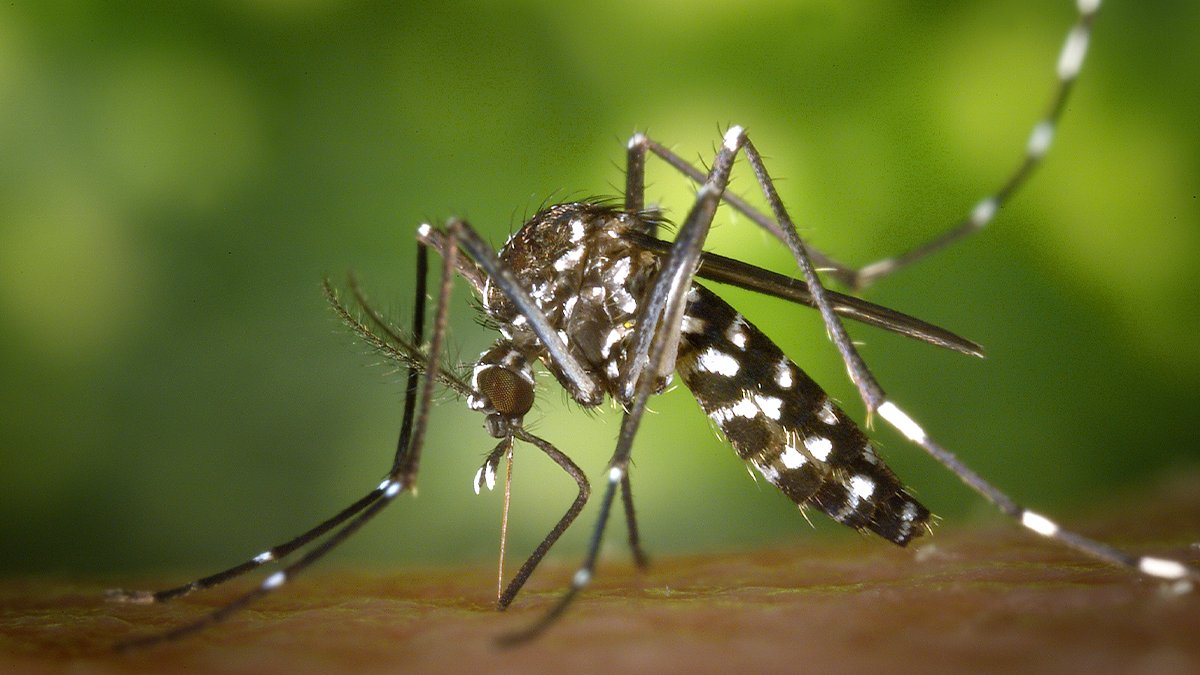
Mosquitoes are vectors for lots of viruses transmitted to humans—dengue fever, malaria, West Nile, yellow fever, and Zika among them. But why don’t mosquitoes get sick with the viruses themselves?
Molecular biologists at the Universitat Pompeu Fabra in Barcelona addressed that paradox directly in a recent study published in PLOS Biology.
Arboviruses—that is, those spread by arthropods such as mosquitoes and ticks—are increasingly significant causes of neurologic disease around the world, with more than 80 percent of the global population at risk of infection. They work by producing proteins that allow them to attach to host cells and take over their machinery. The host cells are ultimately damaged by the replicating virus, but somehow the cells of mosquitoes infected with an arbovirus remain viable, allowing the virus to keep propagating itself.
The researchers injected the cells of Asian tiger mosquitoes (A. albopictus) with Chikungunya (CHIKV), a virus that causes debilitating joint aches in humans, and then monitored the molecular activity. Although the genetic material of the virus—RNA—accumulated in the mosquito cells, the viral proteins did not.
Read more: “Mosquitoes Developed a Taste for Human Blood Before We Existed”
“Our results indicate that persistent infection in mosquito cells is characterized by a balanced host-virus translational state,” wrote the study authors, “in which limited viral translation is maintained while viral takeover of the host translational machinery is avoided.”
Essentially, by staging a more modest takeover in mosquito cells than in human host cells, the arboviruses keep mosquito cells intact, such that the mosquito will survive and carry the virus RNA to humans. Once in human cells, CHIKV and other viruses ramp up their protein production for a full takeover of the cellular machinery.
Furthermore, the researchers found that this repression of viral protein production isn’t just a feature of the CHIKV virus. Infection of mosquito cells by the Zika virus also demonstrated high accumulation of viral RNA with low protein production. In cells from vertebrates such as humans, the Zika virus promotes full cellular shutdown and remodels its RNA to become a virus-replication machine.
We can certainly bite back, though: By better understanding the transmission of mosquito-borne viruses, we can stop them from causing so much harm.
Enjoying Nautilus? Subscribe to our free newsletter.
Lead image: James Gathany, CDC
Sentinel — Human
The text functions as a high-quality scientific news report, presenting complex biological findings with clear causal links and a purposeful concluding argument.