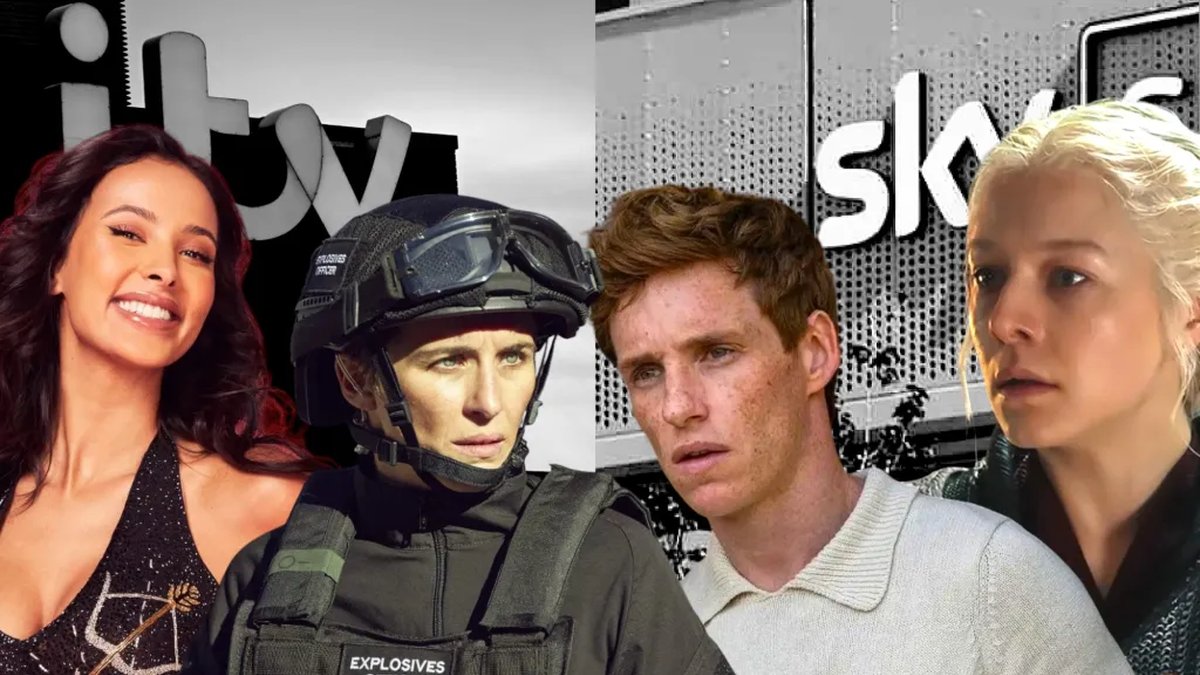
Sky has finally sealed a £1.6 billion ($2.1 billion) deal to acquire ITV‘s television network operations.
ITV confirmed to shareholders on Monday morning that it will sell to its pay-TV rival, meaning a crown jewel of British broadcasting becomes part of the NBCUniversal entertainment empire.
As the Paramount-Warner Bros. Discovery merger inches towards completion, Sky’s acquisition of ITV is another sign that traditional television companies are turning to seismic consolidation to compete with the likes of Netflix and YouTube.
The agreement follows a forensic courtship that has lasted nearly nine months after ITV first notified the London Stock Exchange in November that its media and entertainment division was under offer.
Watch on Deadline
Sky will pay £1.2 billion up front for ITV, with another £200M payable in the first half of 2028, which will be contingent on the company’s ad revenue hitting £1.7 billion next year. There will be a cash return of around £950M (25p per share) for ITV shareholders.
ITV Studios, ITV’s thriving production arm, will not be part of the Sky agreement. It will benefit from the transaction, however, after Sky agreed to sell The Great British Bake Off producer, Love Productions, to ITV Studios as a £200M side-deal to the acquisition.
Sky has struck a £2.1 billion output deal with ITV Studios until 2032, which will give ITV Studios certainty over the ongoing production of ITV hit series, including Love Island, Coronation Street, and I’m a Celebrity…Get Me Out of Here!. These series will not move behind Sky’s paywall.
Sky’s takeover of ITV will likely be subjected to a rigorous regulatory approval process. A deal of this scale would have raised significant competition concerns only recently, but after the ad market was upended by global tech giants, Sky and ITV will now be confident of getting clearance.
Their combined TV and streaming viewing share stood at 18.3% in May, which was just behind YouTube’s share of 18.6%, according to Barb, the official UK ratings body.
Sky CEO Dana Strong said: “This is a defining moment for British media and an opportunity to build a stronger future for two of the UK’s most loved and trusted brands.” She added that ITV will “remain a public service broadcaster at the heart of British life.”
ITV CEO Carolyn McCall said: “I am confident that Sky will be a strong and responsible custodian of ITV, building on its heritage while investing in its future and safeguarding the qualities that make ITV so valued by viewers, advertisers and the UK’s creative industries.”
Sky was founded by Rupert Murdoch in 1990 and became a swashbuckling growth and innovation story in the UK television market, culminating in a $39 billion sale to Comcast in 2018. Primarily a pay-TV and telecoms operation, it has run free-to-air networks, not least Sky News, but the ITV acquisition moves the company into new territory.
ITV is a 71-year-old flagbearer of UK television. A public service broadcaster, with guaranteed prominence on TV guides, ITV is the biggest commercial network in the country, boasting hit series like Love Island and Britain’s Got Talent. It is also home to the FIFA World Cup, alongside the BBC.
Sky is buying a company that generated £2 billion in revenue in 2025, boasting a near 32% share of commercial viewing and a streaming service in ITVX that has grown nearly 60% over the past four years to 16.5M monthly active users. It is also a company whose share price has suffered amid the long-gestating TV advertising downturn, down about two-thirds from highs achieved in 2015.
Sky and ITV will sit under NBCUniversal, which Comcast is spinning out into a standalone listed company. Sources said the choreography of Comcast’s spin-off last week and the ITV deal this week is no coincidence. The hope is that this can inject fresh energy into Sky, which is perceived to be a little unloved in the Comcast empire.
ITV and NBCUniversal are no strangers. NBCU-owned Carnival Films and ITV combined to create one of the defining television hits of the modern era in Downton Abbey. The Julian Fellowes drama lives on through a series of successful movies, and if ITV and NBCU can create a similar hit in the future, it will go some way to making Sky’s takeover a success.
Sky and ITV’s merger raises all sorts of fascinating questions about how the united operation will shake out. Will Sky series like The Day of the Jackal and Saturday Night Live UK be platformed on ITV? Will Cécile Frot-Coutaz or Kevin Lygo get the top content role? Can Sky justify maintaining two big newsrooms in Sky News and ITN-produced ITV News? Will ITV employees have to make the unpopular journey to Sky’s campus in Osterley, deep in southwest London? Sky and ITV are holding a conference call later this morning in the UK where some answers may be provided.
ITV Studios’ Next Move
There is also the question of ITV Studios’ next move following the exit from its network parent. Critics of the network business say the successful production and distribution arm has kept ITV’s share price from tanking over recent years as the TV ad market fell away, though that is just one read of the situation.
In March, ITV Studios posted full-year revenues of £2.1 billion, a 5% rise year-over-year during a period in which some major competitors have struggled to land deals. Adjusted EBITA did, however, stay flat in a tough economic environment for production businesses.
ITV Studios will remain listed in the short term, with the company holding a “capital markets day” after the completion of the Sky deal, during which it will outline its vision to shareholders.
ITV Studios, led by Julian Bellamy, owns a stable of British production companies such as Love Island firm Lifted Entertainment, Ludwig maker Big Talk and The Forsythes producer Mammoth Screen, along with in-house units that make long-running ITV soap Coronation Street and Emmerdale. On the international front, it has production operations across Europe, the U.S. and Australia, and Ruth Berry’s well-oiled distribution division, along with increasing digital capabilities thanks to its investment in Zoo55.
There will be production arrangements in place between ITV and ITV Studios from day one of the split, especially given the nature of soap opera production and the network’s commitment to reality brand Love Island, which is a consistent ratings winner and an expanded franchise.
One question will be whether ITV Studios continues to win as much business from ITV – up to this point it has consistently landed a significant number of total commissions on offer, much to the chagrin of independent players in the UK. Has the market just become a more level playing field thanks to the deconsolidation?
Meanwhile, with Banijay and All3Media merging to create a massive production player on British shores, ITV Studios will be forced to consider whether it still has the scale to compete, or if it will too look for a new strategic investor or merger partner. Teaming with the RTL-owned Fremantle is one potential option, or could it be the case that the ever-acquisitive Banijay seeks one more purchase once its beefed-up business takes shape this fall? Sources we’ve spoken to don’t rule out either scenario.
Whatever plays out, the deal announced this morning is set to reshape British television in a way no other that has done for many years.
Sentinel — Human
The text exhibits the characteristics of human journalistic analysis, blending precise financial facts with contextual speculation about media consolidation and cultural implications.