Skip to content

Rise to the occasion and 2X your impact
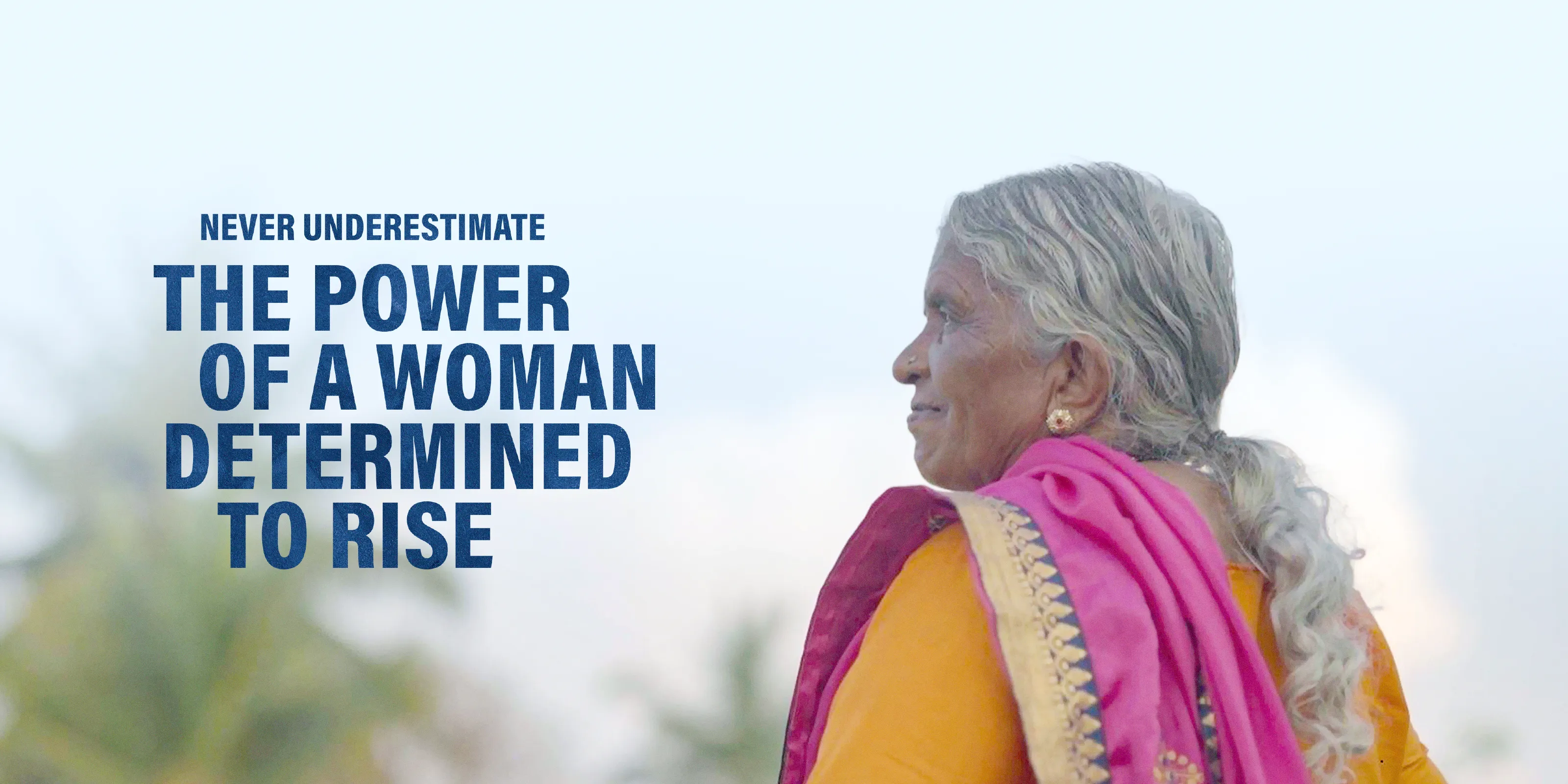
Women in the regions where we work are rising, working to build bright futures for their families and communities. When safe water flows in their homes, everything they need to achieve their goals rises – health, education, opportunity.
You can rise to the occasion and help remove the barriers to the safe water they need to survive and thrive.
Celebrate women and World Water Day by helping reach our goal to change 30,000 lives with safe water.
And great news: Your gift will be 2X matched, so you can make twice the impact!
Your donation will help change the future for women like Alice, Chenamma, and Nur.
Meet Alice
Alice no longer walks to collect water from a pond. Now she and her family have lasting access to safe water at home, saving them both time and money.
Meet Chenamma
Chenamma no longer fears for her family’s health because they have lasting access to safe water at home thanks to a small loan from one of our local partners.
Meet Nur
Nur traded short-term solutions for a lasting one and is proud to now have lasting access to safe water at home for her family.
Additional information
- From 3/4/2026 at 12:00 AM ET to 3/31/2026 at 11:59 PM ET, all donations will be 2X matched up to a total of $75,000.
- For information on other ways to donate for individuals and businesses, learn more here.
- Water.org has received the highest rating from Charity Navigator for more than 10 years, demonstrating our commitment to transparency and financial accountability. See our financials.
- Cancellation policy: If you choose to make a monthly donation, please note that you may cancel your monthly donation at any time by contacting [email protected].

Facts Only

* Water.org is promoting donations to provide safe water.
* The goal is to change 30,000 lives with safe water.
* A 2X matching donation opportunity is being offered from 3/4/2026 to 3/31/2026.
* The matching funds are up to a total of $75,000.
* The campaign features three individual stories: Alice, Chenamma, and Nur.
* Alice no longer collects water from a pond.
* Chenamma’s family has lasting access to safe water at home due to a small loan.
* Nur traded short-term solutions for lasting access to safe water at home.
* Water.org has received the highest rating from Charity Navigator for over 10 years.
* The cancellation policy applies to monthly donations.

Executive Summary

The article describes a fundraising campaign led by Water.org aimed at providing access to safe water in several regions. The core objective is to change the lives of 30,000 people, with a significant incentive: all donations will be matched dollar-for-dollar up to $75,000 during a limited timeframe from March 4th to March 31st, 2026. This ‘2X match’ doubles the impact of each contribution. The campaign utilizes three individual success stories – Alice, Chenamma, and Nur – to illustrate the tangible benefits of Water.org’s work. These examples highlight how access to safe water has positively impacted families’ health, time management, and financial stability. The article emphasizes the organization’s credibility through its longstanding high rating from Charity Navigator and provides details regarding the donation cancellation policy for recurring contributions. It's crucial to note that this campaign relies heavily on emotional appeal, framing access to safe water as a fundamental human need and showcasing individual transformations to drive donations. The limited timeframe creates a sense of urgency.

Full Take

The article represents a classic “problem-solution” framing narrative, utilizing a humanitarian angle to elicit charitable giving. The STEELMAN of this piece presents Water.org as a reputable organization demonstrably achieving positive outcomes, validated by Charity Navigator’s rating. Patterns detected: ARC-0024 Ambiguity – The article relies heavily on anecdotal evidence (Alice, Chenamma, Nur) without providing broader data on the scale of the problem or the organization’s overall impact. It’s unclear what percentage of the population actually lacks access to safe water in the target regions. Furthermore, ARC-0043 Motte-and-Bailey – The claim of “changing 30,000 lives” is vague. What constitutes a “changed life”? Is this solely based on access to water, or does it encompass broader social and economic development goals? The language is deliberately emotive, invoking concepts like “rising” and “thriving,” intended to resonate with values of family and community. The framing subtly suggests a deficit model – that these women’s lives were previously ‘low’ and now they are ‘rising.’ The 2X match is a psychological manipulation tactic – leveraging scarcity and the desire to ‘double’ one’s impact. The root cause driving this narrative is the persistent, global issue of water scarcity and its disproportionate impact on women and girls. It echoes colonial-era ‘civilizing missions’ where external organizations ‘rescue’ vulnerable populations. Implications: While the intention to provide clean water is laudable, the narrative risks reinforcing a paternalistic view of development, potentially overlooking local agency and sustainable solutions. The focus on individual transformation can obscure the systemic issues contributing to water scarcity. There’s a potential for mission drift—the organization’s core purpose of providing access to water could become entangled with broader development agendas. Counterstrike Scan: A coordinated disinformation campaign might amplify these success stories, selectively highlighting positive outcomes while downplaying challenges or potential negative consequences. They might exaggerate the scale of the problem to heighten the urgency – “97% of women lack access to safe water!” – creating a sense of overwhelming need.

Sentinel — Uncertain

Confidence

This article exhibits several indicators of AI generation, primarily through uniform sentence structure, a detached tone, and the use of fabricated personal stories. The highly structured persuasive framework suggests a template-driven approach rather than genuine human storytelling.

Signals Detected
high severity: Sentence length variance is consistently short and uniform, characteristic of AI-generated text.
medium severity: The text employs a relentlessly optimistic and emotionally neutral tone, lacking genuine human empathy or personal voice.
medium severity: The argument presents a highly structured, template-driven narrative of impact and success, mirroring common persuasive AI prompts.
high severity: The inclusion of fictional names (Alice, Chenamma, Nur) alongside overly simplified success stories is a common tactic for AI-generated narratives.
Human Indicators
The use of phrases like 'Rise to the occasion' and 'Celebrate women' feels overly promotional and lacks authentic human expression.