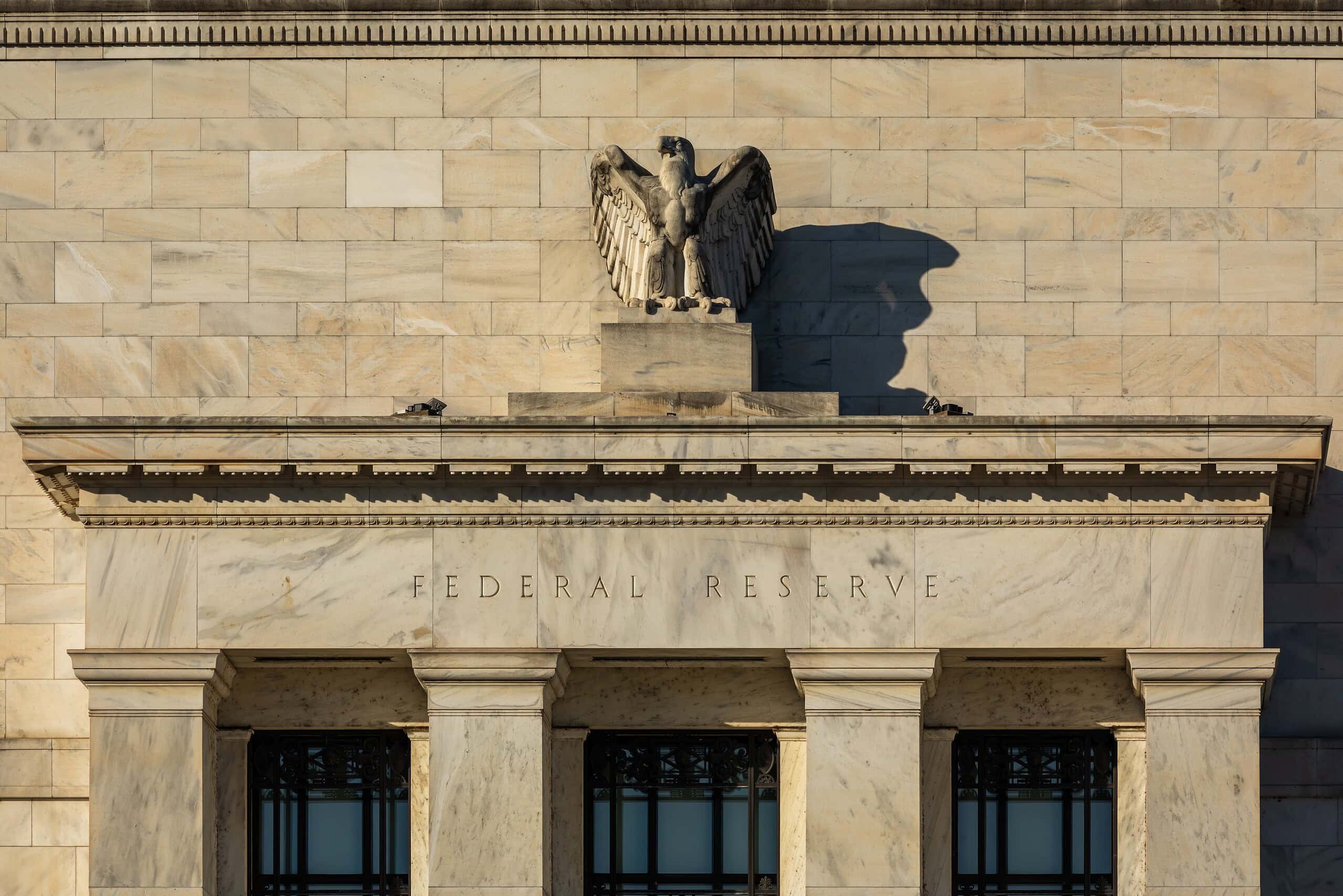
Major US banks proved resilient under the Fed's severe 2026 stress test scenario.
This year’s Federal Reserve Stress Test, which involved 32 U.S. banks, simulated a hypothetical real estate Armageddon in which commercial real estate prices fell 39%, housing prices declined 30%, unemployment spiked to 10%, and economic output dropped commensurately.
The results were encouraging.
Capital declined only 1.6 percentage points in aggregate, according to a Federal Reserve Board statement. All of the banks remained at their minimum common equity Tier 1 capital requirements despite having $708 billion in total hypothetical loan losses.
Of the projected losses, the Fed identified approximately $200 billion in credit card losses, $160 billion in commercial and industrial loan losses, and $75 billion in commercial real estate losses.
“Today’s results underscore the strength of the banking system,” Vice Chair for Supervision Michelle W. Bowman said in a prepared statement. “As we work to increase the transparency and accountability of the stress test, public feedback will help us continue to improve and instill greater confidence in the stress test and its results.”
Compared to last year’s stress test, this one saw a larger decline in aggregate capital due to higher loan losses stemming from increased loan balances and the greater severity of certain test variables, and lower projected unrealized gains in bank securities resulting from smaller hypothetical interest rate declines in the scenario.
The results, however, showed a projected increase in capital from higher interest income driven by recent bank financial performance, offset by the same hypothetical interest rate declines.
Regardless of their results, participating banks will not need to adjust their stress capital buffers since the Fed voted to maintain the current requirements until 2027.
Test Format Change
“This year marks the transition between the Federal Reserve’s existing stress test framework and an updated one that aims to enhance transparency, reduce volatility, and provide opportunities for public comment on the models and scenarios,” said Greg Baer, president and CEO of the Bank Policy Institute, in a statement. “We hope that the revised framework will shed more light on the inputs and provide more certainty. We have also recommended that the most recent Basel proposal be updated to eliminate overlaps with the stress test. These combined changes will allow banks to plan capital more efficiently and support more lending and capital markets financing.”
The Fed opened the 2026 test scenario for comments in October 2025 to improve transparency while avoiding litigation it faced in previous years over opacity and defects in the test itself.
“Capital requirements should not be set in a way that is shielded from meaningful public scrutiny,” the Fed’s Bowman said. “As vice chair for supervision, I am committed to providing transparency and accountability for both the Board and our supervised firms. This is essential for maintaining the value of our stress testing program, and for supervision and regulation more broadly.”
Contact the author at rdaly@gfmag.com
Facts Only
* The 2026 Federal Reserve Stress Test involved 32 U.S. banks.
* The scenario simulated a hypothetical real estate Armageddon where commercial real estate prices fell 39% and housing prices declined 30%.
* Unemployment spiked to 10% in the stress test scenario.
* Aggregate capital declined only 1.6 percentage points according to a Federal Reserve Board statement.
* Banks maintained their minimum common equity Tier 1 capital requirements despite having $708 billion in total hypothetical loan losses.
* Projected losses included approximately $200 billion in credit card losses, $160 billion in commercial and industrial loan losses, and $75 billion in commercial real estate losses.
* The Fed voted to maintain current capital requirements until 2027.
* Test format transition involves moving from the existing stress test framework to an updated one focused on transparency and public comment.
Executive Summary
Major US banks demonstrated resilience during the Federal Reserve's 2026 stress test scenario, simulating a severe real estate collapse and high unemployment. The test involved 32 U.S. banks, projecting significant hypothetical losses across various asset classes, including $200 billion in credit card losses and $160 billion in commercial and industrial loan losses. Despite these substantial projected losses totaling $435 billion, the aggregate capital for the banking system declined only 1.6 percentage points, and all banks maintained their minimum common equity Tier 1 capital requirements.
The Federal Reserve acknowledged the strength of the banking system during the test results. The test marked a transition to an updated framework designed to enhance transparency and public comment on models and scenarios. This change reflects a commitment from the Fed to increase accountability, as stated by Vice Chair for Supervision Michelle W. Bowman, who emphasized that capital requirements should not be shielded from public scrutiny. The shift aims to improve planning for banks and facilitate more efficient lending in capital markets.
Full Take
The contrast between the reported systemic resilience—banks maintaining capital buffers despite massive projected losses—and the sheer scale of hypothetical losses ($435 billion total) creates a significant gap that demands scrutiny regarding risk management assumptions. The narrative frames the outcome as an affirmation of banking strength, potentially easing public anxiety by focusing on survival rather than potential systemic fragility.
The shift toward enhanced transparency and public input represents a structural move in regulatory power. When the Fed emphasizes accountability and opens the testing process to public comment, it subtly shifts the locus of control from purely technical assessment to public legitimacy. This move addresses past concerns about opacity and defensibility of the test itself, suggesting an acknowledgment that the system's stability is intertwined with public confidence.
The juxtaposition of optimism (system strength) and quantifiable potential failure (trillions in projected losses) illustrates a pattern where complex financial risk is distilled into digestible metrics to manage perception. The core implication is whether regulatory transparency truly translates into systemic reform or merely provides procedural legitimacy for existing structures. Where does the responsibility lie when stress tests demonstrate system survival but project massive, unabsorbed credit losses?
Sentinel — Human
The text reads as professionally structured financial journalism, relying heavily on official statements and statistical data to maintain an objective, balanced perspective.