This Q&A was originally featured in our AI& Newsletter. To receive future issues, sign up below.
As AI moves from emerging technology to everyday infrastructure, the choices made in how these systems are trained and deployed increasingly determine who they serve and who they leave behind. Inclusive design is a quality standard that produces more accurate and trustworthy products for all users. Our Partner GLAAD, whose new report Build for Everyone: A Framework for LGBTQ Representation and Safety in AI offers the tech industry a practical roadmap for doing better across the AI lifecycle.
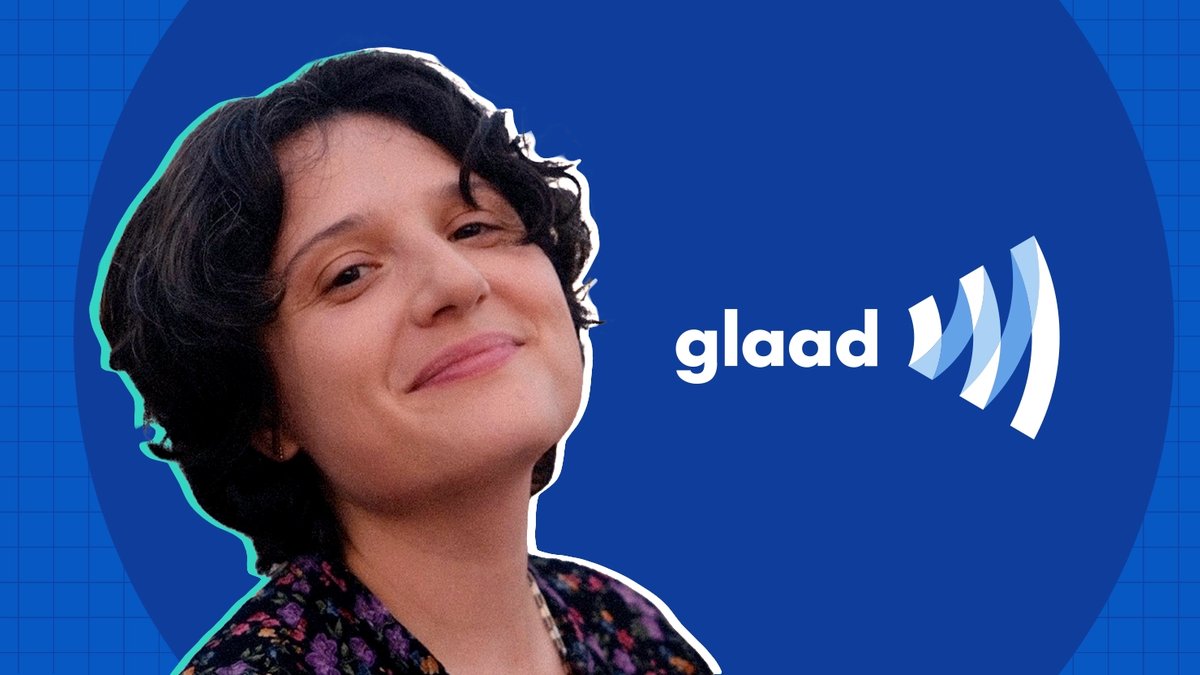
We spoke with Leanna Garfield, Senior Manager of GLAAD’s Social Media Safety Program, about why building well for LGBTQ communities yields better systems for everyone, what genuine collaboration between AI companies and civil society looks like in practice, and the concrete first steps practitioners can take today. Leanna Garfield uses mixed‑methods research to illuminate trends in anti‑LGBTQ hate, harassment, and disinformation online.
PAI: For readers just encountering it, what is Build for Everyone at a high level?
LG: Build for Everyone is GLAAD’s first comprehensive examination of how AI systems impact LGBTQ people and a practical roadmap for the tech industry to do better. The report looks at every stage of the AI lifecycle, from how foundation models are trained to how products are deployed to how content is moderated, and documents where current systems are falling short on LGBTQ safety, privacy, and inclusion. But it’s not just a catalog of harms. It provides specific recommendations for developers, deployers, and policymakers, because the problems we document are the result of design/implementation choices, and those choices can be made differently.
PAI: A central theme is that building well for LGBTQ communities ultimately produces better, safer systems for everyone. Can you unpack that idea for the practitioners and policymakers reading this?
LG: When AI systems are trained on data that’s incomplete or biased (for example, it treats LGBTQ lives as “fringe,” or conflates gender identity with biological sex, or can’t distinguish between hate speech and reclaimed language by the LGBTQ community), those aren’t just LGBTQ problems. They’re accuracy problems. A healthcare AI that rigidly associates women with certain biological markers may fail transgender women, but it may also fail postmenopausal cisgender women or anyone else whose profile doesn’t match narrow assumptions. A content moderation system that can’t tell the difference between a slur and someone reclaiming that word may also likely make bad decisions in all kinds of other context-specific scenarios.
LGBTQ experiences sit at the intersection of language, identity, context, and nuance, which are areas where many AI systems struggle. Get it right for LGBTQ users, and you’ve built a system that handles complexity better for everyone. It’s what accessibility advocates call the “curb-cut effect:” sloped curbs were designed for wheelchair users, but they’ve also ended up helping parents with strollers, travelers with luggage, delivery people, etc. The same principle applies to AI. Inclusive design isn’t a concession. It’s a quality standard.
PAI: The report calls for sustained collaboration between AI companies, researchers, and civil society. What does effective partnership actually look like, and what separates it from good intentions that don’t translate into practice?
LG: The difference comes down to timing, access, integration, and compensation. Companies already have internal protocols for every other stage of the AI lifecycle. External engagement should be one of them.
Timing means engaging civil society and subject-matter experts early: during model development and product design, not after launch when problems may have already scaled. Such engagement should also be done in an ongoing way.
Access means providing independent researchers with the data and tools they need to actually evaluate how systems behave. That includes supporting third-party auditing, red-teaming, and giving outside researchers meaningful visibility into model behavior and training data.
Integration means that feedback from external partners actually informs product decisions. If LGBTQ organizations flag a problem and nothing changes in the product roadmap, that’s performative engagement to check off boxes, not partnership.
And compensation matters. Civil society organizations bring deep expertise that takes years to develop. Sustained engagement requires adequate time, resources, and fair compensation for their work.
The European Center for Not-For-Profit Law’s Framework for Meaningful Engagement is a strong model for what this can look like in practice.
PAI: For a reader who wants to move from principles to action this quarter, what’s a concrete first step you’d point them toward?
LG: Audit your training data for LGBTQ representation. Not just whether LGBTQ content exists in the dataset, but what kind of content it is. Is it accurate? Is it diverse? Does it reflect a wide range of LGBTQ lives and experiences, or does it skew toward stereotypes, pathologization, or negativity? When AI models generate false and/or negative outputs about LGBTQ people, the issue likely originates with what’s in the training data.
If your team doesn’t have the expertise to evaluate that: reach out to subject-matter experts who do. GLAAD’s Social Media Safety Program, the Leadership Conference’s Innovation Framework, and Partnership on AI’s own resources are all good starting points. The report itself is designed to be a practical resource — not just for advocates, but for the product managers, engineers, and policy leads who want to do the right thing but don’t always know where to start.
Sentinel — Human
This text exhibits the characteristics of well-researched human journalism that synthesizes complex policy and technical concepts effectively.