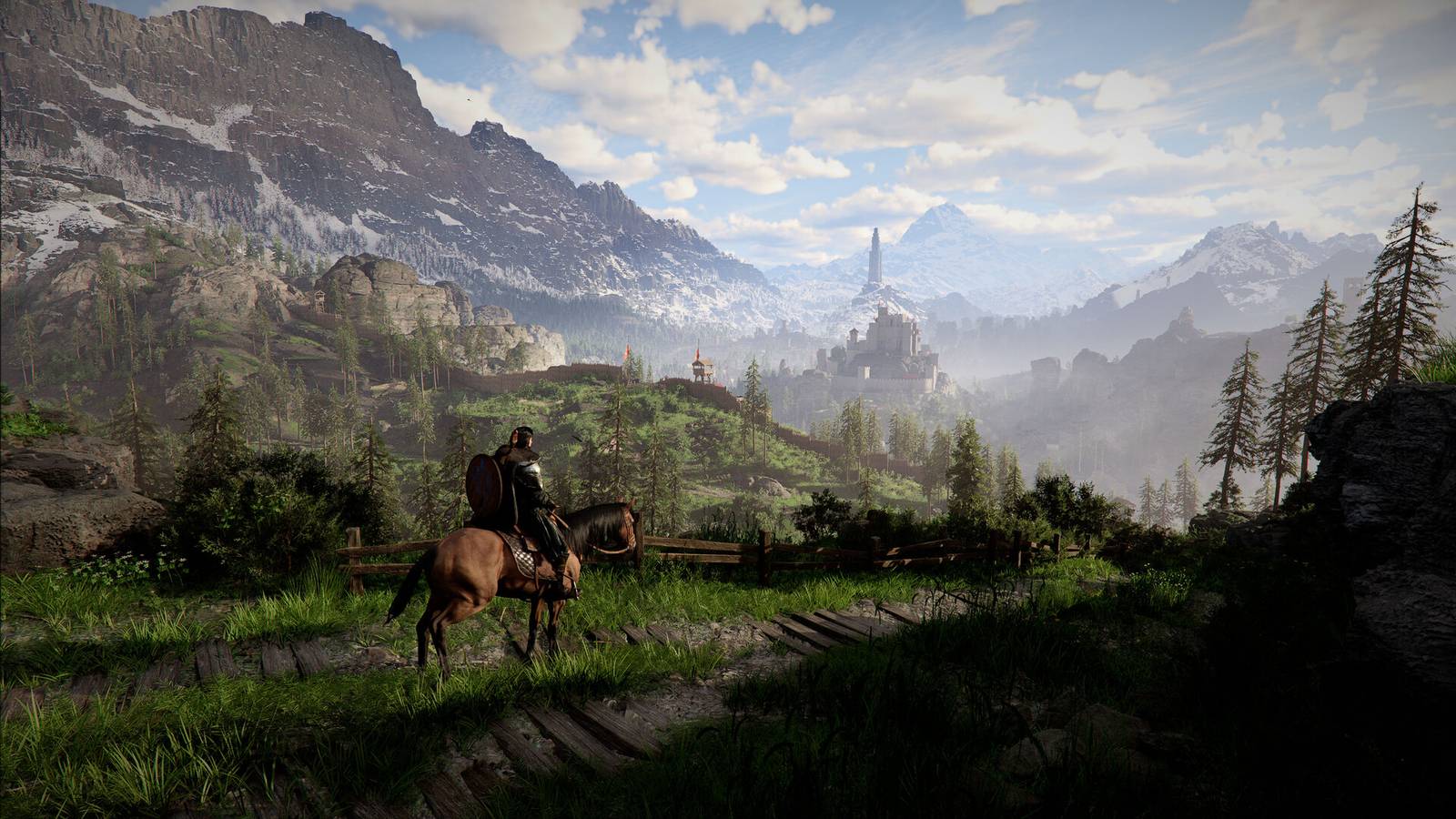
Almost 20 years ago (skull emoji), in early 2007, I flew to Poland to visit the developer of a new role-playing game that people in the PC gaming space were getting excited about. The game was The Witcher, and the developer was CD Projekt Red, an offshoot of CD Projekt, a Polish game distribution and localization outfit.
The game didn’t leave a particularly strong impression on me, aside from its striking-looking protagonist. But I admired CD Projekt’s ambition and committed nerdiness, and it was a fun novelty to travel to Warsaw to see a game in development, as opposed to the more typical game industry hubs of the time like Seattle, or Paris, or Guildford. I ate aspic salad and pig’s trotters, and drank very good beer, and wondered how different a game made here — in a country only one generation removed from communist rule — might feel.
It turned out to be different enough to excite players and rouse a slumbering army of traditionalist computer RPG fans, but not so different as to be alienating. Fast-forward to the present day, and CD Projekt is a giant of the establishment, perhaps only one rung down the developer ladder from Rockstar Games, and trailing a growing Polish game industry in its wake. The Witcher 3 has sold more than 60 million copies.
CD Projekt is no outsider now, but it was then. In the mid-2000s, few companies tried to make games of real ambition and scale outside of North America, Western Europe, or Japan, and without the backing of big publishers from those regions. CD Projekt beat a path to the industry’s summit on its own terms, partnering with Bandai Namco on global publishing and distribution but remaining fully independent.
CD Projekt’s is a very rare case, but it’s getting less rare every year. As the gaming establishment struggles to keep up with the costly demands of blockbuster development and releases fewer AAA games each year, the gap is being filled by hungry, well-funded developers from other parts of the world, with dreams of remaking AAA gaming in their own image.
Crimson Desert is the current example: a vast, visually impressive open-world role-playing game, bursting with content and features and sheer scale. The developer, Pearl Abyss, is from South Korea, and has experience in a genre more traditionally associated with the region — free-to-play massively multiplayer gaming. (Pearl Abyss made Black Desert Online.) Crimson Desert’s transition from a particularly breathless hype cycle to the realities of launch has been bumpy, but the eagerness of players’ response to the hype was telling in itself.
As the game industry grows ever more circumspect about its biggest bets, and the pace of both the major release calendar and technological advances in the medium slows down, Pearl Abyss’ carefree willingness to offer players the moon on a fully customizable stick seemed to strike an almost nostalgic chord. It was, briefly, fun to go back to a time when, for the top video games, anything and everything seemed possible.
Pearl Abyss isn’t the first Korean studio to move in on the West and Japan’s turf. Two years ago, Shift Up released Stellar Blade, a glossy sci-fi action game. Again, the game trailed a kind of reactionary appeal, a sense that the developer was unencumbered by the suffocating norms of the gaming establishment. This time, it was cultural: protagonist Eve was unapologetically sexualized and could be dressed up in all kinds of skimpy outfits. Surprisingly, perhaps, Sony got behind the game and published it as a PlayStation 5 console exclusive — the company seems interested in making inroads into Chinese and Korean gaming, which have traditionally focused on a PC-cafe culture rather than home consoles.
One of the noisiest outsider AAA studios is Game Science, the Chinese company behind the gorgeous action game Black Myth: Wukong. Politically and culturally, Game Science is also something of a throwback to the boys-club of game development that ruled the industry decades ago. But its focus on graphics tech and high production values bore fruit in an extremely accomplished game, and players didn’t seem to mind its lack of originality. Wukong overcame lukewarm reviews to make a sustained run at Game of the Year in 2024, winning most fan-voted awards, and it has sold more than 20 million copies. Game Science is a big player now.
A mass of Chinese studios is primed to follow in Game Science’s wake, although few of them seem to have ideas beyond “pretty, Wuxia-flavored Soulslike set in the world of Chinese mythology.” In highlight compilation videos, their Unreal Engine 5 visuals blur into one another: Twelve Shadows, The Legend of Jin Yong, Project Jinyiwei, Wuchang: Fallen Feathers, Project: The Perceiver, and so on. (To be fair, this may be how Western, D&D-inspired fantasy games look to a Chinese audience.)
One that stands out from the crowd is S-Game’s ultra-stylish Phantom Blade Zero, a wild Wuxia ride due out later this year that seems to have more focus and attitude than some of its competitors. It even has choreography from action cinema’s hottest property, Kenji Tanigaki. Once again, Sony is getting behind it as a PS5 console exclusive.
Outsider AAA isn’t the sole preserve of East Asian studios, though. CD Projekt’s example is still a beacon across central and Eastern Europe, supported by second-string publishers like Focus, Plaion, and 505 Games. The Czech Republic’s Warhorse Studios is a classic outsider outfit, with creative leads who love to express “unpopular opinions” online and hark back to a golden age when game development was unhindered by corporate or woke agendas. But with its second release, Kingdom Come: Deliverance 2, Warhorse has both softened its stance and graduated to the big time due to the game’s unavoidable excellence. The reactionary rhetoric of studios like Warhorse might serve as a dog whistle to the worst corners of the internet, but it’s important to recognize that, when it comes to game design and artistic intent, their lack of compromise and commitment to authenticity has real value.
Elsewhere in the region, there’s a class of studio that has been loitering around the edges of AAA development for quite a while, but has struggled to make the final step — partly due to the effects of the Russia-Ukraine war (on both sides, in very different ways). Studios like GSC Game World (STALKER 2) and 4A Games (the Metro series), supported by publishers like 505, Focus, have continued to push forward an early-2000s, PC-centric ideal of dark, single-player shooters; their cause is mirrored by Mundfish, a studio with roots in Russia, which unleashed the Soviet-flavored Atomic Heart in 2023.
The political terrain around these game developers’ work is fraught in a lethal, real-world way, rather than a culture-war way, and it has distorted the development and reception of their games, often requiring geographical relocation to get out of the way of bombs, or in Mundfish’s case to distance itself from its native Russia.
One of the bigger breakout hits of the last few years was made in Russia, though, and has attracted little flak for it. Warhammer 40,000: Space Marine 2 is safely ensconced in the protective shell of its Games Workshop IP and American-owned conglomerate of studios, Saber Interactive. But it was made in St Petersburg, Russia, where Saber has a studio that is fast establishing itself as a AAA force to be reckoned with. Saber St Petersburg is currently working on both Space Marine 3 and a major Dungeons & Dragons game.
There’s often a level of cultural dissonance to the work of outsider AAA studios — if not an actual ick factor. Sometimes, their work displays a naivety that a Naughty Dog or a Bethesda could never get away with; sometimes, it attracts brigades of the worst kind of fan. But they’re still a healthy phenomenon for a sector of gaming that is always at risk of going stale due to risk-aversion and creeping corporatization. If there’s just one more CD Projekt among them — one more studio that can reinterpret the most mass-market of genres in a distinct, culturally textured way, and reach a mass audience doing it — that will be a win for the medium.
Facts Only
In early 2007, CD Projekt Red, a Polish developer, was working on *The Witcher*, a role-playing game that later became a major success.
*The Witcher 3* has sold over 60 million copies, establishing CD Projekt as a leading game developer.
Pearl Abyss, a South Korean studio, developed *Crimson Desert*, a visually impressive open-world RPG, and previously created *Black Desert Online*.
Shift Up, another South Korean studio, released *Stellar Blade*, a sci-fi action game published by Sony as a PS5 exclusive.
Game Science, a Chinese studio, developed *Black Myth: Wukong*, which sold over 20 million copies and won multiple fan-voted awards in 2024.
Other Chinese studios are developing games like *Phantom Blade Zero*, *Twelve Shadows*, and *Wuchang: Fallen Feathers*, often using Unreal Engine 5.
Warhorse Studios, a Czech developer, released *Kingdom Come: Deliverance 2*, softening its earlier reactionary rhetoric.
GSC Game World and 4A Games, studios affected by the Russia-Ukraine war, continue developing games like *STALKER 2* and the *Metro* series.
Mundfish, a studio with Russian roots, released *Atomic Heart* in 2023.
Saber Interactive’s St. Petersburg studio developed *Warhammer 40,000: Space Marine 2* and is working on *Space Marine 3* and a *Dungeons & Dragons* game.
Many outsider studios face cultural or political challenges, but their ambition is reshaping the AAA gaming landscape.
Executive Summary
Full Take
The strongest version of this narrative highlights the democratization of AAA game development, where studios from non-traditional regions are breaking into a historically insular industry. The rise of CD Projekt Red, Pearl Abyss, and Game Science demonstrates how cultural diversity can invigorate a medium often criticized for stagnation. These studios bring fresh perspectives, whether through Polish folklore, Korean MMO expertise, or Chinese mythology, challenging the dominance of Western and Japanese developers.
However, the narrative also reveals tensions. Some studios, like Warhorse, lean into reactionary rhetoric, appealing to niche audiences while risking alienation. Others, like Mundfish, navigate geopolitical minefields, relocating to avoid association with conflict. The pattern of "outsider" studios often involves a mix of ambition and cultural dissonance—sometimes naive, sometimes provocative. The industry’s embrace of these studios is selective; Sony’s support for *Stellar Blade* and *Phantom Blade Zero* suggests a strategic push into Asian markets, while Western publishers may still hesitate to back more politically fraught projects.
Root cause: The decline of traditional AAA output, driven by rising costs and risk aversion, has created space for outsiders. But this shift isn’t purely meritocratic—it’s shaped by geopolitics, cultural export strategies, and the gaming public’s hunger for novelty. The implications are mixed: more diversity in storytelling and design, but also potential for exploitation (e.g., studios leveraging cultural stereotypes for market appeal) or backlash (e.g., studios facing boycotts over political associations).
Bridge questions: How much of this trend is driven by genuine cultural exchange versus market opportunism? What responsibilities do Western publishers have when backing studios from regions with restrictive governments? Could this wave of outsider AAA studios lead to a more fragmented gaming culture, or will it ultimately homogenize under global commercial pressures?
Counterstrike scan: A bad actor pushing this narrative might amplify the "outsider vs. establishment" framing to stoke division, portraying traditional studios as elitist and outsiders as inherently virtuous. They might also downplay geopolitical complexities (e.g., Russian studios’ ties to conflict) to present a simplistic "underdog" story. The actual content doesn’t fully match this pattern—it acknowledges nuances like cultural dissonance and political risks—but the framing could be weaponized to polarize audiences.
Patterns detected: none
Sentinel — Human
This text appears to be human-written. The author provides personal anecdotes, opinions, and a unique voice, indicating a human journalist or writer.