Dive Brief:
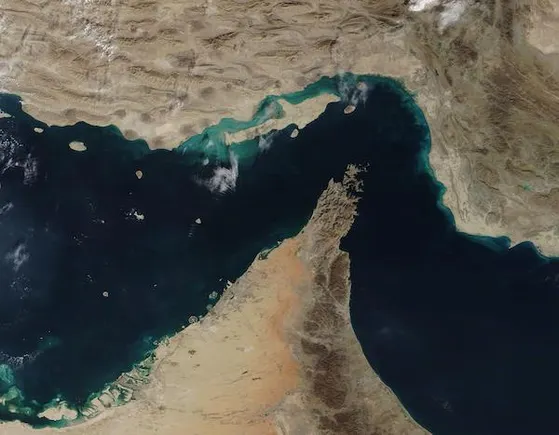
- The continued closure of the Strait of Hormuz, a narrow sea passage and one of the world’s critical transit choke points for oil and other commodities, is causing serious supply disruptions and forcing manufacturers to reroute shipments elsewhere.
- Approximately 30% of global seaborne oil trade and 20% of liquid natural gas trade has been disrupted since the Iran war began, according to an analysis from Roland Berger, a Germany-based management consulting firm. Exports of fertilizer inputs, petrochemicals and materials like aluminum have also been affected.
- Crude oil prices have surged nearly 47% this month, according to Roland Berger. Polypropylene jumped 24% and aluminum increased 10%. Some of the sectors most affected by these disruptions are automotive, chemicals, machinery, food and beverage, and electronics.
Dive Insight:
Manufacturers are starting to see tangible effects more than three weeks after U.S.-Israeli strikes on Iran began. Export outages are primarily impacting Asia countries, with ripple effects across global supply chains.
As companies begin to take on higher transportation costs, they are also bracing for higher materials prices.
For example, petrochemical disruption feeds directly into plastics pricing. As plastic items get more expensive, that translates to more expensive everyday goods and services, Nishkam Batta, founder and CEO of GrayCyan, an AI consultancy and development group, told Manufacturing Dive.
“Everybody is mindful of increasing their prices,” he said. “Even if the producer of these tertiary products ... decides to jack up [prices] by a few cents, the input consumer, which is the manufacturing company, may just absorb the shock for a short while before finally passing it on.”
In addition, higher jet fuel costs are already pushing airline prices higher, according to the Atlantic Council, a Washington D.C.-based nonpartisan think tank focused on international affairs. Soon there will be higher costs for food packaging, medical supplies and “virtually every manufactured good” that relies on petrochemicals in some way, the group said on its website.
China, one of the largest polypropylene producers in the world, accounted for 28% of global capacity in 2015 and has expanded since then, according to Argus Media. If China imposes export controls on certain petrochemical products, U.S. inflation will run higher, the Atlantic Council said.
Beyond commodity constraints, the war is driving longer transit times, higher freight costs and congestion across global logistics networks, according to Roland Berger. U.S. gas prices are averaging nearly $4 per gallon, up $1 from a month ago, AAA data show.
Roland Berger recommended a series of mitigation actions as companies prepare for prolonged disruptions, including identifying supply chain vulnerabilities, securing critical inputs and pre-booking container capacity. Companies should also look for alternative suppliers and determine their “just-in-time” buffer.
Some international companies are able to manage their shipments out of the Strait of Hormuz because of their relationships with Iran, including those located in India, China and other countries, Batta said.
“The majority of the world is still kind of on watch,” he said.
Batta said that if the wars last for months or longer then manufacturers will start to do more to mitigate supply disruptions.
“For now, they’re still kind of in a waiting pattern,” he said.
Facts Only
Actors: U.S., Israel, Iran, manufacturers, airlines.
Events: U.S.-Israeli strikes on Iran; ongoing conflict.
Timeline: Ongoing (as of article publication).
Locations: Strait of Hormuz, Asia countries, global supply chains.
Institutions: Roland Berger, Atlantic Council, Argus Media.
Executive Summary
Full Take
**STEELMAN**: The article presents a factual account of the disruptions and price surges caused by the ongoing conflict in Iran, focusing on its impact on oil and commodity trade, petrochemicals, and global logistics networks.
**PATTERNS DETECTED**: None
**ROOT CAUSE**: The crisis is rooted in geopolitical tensions between Iran and the U.S.-led coalition, resulting in supply disruptions and increased costs for various sectors.
**IMPLICATIONS**: The ongoing conflict has far-reaching implications for global economies, affecting prices, trade, and supply chains. Some companies may absorb higher costs temporarily before passing them on to consumers. If the war lasts for months or longer, manufacturers may take more drastic measures to mitigate disruptions.
**BRIDGE QUESTIONS**: Who are the key players involved in finding a solution to this crisis? How will these disruptions affect emerging economies that heavily rely on oil and commodity trade? What long-term strategies can companies implement to minimize the impact of such crises on their operations?