Iran's parliament speaker Mohammad Bagher Ghalibaf has said that the United States was plotting a ground attack despite publicly engaging in diplomatic efforts aimed at ending the war.
"The enemy publicly sends messages of negotiation and dialogue while secretly planning a ground attack," Mr Ghalibaf said in a statement carried by the official IRNA news agency.
Meanwhile, the risk of an expanded Iran war grew as Yemen's Iran-aligned Houthis yesterday launched their first attacks on Israel since the start of the conflict, as additional US forces reached the Middle East.
Washington has dispatched thousands of Marines to the Middle East in the month-old war.
The first of two contingents arrived on Friday on an amphibious assault ship, the US military said yesterday.
The Washington Post reported that US officials said the Pentagon was preparing for weeks of ground operations in Iran, possibly involving raids by Special Operations and conventional infantry troops.
Whether President Donald Trump would approve plans for deploying ground troops remained uncertain, the Post reported.
Reuters has reported the Pentagon was considering military operations that could include deploying ground troops in Iran.
Series of explosions heard in Iranian capital: AFP journalist
A series of loud explosions was heard this morning across the Iranian capital, an AFP journalist said.
The blasts were heard in northern Tehran and smoke was seen rising from impacted areas in the city's northeast. It was not immediately clear what was hit.
Lebanese journalists, rescue workers hit
The war, launched on 28 February with US and Israeli strikes on Iran, has spread across the Middle East, killing thousands and hitting the world economy with the biggest-ever disruption to global energy supplies.
Secretary of State Marco Rubio said on Friday the US could achieve its aims without ground troops but that it was deploying some to the region so Trump would have "maximum" flexibility to adjust strategy.
The Pentagon was also expected to deploy thousands of soldiers from the US Army's 82nd Airborne Division.
Iranian President Masoud Pezeshkian spoke to Prime Minister Shehbaz Sharif of Pakistan, which hosts talks from Sunday with the Turkish and Saudi foreign ministers on ways to ease regional tensions.
Israel carried out a wave of attacks on Tehran on Saturday, targeting what Israel's military said was Iranian government infrastructure.
It also hit targets in Lebanon, resuming its war against Iran-backed Hezbollah, killing three Lebanese journalists in a strike on a media vehicle, Lebanon's Al Manar TV reported, as well as a Lebanese soldier.
A follow‑up strike on the rescue workers sent to assist them also caused fatalities.
Israel's military said it had targeted one of the journalists, accusing him of being part of a Hezbollah intelligence unit and saying he had reported on locations of Israeli soldiers.
Iran kept up attacks on Israel and several Gulf states after hitting an air base in Saudi Arabia on Friday and wounding 12 US military personnel, two of them seriously, in one of the most serious breaches of US air defences so far.
Air defences shot down a drone near the residence of the leader of the Iraqi Kurdish ruling party, Masoud Barzani, in Erbil, security sources told Reuters early this morning.
Security sources said on yesterdaythat another drone attack had targeted the home of the president of Iraq's Kurdistan region.
Israel, which regularly faced missile attacks from the Houthis before the war, confirmed a missile had been fired at it from Yemen. There were no reports of casualties or damage.
Houthi strikes may mean new threat to shipping
The attack pointed to a potential new threat to global shipping, already hit by the effective closure of the Strait of Hormuz, previously a conduit for about a fifth of global oil and liquefied natural gas supplies.
The group carried out a second strike on Israel, said Houthi military spokesperson Yahya Saree, vowing more strikes to come.
The Houthis have shown an ability to strike targets far beyond Yemen and disrupt shipping lanes around the Arabian Peninsula and the Red Sea, as they did in support of Hamas in the Gaza war.
With US midterm elections due in November, the increasingly unpopular war has weighed on Mr Trump's Republican Party.
He has appeared eager to end it soon, while also threatening escalation.
Demonstrators took to city streets across the US on Saturday in anti-Trump rallies described by organizers as a call to action against the war on Iran.
Mr Trump has threatened to hit Iranian power stations and other energy infrastructure if Iran does not open the Strait of Hormuz.
But he extended a deadline he had imposed for this week, giving Iran another 10 days to respond.
Iranian threats to attack ships in the strait have kept most oil tankers from attempting the waterway.
Iran has agreed to let an additional 20 Pakistani-flagged vessels pass through the strait, with two ships permitted to transit daily, said Pakistani Foreign Minister Ishaq Dar.
Israel has targeted Iran's nuclear infrastructure.
The head of Russia's state nuclear corporation Rosatom, which has evacuated staff from the Bushehr nuclear power plant on the Gulf coast, said the attacks threatened nuclear safety.
Mr Pezeshkian said Iran would "retaliate strongly if our infrastructure or economic centers are targeted".
Iranian attacks were reported in multiple areas across the Gulf, including Kuwait, the United Arab Emirates and Oman.
An Iranian airstrike hit the Israeli village of Eshtaol, near Jerusalem. Seven people were hospitalised, Israel's ambulance service said. Aluminium Bahrain ALBH.
BH said its facilities were targeted in an Iranian attack on Saturday, Bahrain's state news agency reported.
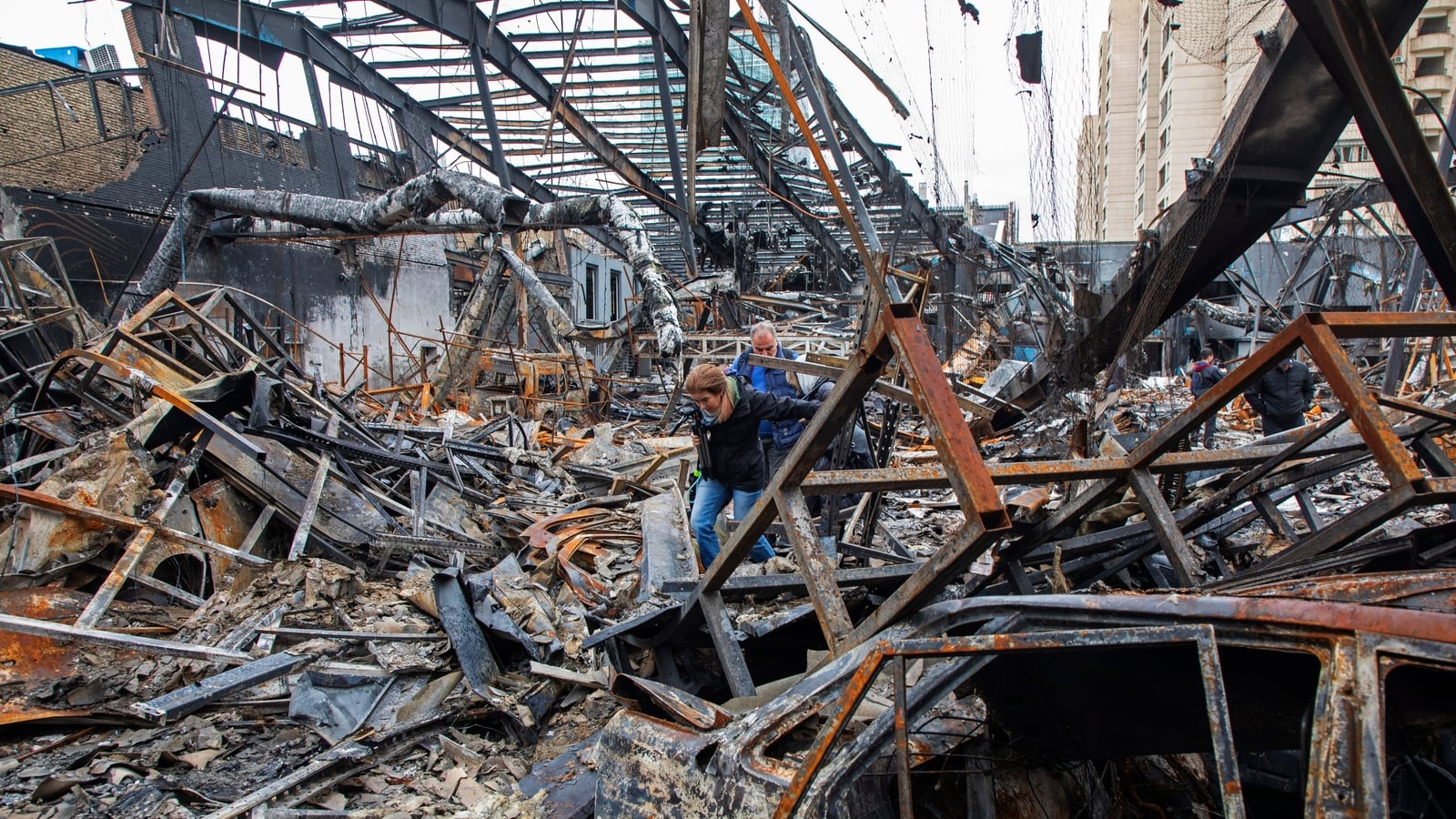
In Iran, media said at least five people were killed in a US-Israeli attack on a residential unit in the northwestern city of Zanjan, and in Tehran, the Iran University of Science and Technology was struck.
Facts Only
Iran's parliament speaker, Mohammad Bagher Ghalibaf, accused the US of secretly planning a ground attack while publicly engaging in diplomacy.
The war began on February 28 with US and Israeli strikes on Iran.
Yemen's Houthi rebels launched their first attacks on Israel since the conflict started.
The US has deployed thousands of Marines and soldiers from the 82nd Airborne Division to the Middle East.
Explosions were heard in northern Tehran, with smoke seen rising from impacted areas.
Israeli strikes in Lebanon killed three journalists and a Lebanese soldier, with a follow-up strike on rescue workers causing additional fatalities.
Iran attacked an air base in Saudi Arabia, wounding 12 US military personnel.
The Houthis vowed more strikes on Israel after their initial attack.
The Strait of Hormuz is effectively closed, disrupting global oil and gas supplies.
Anti-war protests occurred across the US, with demonstrators opposing the conflict.
President Trump threatened to hit Iranian energy infrastructure but extended a deadline for Iran to reopen the Strait of Hormuz.
Iran agreed to allow 20 Pakistani-flagged vessels to pass through the strait daily.
Israel targeted Iran's nuclear infrastructure, prompting Rosatom to evacuate staff from the Bushehr nuclear plant.
Iranian attacks were reported in Kuwait, the UAE, Oman, and Israel, including a strike on the village of Eshtaol near Jerusalem.
A US-Israeli attack killed at least five people in Zanjan, Iran, and struck the Iran University of Science and Technology in Tehran.
Executive Summary
Full Take
The strongest version of this narrative presents a rapidly escalating conflict with clear geopolitical stakes: Iran and its allies (Houthis, Hezbollah) are locked in a multi-front war with a US-Israeli coalition, with global energy markets and regional stability at risk. The source provides concrete details—deployment numbers, specific strikes, casualties—that lend credibility to the severity of the situation. However, the framing leans toward a binary "US-Israel vs. Iran" dynamic, which may oversimplify the motivations of regional actors like Saudi Arabia or Pakistan, who are portrayed as either victims or mediators but not as independent strategic players.
Pattern scan: The article employs emotional exploitation (ARC-0012 Fear Appeals) by emphasizing the "biggest-ever disruption to global energy supplies" and the threat of "weeks of ground operations," which could amplify public anxiety. There’s also a hint of false framing (ARC-0024 Ambiguity) in the lack of clarity around who initiated specific attacks—e.g., the explosions in Tehran are described without attribution, leaving room for speculative blame. The repeated mention of Trump’s threats and deadlines could be interpreted as authority games (ARC-0031 Borrowed Credibility), using his statements to imply inevitability of escalation.
Root cause: The paradigm here is classic great-power proxy warfare, with Iran and the US-Israel axis competing for regional dominance. The unstated assumption is that military force is the primary lever of influence, sidelining diplomatic or economic alternatives. This echoes Cold War-era brinkmanship, where third-party states (Yemen, Lebanon) become battlegrounds for superpower rivalry.
Implications: Human agency is constrained by the logic of escalation—civilians in Tehran, Beirut, and Eshtaol bear the costs, while leaders on all sides frame their actions as defensive or retaliatory. The closure of the Strait of Hormuz disproportionately harms global South economies dependent on energy imports. Second-order consequences include normalized attacks on journalists (framed as "Hezbollah operatives") and the weaponization of nuclear safety risks (Bushehr plant evacuations).
Bridge questions: How might regional actors like Turkey or Pakistan reshape the conflict if they pursued independent mediation? What evidence would change your assessment of whether Iran or the US-Israel coalition is primarily responsible for escalation? How does the framing of "defensive" strikes by both sides obscure the civilian toll?
Counterstrike scan: A coordinated influence campaign would amplify the binary framing (US/Israel as defenders, Iran as aggressor), suppress mentions of civilian casualties, and exaggerate the immediacy of threats (e.g., "ground invasion imminent"). This article includes civilian impacts and diplomatic efforts, which complicates a pure propaganda narrative. However, the lack of Iranian or Houthi perspectives on their strategic goals could indicate selective sourcing. The content doesn’t fully match a hypothetical attack playbook, but the omission of non-Western viewpoints is notable.
Sentinel — Human
The analyzed text appears to be written by a human journalist, with signs of varying sentence lengths, personal voice, and no fabricated claims. However, some uncertainty remains due to the possibility of AI-assisted editing.