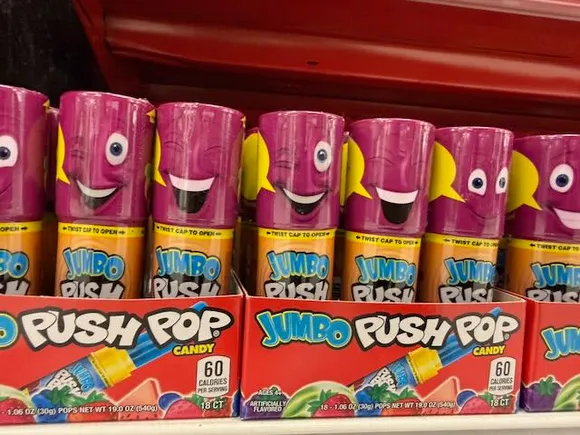
AURORA, Colo. — Last year, tariff-fueled price increases for sweets made in China and other Asian countries, plus weaker demand for those products, drove Bazooka Candy Brands to rethink its supplier strategy.
Gone was the playbook of trading higher volume for lower prices from contract manufacturers in a region that accounts for 80% of Bazooka’s U.S. sales, according to Erika Nava, VP of strategic supply and product development. Instead, the candy company and its suppliers agreed to help each other make the best of what Nava called a "perfect storm."
"We approached it as, it's not your fault, it's not my fault," Nava said at an April 28 Institute for Supply Management World 2026 presentation. "We're both victims of this," she added, referring to tariff-induced price hikes.
Under those circumstances, Bazooka's strategy was to negotiate with its vendors in a way that shared the pain.
For some suppliers, splitting the tariff cost was acceptable, Nava said. For others, margins were too small to absorb that cost, so Bazooka took on a greater share of the tariff hit.
In those situations, Bazooka asked to see the supplier’s cost structure and, in some cases, was given it, providing the candy maker with leverage in future talks.
"That was an unintended great consequence of this agreement," Nava said.
Bazooka also stopped producing some SKUs because they weren’t cost-effective for the company or the suppliers.
Bazooka wanted a deal both sides could live with, knowing it was temporary, Nava said. If tariffs fell, both sides would benefit proportionately. If they went up, then the sides would have to renegotiate the original deal.
Since then, Bazooka has shifted its supplier relationships from a price-versus-volume model to a partnership. That includes plans to refund the portion of the tariffs imposed by President Donald Trump under the International Emergency Economic Powers Act, later deemed illegal by the U.S. Supreme Court, that suppliers paid.
"My nightmare is going to be, how do I calculate how much I'm going to share back to them," Nava told Supply Chain Dive. "I cannot just walk away saying, 'Thank you for your help. See you next crisis.'"
The tariff crisis convinced Nava that building a collaborative relationship with suppliers is good for both sides. Here are Nava’s four lessons learned:
1. Know your suppliers
Learn their decision-making processes, their capabilities and what they’re doing today that may be useful in the future, Nava said. Be sure to get updates on the latter at least twice a year.
"A partnership starts with really asking questions … rather than just dropping demands," Nava said. "That is what makes a difference in suppliers picking up the phone when you need them or going silent. And you don't want that when you are in the middle of a crisis."
2. Track performance relentlessly
Set yearly supplier KPIs, continuous improvement goals and a growth and innovation plan, Nava said. After the metrics are set, have a structured quarterly business review with the most strategic vendors.
3. Map the value chain
Nava advocates monthly or quarterly value stream mapping to identify cost-saving opportunities. VSM maps the flow of materials and information across the supply chain to spot waste, highlight productive activities and pinpoint changes that could boost efficiency.
4. Spotlight supplier wins
Let suppliers know when they go above and beyond to help you, said Nava, who sends thank-you emails to suppliers' executive teams to show appreciation.
"I can tell you next time you need anything, they are going to do whatever it takes for you, because you value their contributions whenever they go above and beyond," Nava said.
Facts Only
* Tariff-fueled price increases and weaker demand drove Bazooka Candy Brands to rethink its supplier strategy.
* Bazooka previously used a playbook of trading higher volume for lower prices from contract manufacturers in Asia.
* Bazooka and its suppliers agreed to help each other manage the "perfect storm" of the situation.
* Bazooka negotiated tariff costs by splitting the burden among suppliers.
* Bazooka requested suppliers' cost structures to gain leverage in future talks.
* Bazooka stopped producing some SKUs that were not cost-effective for the company or suppliers.
* Bazooka shifted supplier relationships from a price-versus-volume model to a partnership.
* Bazooka plans to refund the portion of tariffs paid by suppliers under the International Emergency Economic Powers Act.
* Four lessons learned include knowing suppliers, tracking performance, mapping the value chain, and spotlighting supplier wins.
Executive Summary
Full Take
Sentinel — Human
This text reads like a genuine business case study, effectively blending specific company strategy with high-level supply chain principles, suggesting human-led analytical writing.