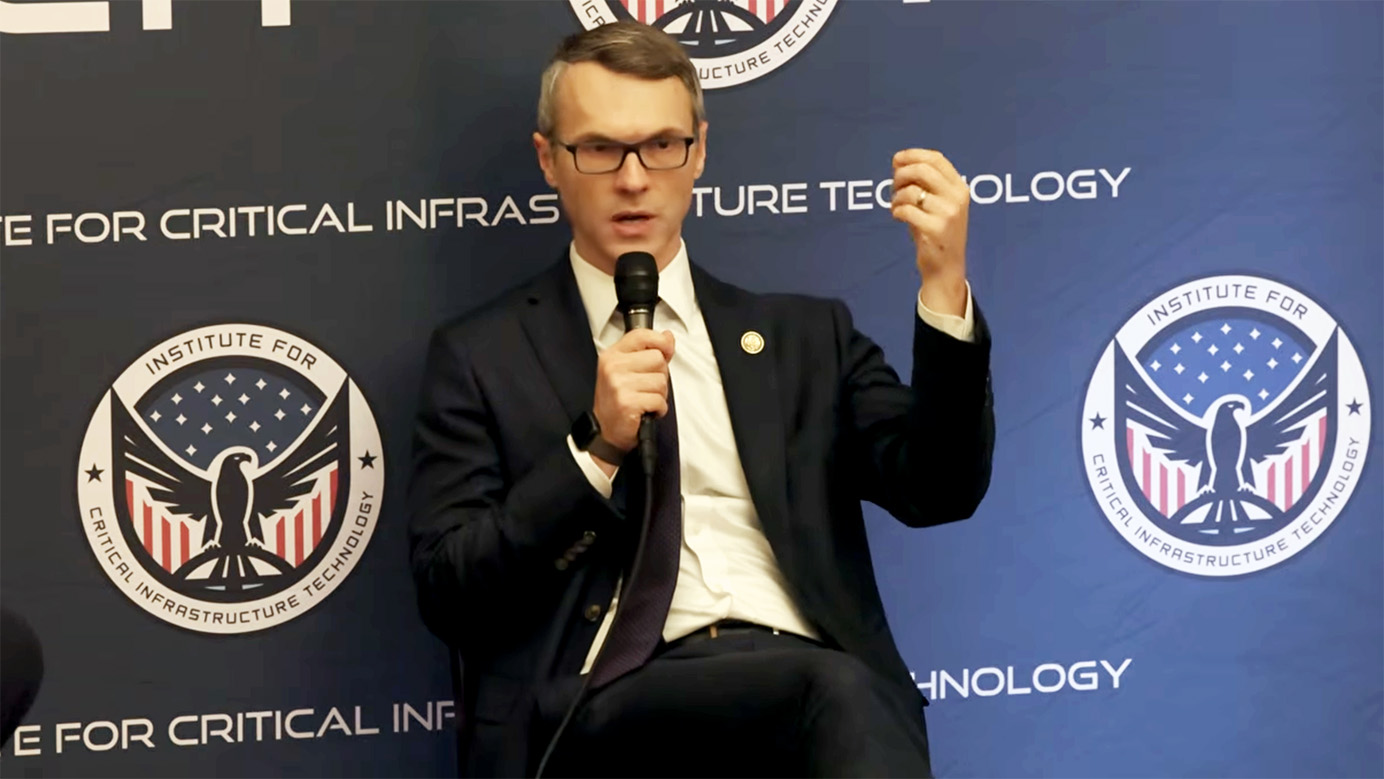
Artificial intelligence is transforming critical infrastructure faster than organizations can prepare their workforces, creating an urgent need for closer collaboration between government, industry and education, speakers said during a June 10 panel discussion at the Institute for Critical Infrastructure Technology (ICIT) conference.Rep. James Walkinshaw, D-Va., and Avature CEO Dimitri Boylan said workforce readiness has become as critical to national resilience as investments in digital infrastructure, cybersecurity and AI.Walkinshaw argued that critical infrastructure should no longer be viewed as primarily physical assets such as roads and utilities. Instead, digital systems, cyber resilience and the people who operate them are now inseparable components of national infrastructure. He also expressed concern about staffing reductions at the Cybersecurity and Infrastructure Security Agency (CISA), saying the loss of experienced personnel comes at a time when cyber threats continue to grow.Boylan said organizations increasingly recognize employees as part of their critical infrastructure but warned that investment in workforce development has failed to keep pace with spending on AI, cybersecurity and advanced technologies. "We're missing people," Boylan said, arguing that education and workforce development must grow alongside infrastructure investments to maintain U.S. competitiveness.Both speakers said employers face growing uncertainty over the skills employees will need as AI reshapes business operations. Boylan noted that while organizations understand current job roles, many lack visibility into the capabilities their future workforce will require.Walkinshaw said policymakers face similar uncertainty, with conflicting predictions about whether AI will eliminate or create jobs. Rather than relying on traditional degree programs that can take years to produce graduates, he called for education providers to work more closely with employers to rapidly adapt curricula and certifications as workforce needs evolve.The discussion also focused on AI's impact on cybersecurity. Walkinshaw said AI presents an opportunity to improve cyber defense by helping organizations detect and respond to threats more effectively, potentially shifting some of the long-held advantage away from attackers.Boylan predicted organizations will increasingly move from humans using AI tools to employees supervising AI-driven workflows. As that transition accelerates, he said, the most valuable skills will be adaptability, continuous learning and the ability to combine deep expertise with broad problem-solving capabilities.Both speakers also cautioned against reducing entry-level hiring as AI automates routine work, warning that organizations still need to develop future experts.Looking ahead, Walkinshaw called for more structured national dialogue between government, industry and educational institutions to better align workforce development with changing economic needs. He concluded that organizations should view their existing employees as valuable assets and prioritize upskilling and reskilling to prepare them for an AI-driven future.
Critical Infrastructure Security, Government security, OT Security
Leaders call for workforce overhaul as AI reshapes critical infrastructure
Rep. James Walkinshaw, D-Va., speaks during a June 10 panel at ICIT’s Congressional Summit on Critical Infrastructure & Cybersecurity.
Related Events
Get daily email updates
SC Media's daily must-read of the most current and pressing daily news
You can skip this ad in 5 seconds
Sentinel — Human
This text is highly likely human-written, functioning as an accurate and contextual summary of specific expert testimony regarding the intersection of AI, critical infrastructure, and workforce development.