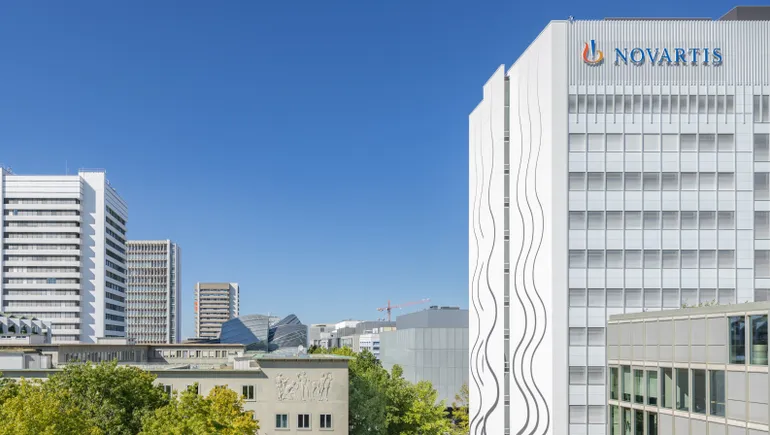
Novartis will acquire Excellergy, a young allergy drugmaker, to gain access to an experimental therapy that could improve upon the widely used medication Xolair.
The deal announced Friday could be worth as much as $2 billion overall when including the unspecified upfront payment as well as future payouts. It’s expected to close in the second half of the year, the companies said in a statement.
At the heart of the acquisition is a drug called Exl-111, which targets the antibody immunoglobulin E, or IgE. In certain cases, IgE can mistakenly react to substances — like food, pollen or pet dander — that wouldn’t otherwise be harmful. The antibody then binds to cells, triggering the release of histamines and in turn, an allergic reaction.
These IgE-mediated allergies can be treated with antihistamines as well as Xolair, a biologic drug co-marketed by Novartis and Roche which prevents IgE from locking onto cell receptors. But some people don’t respond to treatment, and its effects can take weeks to kick in.
Excellergy has claimed that Exl-111 could represent a therapeutic advance. It’s a multifunctional drug that can detach IgE from cells without triggering an immune response, while also possessing the capability to intercept and remove IgE before it reaches a cellular target. Exl-111 lowers the expression of an immune cell receptor that regulates allergic reactions, too, a combination of effects the company believes can lead to faster and better symptom control.
“It’s the holy grail of what people are trying to accomplish,” Geoff Harris, Excellergy’s chief scientific officer, told BioPharma Dive in October. “If you can turn off this access to the immune system, you can completely control a wide swath of different allergy-driven diseases.”
Excellergy officially launched in 2025 with $70 million in financing from Red Tree Venture Capital, Decheng Capital and Samsara BioCapital. Its portfolio is based on research from Stanford University and Switzerland’s University of Bern. The startup began testing Exl-111 in humans earlier this year and, in its statement, Novartis pointed to preclinical data and early results from that trial as evidence of a “differentiated profile.”
“This proposed acquisition strengthens our allergy portfolio and reflects our strategy of advancing innovative bold science to bring meaningful additional benefits to patients,” Fiona Marshall, Novartis’ president of biomedical research, said in a statement.
The acquisition is the latest in a series of dealmaking moves Novartis has made to help confront patent expirations from key drugs like Entresto and Cosentyx. Novartis has now purchased six companies since the start of 2025 and formed multiple partnerships focused on immune drug research. In September, the pharma reupped a pact with Monte Rosa Therapeutics. Three months later, it paid an AI-focused biotechnology company called Relation $55 million upfront in a bid to find new immune drug targets.
Facts Only
Actor: Novartis, Excellergy
Event: Acquisition deal worth up to $2 billion
Timeline: Second half of 2023 (expected closing date)
Substance Targeted: Immunoglobulin E (IgE)
Drug: Exl-111, Xolair
Motivation: Strengthen allergy portfolio and confront patent expirations
Financing: $70 million from Red Tree Venture Capital, Decheng Capital, Samsara BioCapital
Testing Phase: Human trials ongoing for Exl-111
Location: Official launch in 2025 (San Francisco Bay Area and Switzerland)
Executive Summary
Full Take
The acquisition of Excellergy by Novartis is a strategic move aimed at improving upon the widely used medication Xolair with Exl-111, an experimental therapy targeting IgE. The deal reflects Novartis' strategy of investing in immune drug research and confronting patent expirations from key drugs like Entresto and Cosentyx through acquisitions.
Patterns detected: ARC-0043 Motte-and-Bailey, ARC-0024 Ambiguity
The deal is rooted in the pharmaceutical industry's quest for innovation and market dominance by developing new treatments for common diseases like allergies.
The acquisition has significant implications for patients suffering from IgE-mediated allergies, as Exl-111 could potentially offer faster and better symptom control compared to current treatments. The deal also highlights the competitive nature of the pharmaceutical industry and the importance of intellectual property rights in maintaining market positions.
What will be the long-term effects of Exl-111 on IgE-mediated allergy treatment? How will other pharmaceutical companies respond to Novartis' acquisition of Excellergy? What ethical considerations should be taken into account when developing and marketing new treatments for allergies and other medical conditions?
A potential bad actor playing off this narrative would attempt to sow doubt in the effectiveness of Exl-111 or question Novartis' motives for acquiring Excellergy. However, the actual content does not align with these patterns as it presents a clear and objective account of the deal and its potential implications.