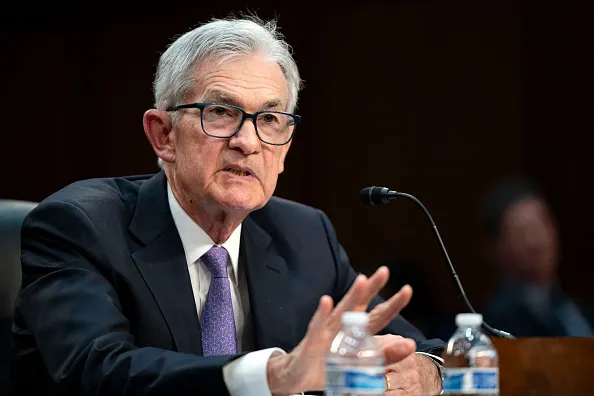
Federal Reserve Chair Jerome Powell tipped his hand Wednesday as to his future at the central bank, saying he would serve as chair pro tempore until his successor is confirmed.
“That is what the law calls for. That’s what we’ve done on several occasions, including involving me. And it’s what we’re going to do in this situation,” Powell told reporters during a press conference Wednesday on the Federal Open Market Committee’s decision to leave interest rates unchanged.
Powell served as Fed chair pro tempore for more than three months in 2022, while awaiting confirmation on his second term.
Powell’s term as Fed chair expires in May. And although President Donald Trump has nominated former Fed Gov. Kevin Warsh to eventually lead the central bank, the Senate Banking Committee has yet to schedule a hearing on the matter.
Warsh’s nomination would be deadlocked in committee if Sen. Thom Tillis, R-NC, continues to oppose any Fed nominee until an investigation by the Justice Department – into allegations that Powell lied during testimony to Congress last June about over-budget renovations at the central bank – is resolved.
A federal judge last Friday quashed subpoenas in the case, asserting that he believes the probe was derived to pressure Powell to resign and make way for a Fed chair who would more readily lower interest rates.
Court documents unsealed last week indicate that Powell is inclined to remain on the Fed board after his chair term expires to “defend” the central bank’s independence.
Powell on Wednesday drilled down on that.
“I have no intention of leaving the board until the investigation is well and truly over, with transparency and finality,” Powell said.
The DOJ indicated last week that it would appeal Friday’s ruling.
After his term as chair, Powell is allowed to serve as a Fed governor through January 2028, though past chairs typically have not. Powell said Wednesday he is undecided on that prospect.
“I will make that decision based on what I think is best for the institution and for the people we serve,” he said Wednesday.
Treasury Secretary Scott Bessent told Fox Business on Thursday that Powell continuing as a governor would go against historical norms.
“Only one former chair has stayed on as a governor, and the president of the United States asked him to stay,” Bessent said. “I can’t imagine [Trump would ask Powell to stay].”
Responding to a request for comment, White House spokesman Kush Desai said the Trump administration “is working closely with Congress to swiftly confirm Warsh and restore confidence, competence and credibility to the Federal Reserve.”
Trump has consistently badgered Powell to lower interest rates, and relentlessly skewered him when he has not.
“Where is the Federal Reserve Chairman, Jerome ‘Too Late’ Powell, today?” Trump wrote last Thursday on Truth Social. “He should be dropping Interest Rates, IMMEDIATELY, not waiting for the next meeting!”
Hours ahead of Wednesday’s FOMC decision, Trump continued, using a nickname for the Fed chair: “When is ‘Too Late’ Powell lowering INTEREST RATES?”
The FOMC on Wednesday held interest rates in a range of 3.5% to 3.75% for a second consecutive meeting, amid increased economic risks tied to the conflict with Iran and uncertainty surrounding the Trump administration's tariff policies.
Two of the Fed board’s three Trump appointees – Vice Chair for Supervision Michelle Bowman and Gov. Christopher Waller – voted Wednesday to keep interest rates steady. The sole dissent came from Gov. Stephen Miran, who pushed for a quarter-percentage-point decrease.
Facts Only
* Jerome Powell announced he will serve as Fed chair pro tempore until a successor is confirmed.
* The law dictates this arrangement, and it has been used previously, including for Powell himself.
* Powell served as chair pro tempore for over three months in 2022 awaiting confirmation of his second term.
* President Trump has nominated Kevin Warsh to lead the Fed.
* The Senate Banking Committee has not scheduled a hearing on Warsh’s nomination.
* Sen. Tillis’ opposition to any Fed nominee until a Justice Department investigation is resolved is a key obstacle.
* A federal judge quashed subpoenas in the Justice Department’s investigation into Powell’s alleged over-budget renovations.
* Powell intends to remain on the Fed board until the investigation concludes with transparency and finality.
* Powell is undecided on whether to continue serving as a Fed governor after his term.
* Treasury Secretary Bessent believes Powell continuing as a governor would go against historical norms.
* Trump has consistently pressured Powell to lower interest rates.
* The FOMC held interest rates steady at 3.5% to 3.75%.
* Two Fed board members (Bowman and Waller) voted to maintain rates, while Stephen Miran dissented.
Executive Summary
Full Take
Sentinel — Likely Human
This article presents a relatively detailed account of the Fed’s decision and Powell’s stance, incorporating direct quotes and attributed statements from multiple sources, suggesting a human-driven narrative rather than purely AI-generated content. The inclusion of Trump’s personal attacks introduces a distinct editorial tone.