Oman
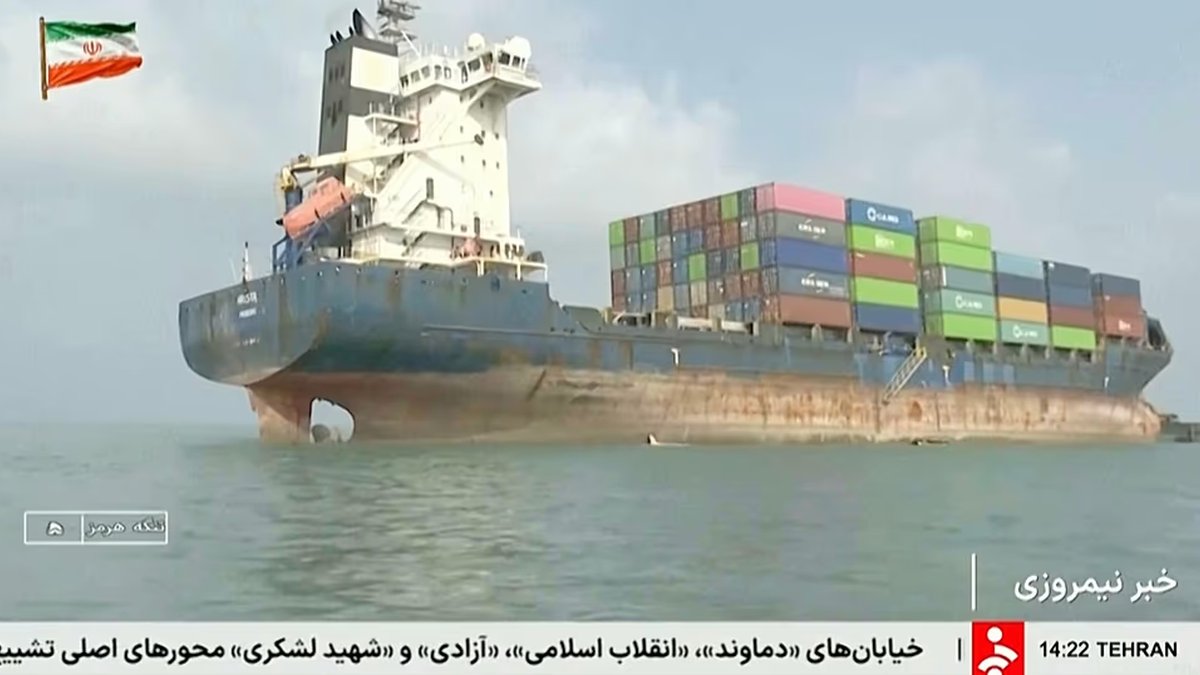
A liquefied natural gas tanker caught fire after being struck by a projectile in the Strait of Hormuz, escalating tensions in one of the world's most critical shipping lanes. The attack comes as Iran mourns Supreme Leader Ali Khamenei and nuclear talks with the United States remain stalled.
A liquefied natural gas tanker caught fire early Tuesday after being struck by a projectile while transiting the Strait of Hormuz off the coast of Oman, according to the United Kingdom Maritime Trade Operations (UKMTO).
The vessel was reportedly hit on its port side near Limah as it headed south toward the Gulf of Oman. Authorities said there was no environmental damage from the incident, while investigations into the attack are ongoing.
Iranian state television reported that the tanker had ignored official navigation warnings but stopped short of formally claiming responsibility for the strike.
Shipping route remains under pressure
The latest incident underscores the growing risks facing commercial vessels in the Strait of Hormuz, a vital maritime corridor through which a significant share of the world's oil and liquefied natural gas trade passes.
Iran has repeatedly insisted that ships use routes approved by its military and has warned that vessels deviating from those lanes could face consequences.
Meanwhile, the Joint Maritime Information Center, overseen by the U.S. Navy, has advised shipping companies that an alternative route near Oman's coastline remains open and safe for international traffic.
Diplomacy hangs in the balance
The attack comes as efforts to revive negotiations between Washington and Tehran remain on hold.
The United States is seeking a broader agreement aimed at securing freedom of navigation through the Strait of Hormuz, curbing Iran's nuclear programme and bringing a lasting end to the conflict that began earlier this year.
U.S. President Donald Trump renewed pressure on Iran, warning that it should reach a deal or face further military action while expressing a preference for diplomacy over escalation.
Iran mourns its late supreme leader
The incident coincided with nationwide mourning following the death of Supreme Leader Ayatollah Ali Khamenei.
His body was flown overnight to the holy city of Qom, where thousands of mourners gathered to pay their respects before his burial.
The funeral has become a focal point for public displays of nationalism, adding another layer of tension to an already volatile regional landscape.
Global markets watch closely
The latest attack has renewed concerns over the security of one of the world's busiest energy corridors.
Any prolonged disruption to shipping through the Strait of Hormuz could have significant implications for global oil and gas supplies, with traders and governments closely monitoring developments as regional tensions continue to rise.
01:15
Mali: Sabotage plunges Bamako into water and power crisis
Go to video
Nigerian medical student killed in Russian strike, days before graduation
01:04
Zimbabwe lights back up after nationwide grid collapse
01:16
Kenya crushes Saba Saba march in latest crackdown on dissent
01:07
Algeria: record-low turnout shadows ruling party's election victory
01:02
Faye moves to launch new party as split with Sonko deepens
Facts Only
* A liquefied natural gas tanker caught fire after being struck by a projectile while transiting the Strait of Hormuz off the coast of Oman.
* The incident occurred on Tuesday.
* The vessel was reportedly hit on its port side near Limah as it headed south toward the Gulf of Oman.
* Authorities reported no environmental damage from the incident.
* Iranian state television reported the tanker ignored official navigation warnings.
* The tanker did not formally claim responsibility for the strike.
* Iran insisted that ships use routes approved by its military and warned of consequences for deviation.
* The Joint Maritime Information Center advised shipping companies that an alternative route near Oman's coastline remains open and safe.
* The incident coincided with nationwide mourning following the death of Supreme Leader Ali Khamenei.
Executive Summary
A liquefied natural gas tanker caught fire after being struck by a projectile while transiting the Strait of Hormuz off the coast of Oman on Tuesday, according to the UKMTO. The vessel was reportedly hit on its port side near Limah while moving south toward the Gulf of Oman. Authorities reported no environmental damage from the incident, and investigations into the attack are ongoing. Iran’s state television noted that the tanker ignored official navigation warnings but did not formally claim responsibility for the strike.
The incident highlights ongoing risks to commercial vessels in the Strait of Hormuz, a vital shipping lane for global oil and LNG trade. Iran has stated requirements for ships to use routes approved by its military, warning of consequences for deviations. In response, the Joint Maritime Information Center advised shipping companies that an alternative route near Oman's coastline remains open and safe.
This event occurs concurrently with ongoing diplomatic efforts between the United States and Iran aimed at reviving negotiations and addressing Iran's nuclear program. Furthermore, the incident coincided with nationwide mourning in Iran following the death of Supreme Leader Ali Khamenei. Global markets are monitoring developments due to concerns about potential disruptions to energy supplies flowing through this corridor.
Full Take
The narrative presents a convergence of kinetic action, geopolitical deadlock, and domestic political symbolism within a high-stakes maritime corridor. The physical act of sabotage in the Strait of Hormuz serves as an immediate escalation point against sustained diplomatic stalemate concerning Iran's nuclear program and regional conflict. This links operational security—maritime transit—directly to high-level political negotiations between Washington and Tehran.
The juxtaposition with the mourning for Supreme Leader Khamenei introduces a layer where kinetic events are framed within a context of deep, polarized national sentiment. The strike operates simultaneously on multiple planes: as an act of state aggression, a tool of international pressure, and a domestic reflection of profound grief and nationalism. This forces an examination of how non-military actors—shipping companies, maritime centers, global markets—are situated between these conflicting realities.
The underlying pattern suggests that when formal diplomacy stalls, the space for asymmetrical action in critical choke points expands. The operational response by the Joint Maritime Information Center and the sustained pressure from other global actors reveal a functional, albeit fragile, system of managed risk despite overt hostility. The implication is that volatility in one arena immediately translates into systemic risk across energy flows, demonstrating how localized incidents can trigger wider geopolitical consequences for human agency and global stability.
Bridge Questions:
What mechanisms exist for mediating the tension between kinetic maritime threats and high-level diplomatic processes? How do divergent national mourning rituals influence the calculus of state actions in volatile regions? What is the long-term impact on international maritime law and freedom of navigation when physical acts are used to enforce geopolitical objectives?
Sentinel — Human
The text reads like conventional geopolitical news reporting, characterized by factual reporting linked together by logical progression rather than dense synthetic argumentation.