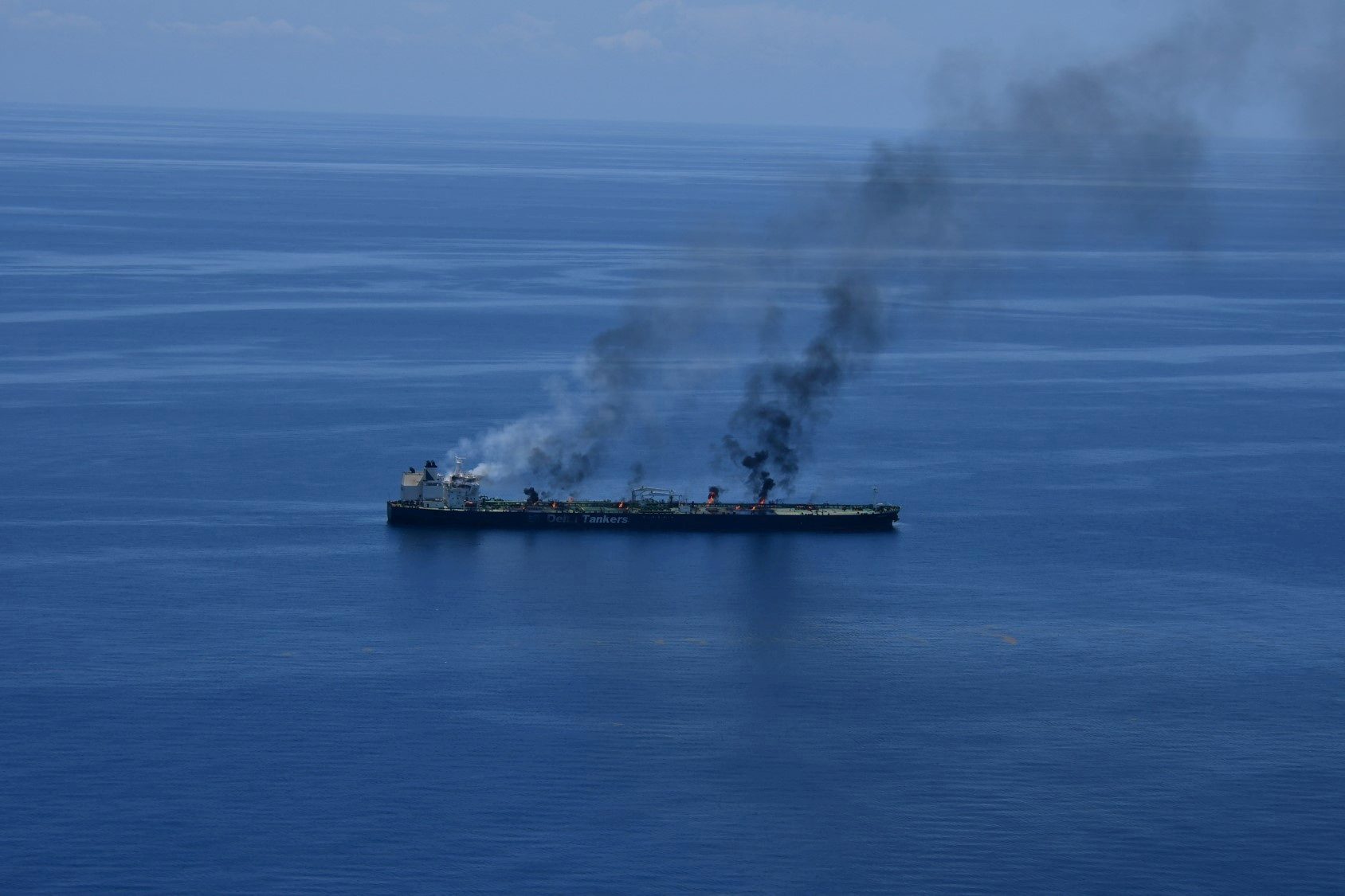
Yemeni group warns its “fingers are on the trigger” as Hormuz disruption collides with rising Bab el-Mandeb risk.
Yemen’s Iran-aligned Houthi movement has issued its clearest warning yet that it could enter the escalating U.S.–Israel–Iran conflict, explicitly threatening action in the Red Sea and tying any intervention to how the war unfolds in the days ahead.
In a formal statement released Friday, the Yemeni Armed Forces said their “fingers are on the trigger for direct military intervention,” outlining specific conditions that could prompt attacks—including the use of the Red Sea for U.S. or Israeli military operations and the expansion of alliances against Iran.
The language marks a significant escalation from earlier rhetoric.
The Houthis warned they “will not allow” the Red Sea to be used as a staging ground for operations against Iran or other regional actors, signaling a potential return to the kind of maritime attacks that disrupted global trade during earlier phases of the Gaza war. Those operations—often involving drones, missiles, and asymmetric targeting of commercial vessels—forced widespread rerouting and drove up insurance costs across the industry.
The Houthis did not issue a blanket threat against all shipping, focusing instead on U.S. and Israeli activity in the Red Sea. But past attacks show the risk is broader, with multiple vessels hit despite no clear links to either country.
The Houthi warning comes as the shipping industry is reeling from the collapse of traffic through the Strait of Hormuz, where vessel movements have plunged and war-risk insurance has been pulled or repriced across large segments of the market.
The U.S. Maritime Administration has already warned that the threat from Houthi forces remains active across the Red Sea and Gulf of Aden, noting that vessels’ electronic signals can be exploited for targeting. Friday’s statement reinforces those concerns, suggesting the group is prepared to escalate if conditions are met.
From late 2023 through October 2025, Houthi forces were responsible for more than 100 attacks on merchant vessels, impacting ships from over 60 countries. Although there have been no confirmed Houthi attacks on commercial shipping since the October 2025 Israel–Gaza ceasefire, the U.S. Maritime Administration continues to warn that the group remains a credible threat.
Beyond the Red Sea, the Houthis framed their position as part of a broader regional alignment with Iran and what they described as the “axis of jihad and resistance.”
Critically, the group laid out three clear triggers for action: the expansion of military alliances supporting U.S. and Israeli operations, the use of Red Sea waters for hostile missions, and continued escalation against Iran.
That level of specificity is likely to heighten concern among shipowners, insurers, and naval planners, who have been watching closely for signs that the Red Sea could once again become an active conflict zone.
According to Drewry’s latest Red Sea Diversion Tracker, Suez Canal transits are in sharp decline. In the two weeks ending March 22, containership sailings through Suez fell 33% to just 43 transits, down from 64 in the prior period. Major carriers have largely suspended Asia–Europe services through the corridor altogether, with only a limited number of operators still deploying larger vessels on the route.
If the Houthis follow through, the industry could soon face a scenario of simultaneous disruptions at both Hormuz and Bab el-Mandeb—two chokepoints that together underpin a significant share of global energy and container trade.
Editorial Standards · Corrections · About gCaptain
Facts Only
Yemen’s Iran-aligned Houthi movement issued a formal statement on Friday warning of potential military intervention in the Red Sea.
The Houthis stated their "fingers are on the trigger for direct military intervention" and outlined conditions that could prompt attacks.
Conditions include the use of the Red Sea for U.S. or Israeli military operations and the expansion of alliances against Iran.
The Houthis warned they "will not allow" the Red Sea to be used as a staging ground for operations against Iran or other regional actors.
Past Houthi attacks involved drones, missiles, and asymmetric targeting of commercial vessels, disrupting global trade.
The U.S. Maritime Administration has warned that Houthi threats remain active across the Red Sea and Gulf of Aden.
From late 2023 through October 2025, Houthi forces conducted over 100 attacks on merchant vessels, impacting ships from over 60 countries.
No confirmed Houthi attacks on commercial shipping have occurred since the October 2025 Israel–Gaza ceasefire.
Suez Canal transits have declined sharply, with containership sailings falling 33% in the two weeks ending March 22.
Major carriers have largely suspended Asia–Europe services through the Suez Canal.
The Houthis framed their position as part of a broader regional alignment with Iran and the "axis of jihad and resistance."
The group specified three triggers for action: expansion of military alliances, use of Red Sea waters for hostile missions, and escalation against Iran.
Executive Summary
Yemen’s Iran-aligned Houthi movement has issued a formal warning of potential military intervention in the Red Sea, explicitly tying their actions to the escalating U.S.–Israel–Iran conflict. The group stated their "fingers are on the trigger" and outlined specific conditions that could prompt attacks, including the use of the Red Sea for U.S. or Israeli military operations and the expansion of alliances against Iran. This marks a significant escalation from previous rhetoric, though the Houthis have not threatened all shipping, focusing instead on U.S. and Israeli activity. The warning comes as global shipping faces disruptions in both the Strait of Hormuz and the Bab el-Mandeb, with Suez Canal transits declining sharply due to rerouting by major carriers. The U.S. Maritime Administration has maintained warnings about Houthi threats, noting past attacks on over 100 merchant vessels from 2023 to October 2025. The Houthis frame their stance as part of a broader regional alignment with Iran, emphasizing three triggers for action: military alliances supporting U.S. and Israeli operations, hostile use of Red Sea waters, and escalation against Iran. The shipping industry is already under strain, with insurance costs rising and traffic through key chokepoints plummeting, raising concerns about further disruptions to global trade.
The situation reflects a volatile intersection of geopolitical tensions and economic vulnerabilities, with the Houthis positioning themselves as a potential disruptor in a critical maritime corridor. While their threats are conditional, the history of attacks and the current instability in Hormuz suggest that any escalation could have far-reaching consequences for energy and container trade. The U.S. and its allies have previously responded to Houthi aggression with military strikes, but the group’s latest warning signals a willingness to re-engage if their red lines are crossed. The industry’s response—rerouting ships and suspending services—underscores the immediate economic impact, though the full scope of the threat remains uncertain.
Full Take
The Houthi warning is a calculated escalation, leveraging geopolitical tensions to assert leverage in a region already strained by conflict. The strongest version of this narrative is that the Houthis are signaling their readiness to disrupt critical maritime routes if their red lines are crossed, framing themselves as defenders of Iran and the "axis of resistance." This aligns with their historical pattern of asymmetric warfare, where they exploit vulnerabilities in global trade to pressure adversaries. The specificity of their triggers—military alliances, Red Sea operations, and escalation against Iran—suggests a strategic attempt to deter U.S. and Israeli actions while reinforcing their role as a regional power broker.
Patterns detected: ARC-0024 Ambiguity (conditional threats leave room for interpretation), ARC-0043 Motte-and-Bailey (broad framing of "hostile missions" allows flexible justification for attacks).
The root cause of this narrative is the broader U.S.–Israel–Iran conflict, with the Houthis positioning themselves as a proxy force capable of inflicting economic pain. The unstated assumption is that disrupting shipping will force concessions, echoing past strategies where non-state actors weaponize trade routes. The implications for human agency are stark: sailors, insurers, and global consumers bear the costs of rerouted ships and higher prices, while the Houthis and their backers gain leverage. Second-order consequences could include further militarization of the Red Sea, increased insurance premiums, and prolonged supply chain disruptions.
Bridge questions: How might the U.S. and its allies respond to conditional threats without escalating further? What economic or diplomatic levers could mitigate Houthi actions without military confrontation? Would a renewed ceasefire in Gaza defuse this tension, or is the Houthi stance now independent of that conflict?
Counterstrike scan: A coordinated influence campaign would amplify the Houthi threat to sow panic in shipping markets, using conditional language to create uncertainty. The actual content aligns with this pattern but lacks overt manipulation, as the warnings are explicit and tied to observable conditions. The focus on economic disruption rather than direct military confrontation suggests a calculated strategy rather than pure provocation.